
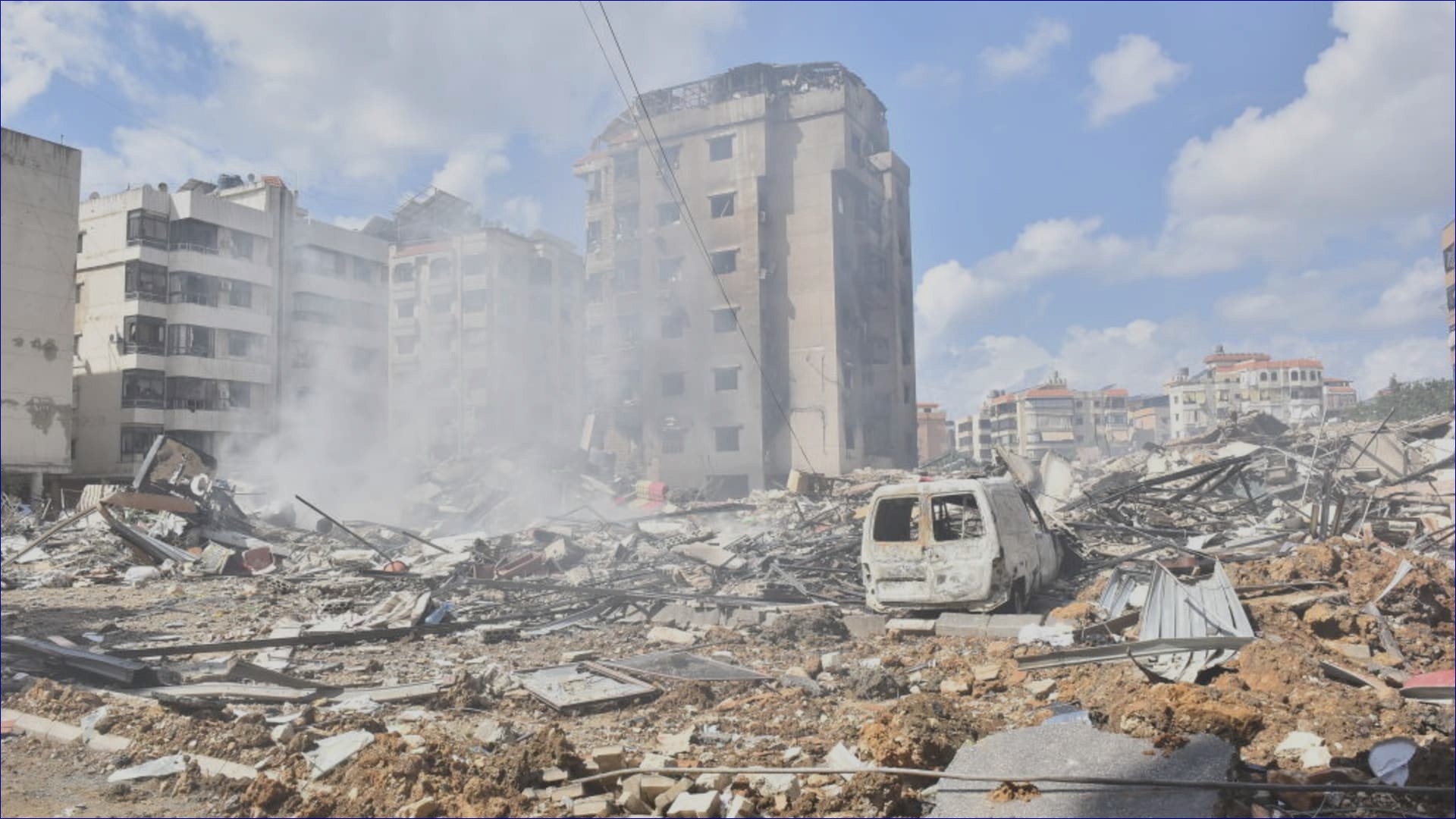
In the wake of a tumultuous weekend, the scenes emerging from Beirut’s Dahieh neighborhood are starkly haunting. Buildings lie shattered, echoes of the recent Israeli offensives resounding across the landscape—an indelible imprint on a once-vibrant area. Elevated tensions erupted on Saturday as the Israeli military unleashed strikes targeting alleged Hezbollah arms depots nestled in southern Beirut, following an ominous volley of rockets fired by the Lebanese militia toward northern Israel. Adding a layer of complexity, a drone was reportedly launched at Prime Minister Benjamin Netanyahu’s holiday retreat, an act the Prime Minister labeled an assassination endeavor executed by “Iran’s proxy Hezbollah,” denouncing it as a “grave mistake” during an already precarious juncture in regional stability.
This skirmish unfolds against the backdrop of intensified Israeli endeavors to obliterate Hamas, a militant entity entrenched in Gaza, which has inadvertently resulted in a catastrophic humanitarian crisis. With over a hundred lives claimed in recent strikes within the coastal enclave, the humanitarian toll continues to escalate, while three hospitals find themselves encircled by mounting siege. As glimmers of hope flickered following the death of Hamas leader Yahya Sinwar on Wednesday, both Hamas and Hezbollah have vowed to persist in their confrontations, dousing any fragile prospects for truce and further exacerbating regional unrest.
Emerging reports suggest that Israel, casting a keen gaze toward its own impending elections, could be orchestrating a strategy to ramp up military maneuvers, ostensibly shielding its borders while preventing foes from regrouping. Israeli aircraft were noted, earlier today, dropping propaganda leaflets depicting Sinwar alongside the stark proclamation: “Hamas will no longer rule Gaza.” This was followed by a devastating assault on a multi-story structure in Beit Lahiya, where the death toll mounted to at least 73, while hundreds more found themselves affixed in the crossfire.
In southern Beirut’s suburbs, Israeli forces executed extensive strikes, casting thick smoke clouds into the evening sky—a precursor to the chaos that increasingly defines daily life for the residents of these neighborhoods. Israeli military sources disclosed that these precise attacks were aimed at “a number of Hezbollah weapons storage facilities and an intelligence command center.” Notably, evacuation orders had been disseminated for four districts within these suburbs, urging denizens to flee at least 500 meters away, though the strikes continued to rain down indiscriminately in other regions, amplifying the humanitarian tumult.
With tens of thousands evacuated since the inception of regular aerial assaults three weeks prior, once-thriving locales are now ghostly shadows of their former selves, housing not only civilians but also crucial Hezbollah operations. The recent death of Hezbollah’s secretary general, Hassan Nasrallah, during an air assault on September 27, underscores the deathly stakes of this ongoing conflict, where leadership losses compound the turmoil.
Responses from the United States have indicated a desire for Israel to temper its military response in Beirut. Secretary of Defense Lloyd Austin articulated this sentiment, adding to the fraught dialogues surrounding the conflict. Saturday witnessed additional strikes, with reports confirming casualties on Lebanon’s main highway near Jounieh and in the Bekaa Valley—where yet another mayor fell victim to the relentless violence. Just across the border, Hezbollah rockets claimed lives in Israel, the murky threads of conflict weaving deeper into both nations.
As confrontations between Hezbollah and Israel reach fever pitch, the artillery exchanges have intensified. An alarming 200 projectiles were noted to have been launched by Hezbollah on Saturday alone. Recent Israeli ground operations within Lebanese territory have aimed at stemming chaos, ostensibly with the intent of restoring some semblance of order to the border region.
The toll of this conflict remains staggering; Lebanon’s health ministry estimates that over 2,400 lives have been lost since October, most of whom were claimed in recent months, as Israeli authorities report 59 fatalities in northern Israel. Following the initial Hamas-led assault that ushered in this cycle of violence, casualty counts reflect a severe humanitarian crisis unfurling in Gaza, where widespread devastation has left 2.3 million residents grappling for survival amidst crumbling infrastructure.
Amidst the despair, glimmers of diplomacy flicker but remain shrouded in uncertainty. Although prominent leaders, including U.S. President Joe Biden, voice cautious optimism regarding potential deals stemming from Sinwar’s death, negotiations remain at an impasse. With U.S. Secretary of State Antony Blinken poised to embark on a regional diplomatic tour Tuesday, the road ahead appears fraught with obstacles yet tantalizingly close to a pivotal turning point in the ever-escalating conflict.
