
Chhattisgarh is poised for a transformative leap as its government ambitiously charts a course to connect the vital Korba-Bilaspur-Raipur corridor with the ambitious Nagpur industrial corridor, a strategic move designed to supercharge the state’s economic engine.
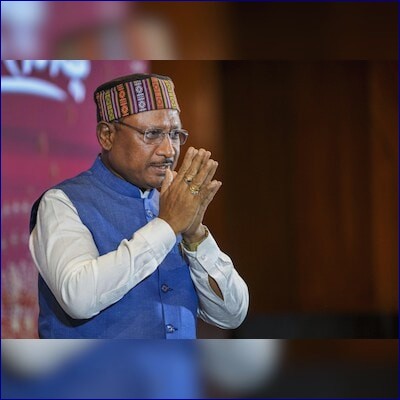
In a significant meeting last week, Chief Minister Vishnu Deo Sai engaged with Union Minister for Commerce and Industry, Piyush Goyal, delving into a plethora of developmental projects that hold the promise of reshaping the state’s industrial landscape.
Their discussions not only spotlighted the industrial corridor but also meandered into the realm of international air cargo facilities and an array of other ambitious undertakings. Notably, the National Industrial Development Corporation’s (NIDC) proposed linkage emerged as a cornerstone of the dialogue, reflecting a clear intent to maximize industrial synergy.
A spokesperson from the state government conveyed the optimistic sentiment, revealing, “Union Minister Piyush Goyal assured us that the proposal would be reviewed and acted upon promptly.” This assurance resonates with the urgency of their objectives.
Further underscoring this initiative, Goyal instructed officials to mobilize resources and actions to realize these developmental visions. CM Sai passionately articulated to Goyal that intertwining the Korba-Bilaspur-Raipur stretch with the Nagpur corridor is anticipated to ignite a surge in industrial activity, ultimately crafting a plethora of employment opportunities. “This linkage will secure a noteworthy position for Chhattisgarh on the national industrial map,” he asserted.
Central to the NIDC’s vision is the ambitious creation of a 1,080-kilometer fast route connecting Delhi and Nagpur, in addition to plans for yet another corridor stretching between Nagpur and Hyderabad. Chhattisgarh is eagerly awaiting these connections, which are deemed crucial for fostering a robust industrial milieu.
Moreover, the Chief Minister emphasized the vital necessity for international air cargo facilities in Raipur, which he posited could catalyze the export potential of the state’s agricultural and food processing sectors. He proposed leveraging the existing infrastructure of the old terminal, envisioning a platform that enables local industries to vie effectively in the global marketplace.
The conversation also traversed the establishment of an Agricultural and Processed Food Products Export Development Authority (APEDA) certification office, aimed at elevating the global stature of Chhattisgarh’s agricultural output—an initiative poised to benefit not only farmers but also industrialists seeking recognition and expansion in their fields.
In essence, this concerted effort articulates a vision where Chhattisgarh could not only augment its industrial capabilities but also establish itself as a formidable player on the national and international stage. The landscape is primed for change, and the state’s leadership is determined to seize the moment.
