
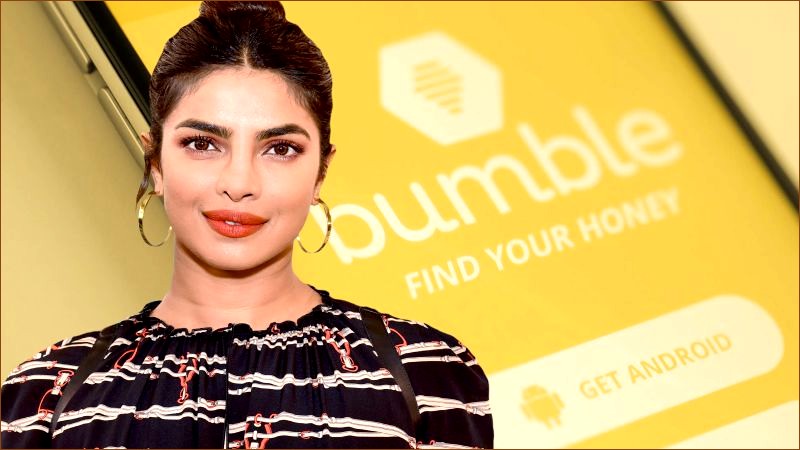
Bumble, the innovative online dating platform that champions women making the first move, has set its sights on India, marking a significant expansion into one of the world’s most vibrant digital landscapes. This announcement, made just this past Wednesday, signifies not merely a business venture but a cultural dialogue — one that resonates deeply with the evolving dynamics of gender interactions in the Indian context.
At the helm of this ambitious initiative is none other than Bollywood superstar Priyanka Chopra, who has recently joined Bumble as an investor and will lend her expertise and insight into navigating this new territory. Interestingly, Chopra has been an advocate for Bumble’s mission long before this official collaboration; she emphasized the necessity of bringing Bumble to Indian women months ago, igniting a partnership that dates back to her involvement in Bumble Bizz, the company’s networking arm, launched back in October 2017.
The timing of Bumble’s announcement is striking, coinciding almost perfectly with a fresh feature introduced by rival dating app Tinder, dubbed “My Move,” which empowers women by allowing them to dictate the initiation of conversations. This competitive landscape only adds gravity to Bumble’s entrance into the market, highlighting the ongoing evolution of dating apps in response to users’ desires for agency and comfort.
Bumble’s preparations for this leap have not been taken lightly. CEO Whitney Wolfe Herd reflected on this venture with a sense of shared purpose, stating in an email to CNN, “It was clear then we shared a passion for empowering young women on a global level.” The roadmap to launching Bumble in India has been meticulously constructed, focusing on tailoring the user experience to resonate with local cultural nuances, a challenge that Chopra is poised to assist with.
Beneath the surface, however, looms another layer of complexity — the undeniable challenges tied to safety and the app’s perception in a region fraught with gender-based violence. India has gained notoriety for being perilous for women; indeed, a recent report branded it the most dangerous country for them globally. Aware of these concerns, Bumble is taking proactive measures, introducing safety features designed to instill a sense of security for its users. The app will prioritize user anonymity—requiring only initials rather than full names—and enhance reporting mechanisms for inappropriate behavior, all vital steps towards building a safe digital community.
Additional strategic support comes from Chopra’s manager, Anjula Acharia, whose impressive track record of linking Western artists with Indian markets promises to extend Bumble’s relatable appeal. Acharia’s history includes successful promotions of pop icons like Britney Spears and Lady Gaga in India, suggesting that she may adeptly bridge cultural divides to foster Bumble’s acceptance.
In terms of accessibility, Bumble will cater to its Indian audience by offering its app in Hindi and Hinglish, a popular blend of Hindi and English, thereby ensuring that language is no barrier to entry for potential users. Moreover, with over 4,000 dedicated content moderators and the implementation of photo verification processes, Bumble aims to create a verified, trustworthy environment for its users.
All of this takes place against a backdrop of legal tension with rival Tinder, as Bumble finds itself embroiled in litigation with Match Group, Tinder’s parent company. This ongoing legal battle, which began with accusations of patent infringement and escalated into a counter-suit from Bumble, reflects the high stakes of the dating app industry.
Despite the tumultuous landscape, Bumble’s ambition to penetrate the Indian market is driven by undeniable potential. With an impressive 390 million internet users, India represents an opportunity too vast to ignore, offering a fertile ground for Bumble’s philosophy of female empowerment and relational agency to flourish among the masses. As the app prepares for its launch later this year, all eyes will be on how this unique blend of innovation and cultural sensitivity unfolds in one of the world’s largest digital marketplaces.
