
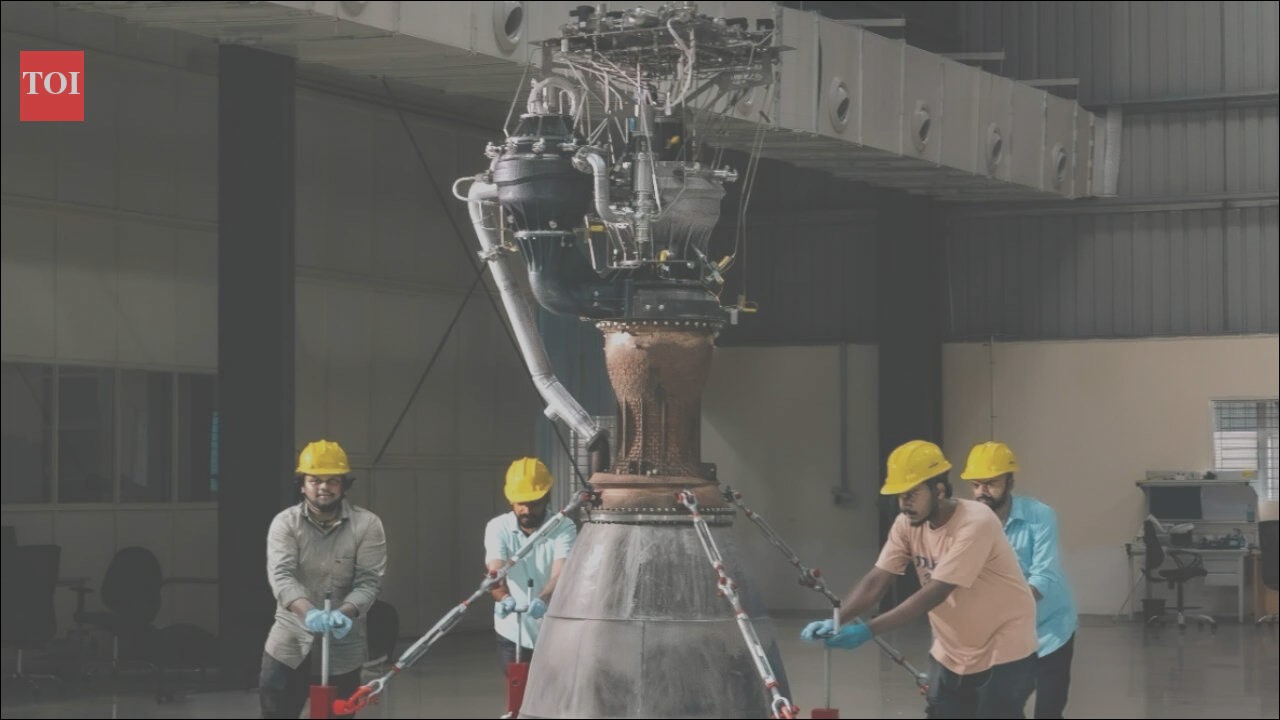
Bengaluru-based Astrobase Unveils India’s First Private 800kN Rocket Engine
BANGALORE: Astrobase Space Technologies, a rising star in India’s space sector, has introduced the “Everest,” a groundbreaking 800kN rocket engine. This engine, described as India’s first privately built liquid oxygen-methane engine with a full-flow staged combustion design, aims to set new standards for reusable launch systems and enhance the country’s launch infrastructure.
The company, located in Bengaluru, stated that this engine is specifically built for medium-lift launch vehicles. It is part of a broader vision to create a complete launch ecosystem that encompasses propulsion, manufacturing, testing, and launch operations. The next significant step for Astrobase will be to conduct a thorough hot-fire test of the engine, followed by vehicle integration and work towards its first orbital mission.
According to Astrobase, the Everest engine utilizes one of the most intricate rocket engine designs, fueled by liquid oxygen and methane. It can produce 800kN of thrust and has a specific impulse of around 340 seconds, with a throttle range between 50% and 110%.
The company plans to ramp up production to 50 engines per year once its facilities are fully operational, with the ambition to conduct hot-fire tests on approximately one engine each week. Before launching its first orbital mission, Astrobase aims to test around 20 engines.
The initial phase of their expansion will support a launch capacity of about 100 tonnes annually. In the long run, Astrobase hopes to exceed a capacity of 1,000 tonnes through increased launch frequency. They are also working towards a “launch-on-demand” capability that could facilitate missions within just 15 days in response to urgent national needs.
Neeraj Khandelwal, co-founder of Astrobase, emphasized that the Everest engine represents a significant step in building India’s industrial capabilities, rather than being merely a technology experiment. He noted the increasing global demand for satellite launches highlights the need for indigenous high-thrust propulsion systems.
Rajeev Jyoti, a director at IN-SPACe, mentioned that Astrobase is one of the beneficiaries of IN-SPACe’s Technology Adoption Fund, which supports the development of the 800kN engine. As the program advances, it could enhance India’s launch capabilities and open new doors in the global space economy.
Founded in 2024, Astrobase is committed to developing propulsion systems, testing infrastructure, and innovative reusable launch technologies from its base in Bengaluru.
