
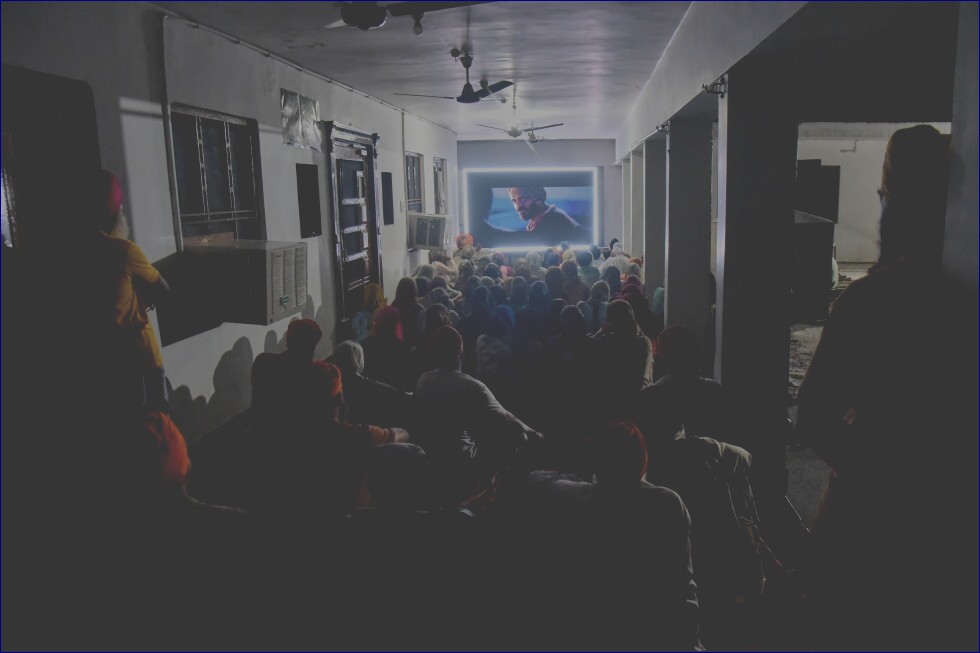
Gurdaspur Village Hosts Blocked Film Screening
As night fell over Gurdaspur, a small village in India, locals gathered in the courtyard of a Sikh temple for a unique movie screening. The film, titled “Satluj,” has faced a ban from Indian officials but has continued to spark interest among the community.
“Satluj” depicts the real-life story of human rights activist Jaswant Singh Khalra. He investigated numerous disappearances and unlawful killings during a government crackdown on a separatist movement in Punjab during the 1980s and early 1990s. At the screening, villagers of all ages— from elderly survivors of the conflict to young teens born long after it ended—sat together in anticipation. As the film started, the crowd fell silent.
Originally named “Punjab 95,” the movie faced a lengthy approval process and was delayed for three years due to a demand for over 120 cuts from the Indian censor board. Although it finally premiered on the ZEE5 streaming platform, it was taken down in India just two days later.
This ban prompted a grassroots movement. Across Punjab, Sikh groups and local activists organized community screenings using copies shared online. Sikh temples and village community centers transformed into makeshift theaters, allowing audiences to reconnect with memories of a turbulent chapter in Indian history.
The Legacy of Punjab’s Insurgency
“Satluj” focuses on Khalra’s fight for justice, revealing the harsh realities faced during the insurgency. This conflict involved Sikh militants and Indian security forces, leading to the deaths of thousands, including civilians. Khalra’s work uncovered disturbing evidence of enforced disappearances and undisclosed cremations, with many families left without answers.
Khalra himself was abducted and murdered in 1995 for his efforts, and some police officers were later convicted for his death. Although the insurgency was subdued and support for Khalistan declined, the Indian government still sees separatist sentiments as a security issue. While officials haven’t detailed the reasoning behind the film’s removal, they’ve cited security concerns to local media.
Community Spirit Through Film
The screenings have been community-led, with villagers providing projectors, sound systems, and power sources. Inderjeet Singh Bains, an organizer in the Gurdaspur district, said the aim is to create a shared space for reflection and discussion about this significant period in Punjab’s history.
He noted the emotional impact on audiences: “When we screen the film, we see our elders crying for their lost sons. Our people have endured tremendous suffering.”
Audience member Gurmukh Singh remarked that the film helped fill in the gaps of stories younger generations had only heard in pieces. For families in the region, the insurgency is not merely historical; it remains a painful memory.
“It reminds us of the grief our earlier generations carried,” Singh said.
The Impact of Censorship
The removal of “Satluj” has reignited discussions about artistic freedom in India. Critics argue that under Prime Minister Narendra Modi’s government, there have been increased censorship battles, leading to concerns over the government promoting films that align with nationalist narratives.
Balwinder Singh, a Sikh leader, emphasized the importance of sharing these stories, stating, “The truth should be seen, as it reveals what happened.”
In response to the film’s removal, ZEE5 announced that it would explore legal avenues to reinstate it.
Emotions Run Deep
Lead actor Diljit Dosanjh voiced his belief that the film’s impact cannot be undone, regardless of its online presence.
As the audience in Gurdaspur watched scenes depicting the struggles of innocent families and police violence, many felt compelled to linger after the screening, sharing their own memories and experiences.
Pawan Deep Kaur described it as a “heartbreaking portrayal” of suffering, saying, “It made us cry endlessly.”
In Gurdaspur, the film is not just entertainment; it’s a powerful reminder of past hardships and a shared journey towards healing.
