
Huawei Launches New AI Technology in South Korea Amid Price Competition
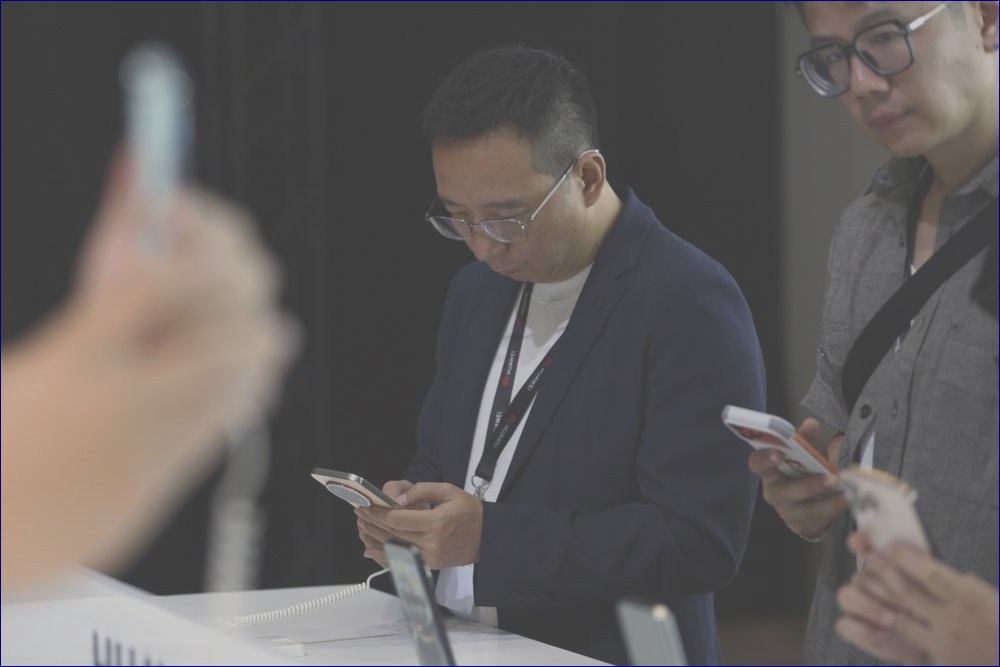
On May 7, Huawei showcased its latest flagship smartphone, the Nova 15 Max, during a product launch event in Bangkok, Thailand. As part of its international strategy, the company is now set to introduce its advanced AI technology in South Korea later this year.
Huawei plans to release its Ascend 950 AI processors and Atlas 950 SuperPod computing clusters in South Korea by the fourth quarter, offering significant discounts compared to Nvidia, a leading chipmaker. This move aims to establish a presence in a key market where Nvidia is already strong.
The Ascend 950PR chip promises about 2.87 times the inference performance of Nvidia’s H20 accelerator, yet is priced at a mere quarter of its cost. Although Huawei admits that its processor may fall short of Nvidia’s flagship H200 in overall power, it believes that performance will improve dramatically when multiple processors are used together. The Atlas 950 SuperPod can connect up to 8,192 Ascend chips into one powerful cluster.
Instead of selling individual chips, Huawei is combining its hardware with networking tools and software to provide a complete solution, similar to its successful model in China. Additionally, the company has made strides in aligning its Compute Architecture for Neural Networks (CANN) software with Nvidia’s CUDA ecosystem, which could make it easier for developers to transition to Huawei’s platform.
Earlier this year, Huawei started mass production of the Ascend 950PR, marking it as the first in a series of new products scheduled through 2028. The chip has already been implemented in China for training DeepSeek’s latest model, showcasing its capabilities.
Huawei has partnered with two local distributors, SK Shieldus and Hansol PNS, to assist with its market entry. Industry analysts recall that Huawei’s foray into South Korea’s LTE equipment market in 2013 was similarly driven by competitive pricing.
However, entering the South Korean market may pose challenges. There is a growing wariness toward Chinese technology in South Korea. Potential customers are weighing the Ascend platform’s energy consumption and heat output against its cost benefits, which could slow its adoption even if the pricing is appealing.
South Korea is strategically important, hosting around 28,500 U.S. troops, and serves as a critical part of Washington’s alliance system in Northeast Asia. The telecom and data center sectors here are vital to the digital backbone that supports the U.S.-Korea alliance.
Experts at the Center for Strategic and International Studies warn that a successful AI chip ecosystem from Huawei could undermine U.S. export policies. If South Korean firms develop their AI infrastructure using Huawei’s technology, the implications extend beyond commercial interests to intelligence sharing and technology standards. This raises concerns about reliance on a supplier that has been viewed as a security risk by the U.S. since 2019.
Huawei’s strategy reflects an adaptation to U.S. export restrictions, with the company’s leadership noting that these pressures have pushed Chinese firms to build a reliable chip supply chain. The Ascend 950PR uses memory that Huawei developed in-house, maintaining some independence from U.S. restrictions, even while competing against major South Korean companies like Samsung and SK Hynix.
However, some analysts argue that Huawei’s output still pales in comparison to Nvidia’s, and the challenges in manufacturing at home may keep Ascend chips from leading the market for the foreseeable future. By this perspective, the move into South Korea appears more as a tactical pricing strategy for customers seeking alternatives.
As Huawei prepares to launch its products in the fourth quarter, the South Korean market will serve as a key test of its strategy. If local companies begin purchasing significant quantities of Huawei hardware, it will force U.S. policymakers to rethink the effectiveness of export controls in protecting allied infrastructure.
Whatever the outcome, this situation highlights a broader lesson: while export controls can hinder a competitor’s access to the latest technology, they cannot guarantee that allies will continue to choose alternatives when a more affordable and effective option becomes available. Other governments will closely observe South Korea’s decisions, considering the future of AI infrastructure and the potential shift toward Chinese technology.
