
EU-India Trade Agreement: A Transformative Step
The recent conclusion of a trade agreement between the European Union (EU) and India is a significant development with implications that reach beyond mere economic gains for both parties.
For India, this agreement represents the most important step toward market opening since the country began its economic reforms in 1991. It also marks the EU’s first comprehensive free trade agreement (FTA) with a rapidly developing lower-income nation, which holds a key political role in the Global South.
Moreover, Brussels has successfully established ambitious FTAs with many countries in the Americas and the Indo-Pacific, including four members of BRICS and the G20—Brazil, India, Indonesia, and South Africa.
Realism in EU-India Relations
While the EU-India FTA does include less ambitious terms on market access and tariffs compared to the agreements with Southeast Asian countries, this is mainly due to India’s current stage of development. The negotiation process required a practical approach from both sides. When I managed FTA discussions for the European Commission from 2007 to 2014, India was reluctant to discuss labor and environmental standards.
The deal, signed last January, does include a sustainable development chapter that commits both sides to uphold labor and environmental standards in line with other EU FTAs. However, it has been agreed that any disputes regarding these commitments will be resolved through discussions rather than formal arbitration.
Additionally, the agreement supports joint efforts to implement a Carbon Border Adjustment Mechanism, accompanied by a memorandum of understanding worth €500 million for climate initiatives over an initial two-year period. These actions could foster closer collaboration on reducing carbon emissions as India looks to build its own carbon pricing system.
For this FTA to significantly impact India, it must also enhance the country’s appeal to European investors. Despite its vast potential for growth in manufacturing, India attracts less foreign direct investment than neighboring nations. While FDI accounts for about 4% of GDP in Vietnam, it is under 1% in India. Sadly, the current agreement lacks strong commitments regarding manufacturing investment, and negotiations on investment protection have seen limited progress.
Both parties need to quickly find new ways to stimulate investment talks.
A promising approach could be to pair the FTA with a Clean Trade and Investment Partnership, similar to what Brussels signed with South Africa, aimed at boosting investments that support sustainability.
A Framework for Cooperation in the Global South
The trade agreement is expected to be ratified by early 2027 and is likely to be less contentious than the EU-Mercosur deal due to fewer agricultural sensitivities. However, both sides should recognize the geopolitical importance of finalizing this ambitious agreement amidst significant shifts in the global economic landscape.
Historically, the EU and India have not always seen eye-to-eye on issues like World Trade Organization reforms or climate diplomacy. Yet, the current geopolitical climate presents a chance for both to enhance cooperation and support a reformed, rules-based global economic system.
The EU’s extensive network of trade agreements could serve as a solid foundation for a new alliance focused on this reform.
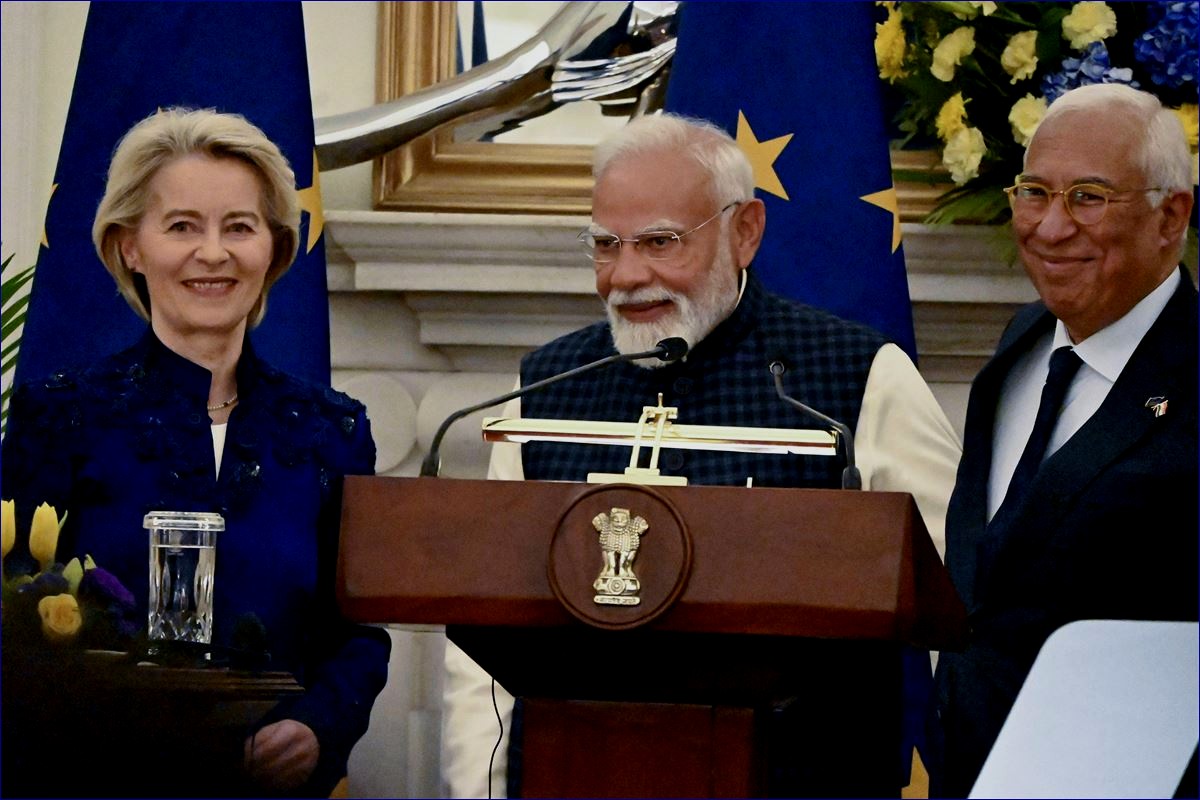
When Indian Prime Minister Narendra Modi and European Commission President Ursula von der Leyen reinitiated FTA discussions in 2021, their goal was to create more than just a basic trade deal—it was to forge a partnership with far-reaching geopolitical implications.
This ambition is now more critical than ever and could pave the way for a new strategic alliance between the EU and other influential players in the Global South.
