
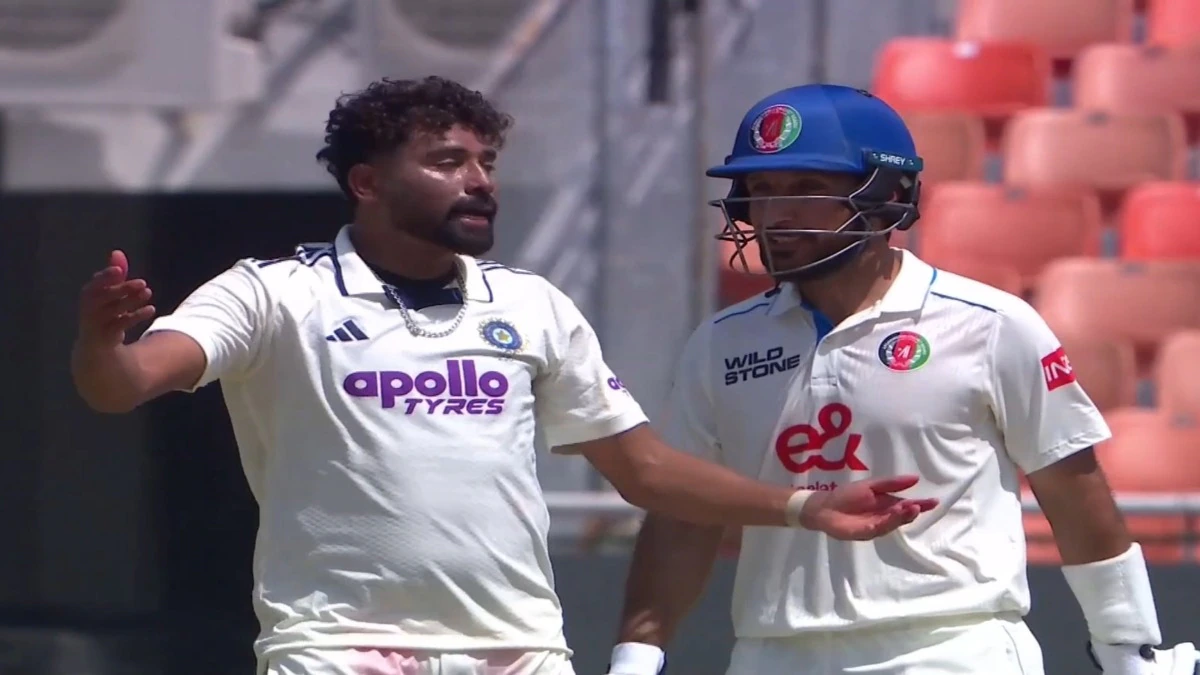
Mohammed Siraj Sparks Afghanistan’s Downfall in Test Match
On Day 3 of the one-off Test at Mullanpur, India’s pace bowler Mohammed Siraj played a pivotal role in leading to Afghanistan’s downfall on June 8.
What stood out was that Siraj’s major impact came off the field rather than just with his bowling.
During the 53rd over of Afghanistan’s innings, Rahmat Shah was at the crease alongside Sharafuddin Ashraf, who was struggling due to a leg injury. This left Ashraf mostly defending the deliveries without much mobility.
Noticing Ashraf’s limitation, Rahmat also seemed to slow down, opting to protect his wicket and waiting for India’s bowlers to tire. This defensive strategy frustrated Siraj. Known for his fiery nature, he approached Rahmat and urged him to be more aggressive at the crease rather than simply blocking balls.
Siraj’s annoyance was clear just a ball earlier when he fielded a defensive shot from Rahmat and aggressively threw the ball back at the stumps, despite Rahmat being safely within his crease. Shortly after, Siraj and Rahmat exchanged words, with Siraj challenging him to take risks and play more actively.
This exchange seemed to change the game’s dynamics. Just two overs later, India struck gold. Ashraf tried to play a more adventurous shot but ended up edging the ball to wicketkeeper Rishabh Pant, who made a sharp catch.
Following Ashraf’s dismissal at 142 runs, Afghanistan’s resistance quickly crumbled, losing three more wickets in the next four overs and ultimately getting bowled out for only 152 runs. Rahmat, who was the only player from Afghanistan to score a half-century in the innings, fell to debutant spinner Manav Suthar, who impressed with a five-wicket haul in his first Test match.
Whether by design or coincidence, Siraj’s motivational words injected urgency into what was becoming a stagnant game and contributed to Afghanistan’s downfall, allowing India to take the upper hand.
With a lead of 412 runs after Afghanistan’s first innings, India immediately enforced the follow-on and managed to dismiss five batters for just 98 runs by the tea break. The last wicket to fall before tea on Day 3 was that of Sediqullah Atal, who had been batting solidly.
This day marked a significant shift in the match, putting India firmly in control.
