
PatenSee Teams Up with Henry Ford Health for Innovative Dialysis Imaging
An exciting collaboration is underway between the Israeli startup PatenSee and Henry Ford Health in Michigan. PatenSee is working on a new non-contact imaging system designed to improve the care of dialysis patients, focusing on their comfort and safety.
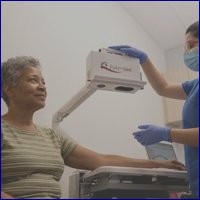
This early-stage company has created an advanced imaging device that allows doctors to check vascular access—the point on the arm where dialysis is performed—without any physical contact. This technology is currently being tested in clinical settings through a partnership with Henry Ford Health.
The partnership is part of a program called the Henry Ford Health and MSU Innovation Hub, which aims to help emerging healthcare companies as they validate their products for commercial use. PatenSee is one of the first companies to join this initiative and plans to set up its U.S. headquarters in Michigan, aiming for a market launch by early 2027.
PatenSee was founded to tackle a significant issue in kidney care—better monitoring and management of vascular access for patients undergoing dialysis. For the many Americans who rely on this treatment, keeping their access points healthy is crucial. Neglected access points can lead to serious health issues. Eileen Ke, PatenSee’s U.S. interim president, explains, “When vascular access is ignored, patients face severe complications, which can lead to hospital stays or further surgeries.”
The need for routine monitoring is critical, but many dialysis clinics struggle with insufficient staff and tools. PatenSee’s technology is designed to fill this gap.
Innovative Monitoring Solution
PatenSee’s imaging system conducts a quick scan of the patient’s arm, lasting just one to two minutes. It uses artificial intelligence to analyze the results in real-time and can identify potential problems up to two months in advance.
“Our goal is to implement a tool in the dialysis clinic that any care technician can use easily during a patient’s visit,” Ke says.
Currently, PatenSee is undergoing clinical validation with Henry Ford Health and other institutions and is set to seek FDA approval for its system later this year. Since dialysis patients are especially prone to infections, PatenSee has ensured that the system is completely non-contact. This eliminates the risk of spreading infections during routine checks, while allowing for a comprehensive view of a patient’s vascular health.
Moreover, digitizing the monitoring process enables medical professionals to track health trends over time. “This system can provide insights into how certain metrics change, leading to better predictions of complications among patients,” Ke adds.
PatenSee’s technology is said to be as effective as having 200 stethoscopes assessing the vascular health of a single patient simultaneously.
Strengthening Ties Between Michigan and Israel
PatenSee’s development has received support from various investors and international partnerships. Last year, the company raised $2 million in seed funding led by Michigan Rise, with contributions from Spark Capital and others. Assistance has also come from the Michigan Israel Business Accelerator (MIBA), aiming to foster economic and innovative cooperation between Michigan and Israel.
Bernard Bourgeois, managing director at MIBA, expressed pride in helping PatenSee connect with local health systems and investors, facilitating their decision to establish their U.S. base in Detroit. He believes that PatenSee exemplifies a company that combines strong leadership with innovative technology that meets real medical needs.
As PatenSee approaches regulatory approval and market entry, it symbolizes the growing collaboration between Israeli innovation and Michigan’s healthcare landscape, potentially enhancing patient care locally and beyond. “Their efforts to improve monitoring for dialysis patients could have a significant impact,” Bourgeois concludes.
