
Odys Aviation Takes a Different Route in Advanced Air Mobility
Salt Lake City, Utah — May 20, 2026
In anticipation of the upcoming Project Alta Summit on May 26–27 at the Ken Garff University Club at Rice-Eccles Stadium, nearly 200 companies in the advanced air mobility (AAM) industry are gearing up for discussions on the future of this groundbreaking sector. The event, organized by 47G, will bring together manufacturers, regulators, and policymakers, marking an important moment in the industry’s evolution.
While many in the AAM space are focusing heavily on electric-powered aircraft, Odys Aviation is taking a unique approach with their hybrid propulsion technology. Bob Ellithorpe, the Senior Vice President of Operations at Odys Aviation, recently shared insights about their strategy.
“We’re not waiting for major breakthroughs in electric battery technology like some other companies,” Ellithorpe stated. “Our hybrid technology is reliable and can deliver what our customers need right now.”
This reflects a shift in a landscape buzzing with excitement for all-electric vertical takeoff and landing (eVTOL) aircraft. However, as some of the industry’s frontrunners face challenges around certification and real-world usage, Odys Aviation’s hybrid method is appearing increasingly practical.
Two in One: A Smart Strategy
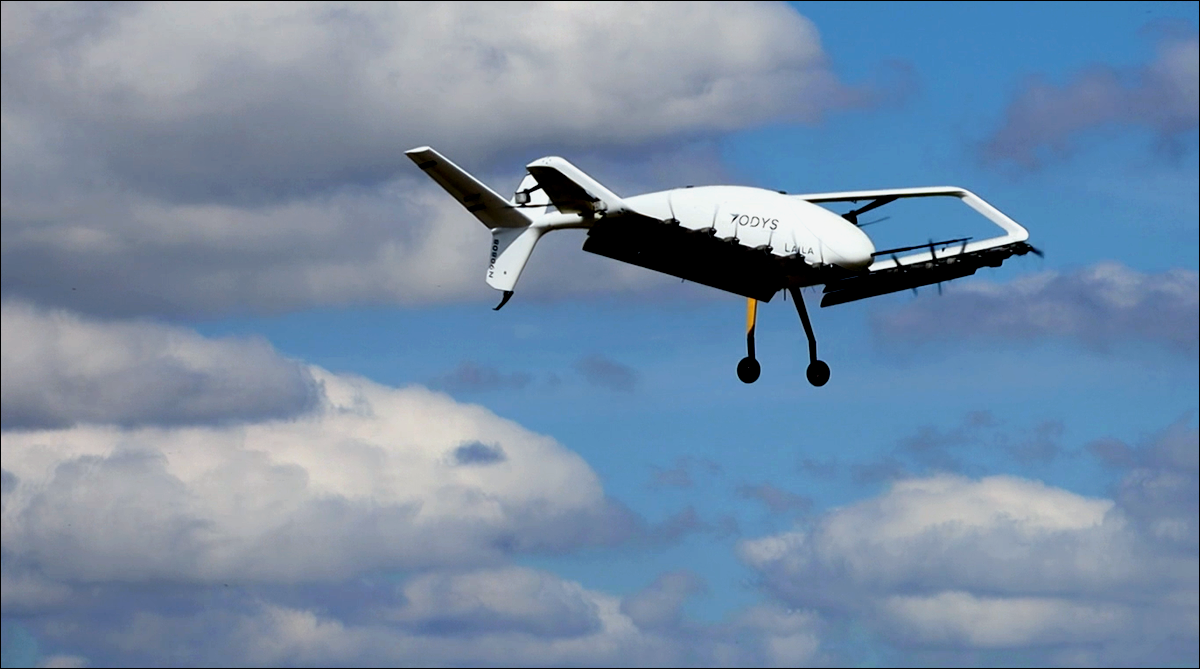
Odys Aviation, based in Long Beach, California, is developing a versatile VTOL aircraft designed for both cargo and passenger transport, in both civilian and military sectors. Their first aircraft will be an unmanned cargo vehicle, which boasts a wingspan of 14 to 15 feet, allowing it to carry approximately 130 pounds over distances of up to 450 miles. Following that, they plan to introduce a piloted aircraft for up to nine passengers, capable of flying between 750 to 1,000 miles.
This two-step rollout strategy is strategic. The unmanned cargo aircraft will seek certification through a regulatory framework already in place, allowing it to operate in over 50 countries upon approval later this year. Ellithorpe noted, “Using existing rules minimizes risk and increases our chances of success.”
The following passenger aircraft will pursue more traditional certification paths, but because both share the same hybrid technology, data from the unmanned aircraft will help streamline the certification process for the manned version.
The Benefits of Hybrid
At the core of Odys Aviation’s differentiation is their hybrid propulsion system, which powers electric motors using a turbine-based setup, avoiding the need for solely battery storage. According to Ellithorpe, this gives hybrid systems distinct advantages in range, endurance, and payload capacity.
“Simplicity often leads to better maintenance and performance,” he mentioned, emphasizing that their design is less prone to mechanical issues. Additionally, the hybrid system generates onboard electrical power, making it helpful for transporting sensitive medical cargo that needs power during flight.
Flexibility Without Limits
One downside of all-electric VTOL aircraft is their reliance on charging stations, which are not widely available yet. In contrast, Odys Aviation’s hybrid aircraft can operate from existing airfields, heliports, or even unpaved locations. This opens doors for uses such as border patrol or remote inspections—areas where traditional electric aircraft may struggle.
Looking Ahead
Ellithorpe is also aware of the challenges that lie ahead for the AAM industry as a whole, especially the complexities of scaling production. He highlighted that in 2025, around 925 civil helicopters were produced, while a single AAM company could surpass that number.
“Meeting production targets is a challenge for all of us,” he stated, emphasizing the need for advancements in electric motor reliability as they push toward higher production volumes.
Utah’s Unique Ecosystem
As Ellithorpe prepares to attend the Project Alta Summit, he appreciates Utah’s collaborative way of working within the AAM sector. “What’s happening here is quite rare,” he shared, noting the collaboration among state resources and local authorities. Projects like the FAA’s eVTOL integration pilot program exemplify this.
Odys Aviation is also in the process of selecting a factory location in the U.S., with Utah on the short list due to its promising AAM ambitions and upcoming events like the 2034 Winter Olympics.
A Grounded Path in a Buzzing Industry
In an industry filled with lofty visions, Odys Aviation stands out for its practical approach to achieving results with current technologies. With certification for their unmanned cargo aircraft expected soon and increasing interest from customers, the company is prepared to play a key role in shifting AAM from concept to reality.
For Bob Ellithorpe and Odys Aviation, the focus remains clear: delivering on promises while navigating a rapidly changing landscape.
