
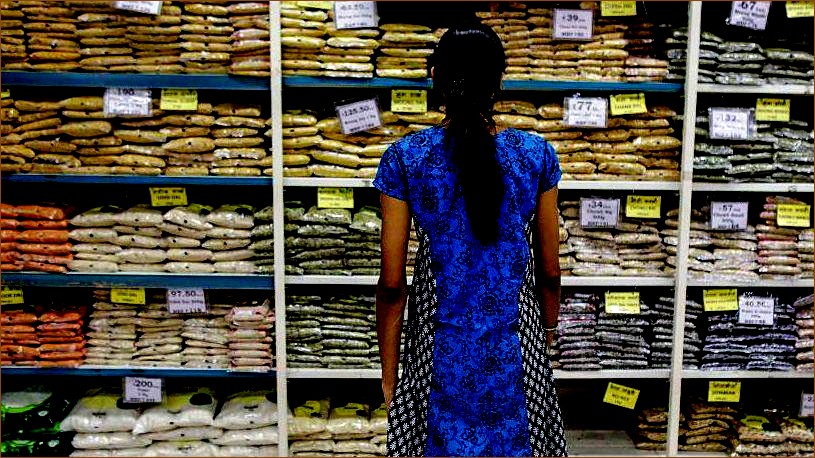
In her kitchen in Delhi, Nirmal Rao, 55, carefully places a tray of boiled turmeric under the warm afternoon sun to dry. Next to it, she grinds yesterday’s batch in a mixer, producing a fine, golden powder. Not long ago, Rao never imagined dedicating her evenings to grinding spices at home.
“We shouldn’t have to do this,” she says as she fills a jar with the turmeric. “But you can’t trust what’s sold in stores anymore.”
Rao’s concerns are echoed by many across Indian cities, where numerous middle-class families are transforming their kitchens into mini food-processing hubs. They’re grinding spices by hand and making their own cottage cheese, opting to buy grains straight from farmers. This shift stems more from distrust of market products than nostalgia.
Recent government reports reveal troubling statistics: between 2022 and 2025, one in six food samples tested failed to meet safety standards, leading to the cancellation of over 1,100 food business licenses.
Experts attribute these failures to various issues, ranging from poor hygiene to contamination and labeling mistakes. In a recent incident, food safety officials in Hyderabad confiscated over 3,000 kg of adulterated tea powder mixed with synthetic colors and expired ingredients.
Food adulteration is not a new problem in India, but the struggle to keep up with a vast informal food market, combined with social media spreading food safety fears, has heightened distrust among consumers. A few decades ago, adulteration might have involved diluted milk or pebbles in grain. Now, raids reveal milk laced with detergent and spices containing artificial dyes.
India has regulations aimed at addressing these issues. The Food Safety and Standards Authority of India (FSSAI), established by law in 2006, oversees food processing, storage, transport, and sales. According to former FSSAI chief Pawan Agarwal, “It boasts some of the most modern food safety regulations in the world.”
However, in reality, much regulatory action happens only after something goes wrong. While larger companies perform tests on their products, many in the food sector do not follow this practice, testing products only after complaints arise. By then, unsafe foods may have already been distributed widely.
The challenge is exacerbated by loose products like flour and spices, sold in small quantities without proper branding. Countless unregulated vendors make tracing unsafe products nearly impossible.
Furthermore, the food testing system has its flaws. Businesses are only required to send samples for testing every six to twelve months—an interval that is often manipulated to ensure compliant batches are tested while ignoring others that may be unsafe.
Enforcement is also a major hurdle. In Maharashtra, for example, fewer than 500 food safety officers are responsible for thousands of registered businesses, along with numerous informal ones. This limitation makes it difficult for authorities to monitor compliance effectively.
Experts note that other countries, like Italy and the UK, can trace and recall products swiftly through well-documented supply chains. In India, tracking a contaminated batch can take weeks, if it even happens at all.
This issue has gained attention at high levels, with India’s National Human Rights Commission discussing food safety concerns and warning that contaminated products can spread quickly before authorities can respond.
For many, the simplest solution is to pay more for trusted food sources. Tiash De, 29, from Mumbai, acknowledges that her fear of low-quality products has led her to choose more expensive, well-known brands. She even pays a premium for a milk delivery service, believing it offers peace of mind.
Doctors warn that the risks often lie not in immediate illness from contaminated food, but in the long-term effects of consuming substandard ingredients. Concerns regarding food safety are rising, driven largely by information circulating online rather than an actual increase in incidents of food adulteration.
Food safety expert Pawan Agarwal notes that “We’re sensitive about what we eat. Any news about it quickly grabs our attention.” He believes real change will come from consumers demanding safer food, pushing businesses to respond.
He also highlights that the FSSAI regularly provides tips for detecting food adulteration at home, a practice uncommon in other countries. “There needs to be a sense of responsibility from manufacturers to consumers,” adds Saurabh Arora from Auriga Research.
In Rao’s kitchen, jars of homemade spices have taken the place of store-bought packets. Though she admits the process takes time and may not be practical for busy families, she wonders, “If we can’t trust even basic food, what are ordinary people supposed to do?”
