
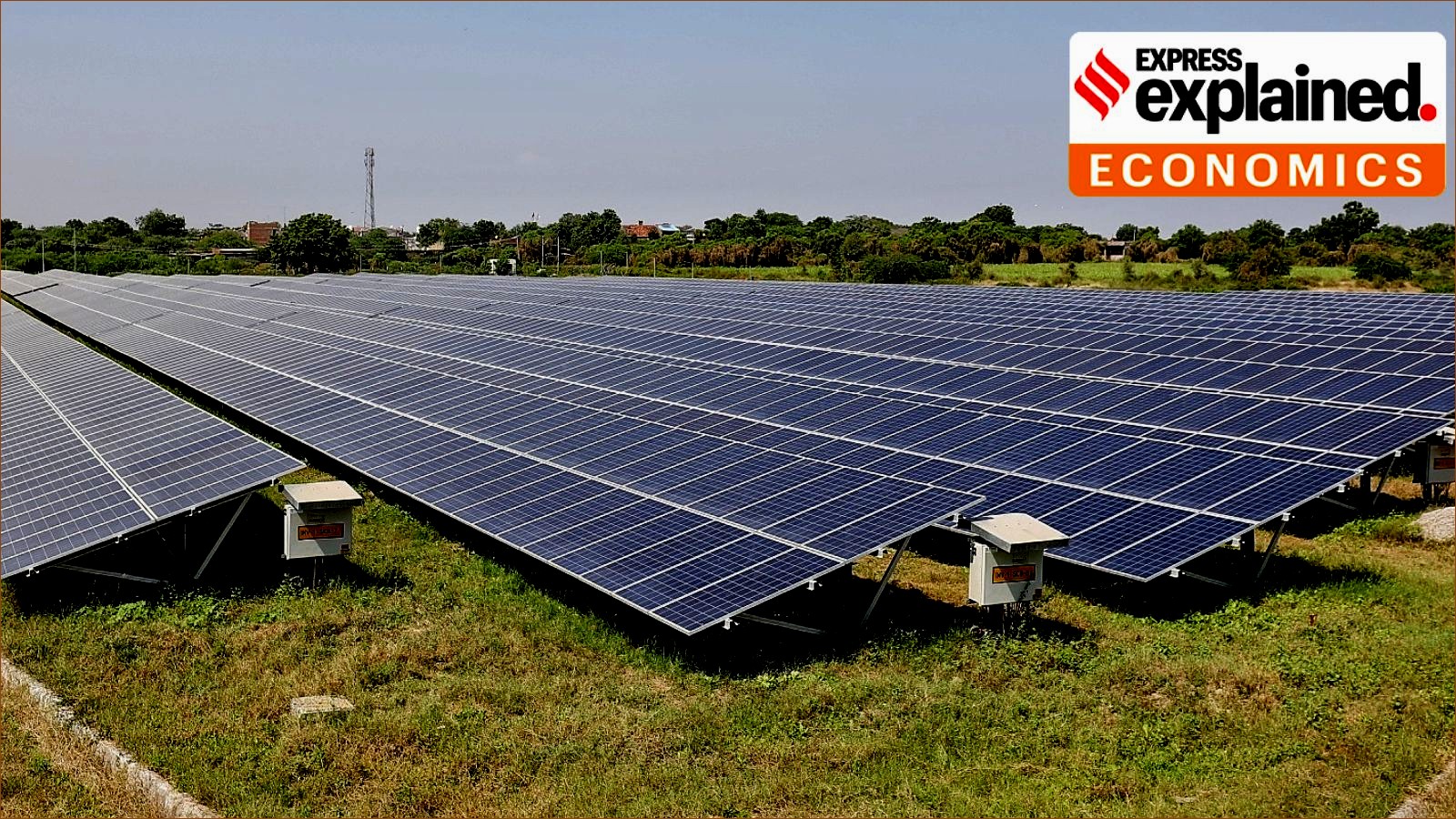
In April, India’s electricity usage reached a record high, driven by an early summer heatwave. During this period, an average of 23 gigawatt-hours (GWh) of solar power was curtailed each day, which could have powered one-fourth of Delhi for a full day.
Curtailment occurs when grid operators ask renewable energy facilities to cut back their production to ensure the stability of the power system. This results in a significant waste of clean energy, particularly at a time when India is trying hard to transition to greener energy sources.
Data from Grid Controller of India (Grid India) revealed that solar energy curtailment in April surged by 74% compared to the total curtailed power in January, February, and March, indicating increasing stress on the power grid even as daytime electricity demand climbed.
Specifically, around 693.81 GWh of solar power was curtailed in April, significantly more than the 399.34 GWh curtailed in the first three months of the year. A prior report by global energy group Ember highlighted that from late May to December 2025, 2,300 GWh of solar power would likely be curtailed due to a system mechanism known as Emergency Tertiary Reserves Ancillary Services (TRAS), with 900 GWh expected to be cut back in October alone.
Interestingly, these curtailments happened despite there being no reported shortages during peak daytime hours. This points to the crucial role that solar energy plays in meeting demand during the day, while also underscoring the excess generation that went unused.
The disparity in energy supply was noted in power markets too. In April, spot prices on the Indian Energy Exchange surged to the maximum limit of Rs 10 per unit during the night hours, but plummeted to around Rs 1.5 per unit during the daytime. This illustrates the growing gap between the plentiful supply of solar energy during the day and the increased demand during the evening.
### Reasons for Curtailment
Solar energy plants, while classified as “must-run” sources in India, can still be asked to reduce output for reasons related to grid safety and security. One of the protocols used is Emergency TRAS, which allows the National Load Dispatch Centre (NLDC) to instruct renewable energy projects connected to the inter-state transmission system to lower generation during emergencies. This is the third layer of control on the grid and is activated when further steps are needed to prevent instability.
Renewable energy plants can quickly decrease their output, making them often the first choice for such down-regulation. Unlike other curtailment methods, plants impacted by Emergency TRAS receive financial compensation for their reduced generation.
Data from Grid India also indicates that curtailment under this emergency protocol averaged 15.76 GWh per day in April. On April 5 alone, this reached 80.5 GWh, enough to meet the daily electricity requirements of hilly states like Uttarakhand and Himachal Pradesh.
### Technical Challenges
In addition to emergency protocols, significant curtailment has been observed in solar-heavy states such as Rajasthan and Gujarat due to technical issues like transmission overloads and low demand from states. In April, around 7.36 GWh of solar power was curtailed daily for technical reasons, up almost 75% compared to the combined average of 1.4 GWh in the first quarter of the year.
Much of this curtailment can be attributed to under-drawing in Gujarat. In Rajasthan, issues with overloaded transformers have also been identified as major factors resulting in reduced renewable energy production.
Officials have indicated that under-drawal often arises from sudden drops in demand, which can be triggered by unseasonal rainfall or decreased manufacturing activity. While this is usually a temporary issue, it can persist under certain conditions.
To minimize renewable energy curtailment, there’s a pressing need to improve transmission infrastructure, which the Ministry of Power and the Central Transmission Utility (CTU) are reportedly working on.
### Infrastructure Delays Affecting Generators
The slow development of transmission infrastructure has become a key issue, as it often doesn’t keep pace with the rapid growth of renewable energy projects. Industry experts note that this mismatch leads to significant curtailment.
Akshay Hiranandani, CEO of Serentica Renewables, explained that some of their projects are facing curtailment rates as high as 70%, translating to a financial loss of about 65-70%.
Under the current General Network Access (GNA) system, renewable projects connected to the inter-state transmission system that have long-term access receive firm evacuation rights. However, those that are still waiting for necessary infrastructure only receive temporary access, which offers limited scheduling flexibility. Because of transmission congestion, priority often goes to projects with long-term access, leading to increased curtailment for others.
Hiranandani emphasized that while his company has completed projects on schedule, they are still facing curtailment because the transmission infrastructure has not been developed on time. He suggested treating these projects equally to those with established long-term access.
