
Fundraiser Sheds Light on Black Maternal Health Issues in Durham
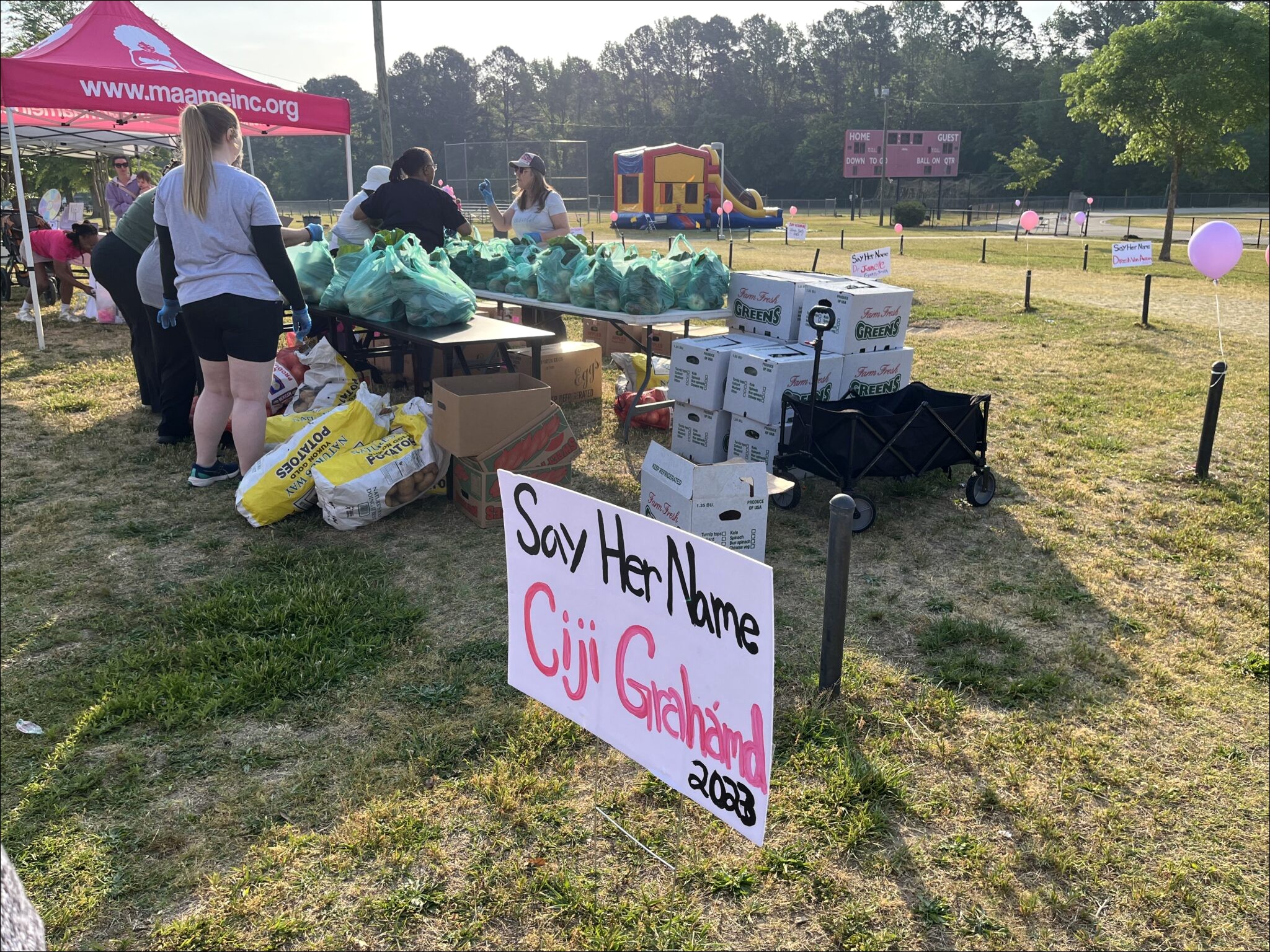
On Saturday, the track at a Durham middle school was adorned with signs commemorating Black women who lost their lives due to pregnancy-related complications. This moving display was part of a fundraiser for MAAME, a local nonprofit dedicated to providing doula services and support for mothers.
MAAME, which stands for Mobilizing African American Mothers through Empowerment, also means “mother” or “woman” in Twi, a language spoken in Ghana. The organization aims to address disparities in maternal health, particularly among Black women.
Laura Gonzalez Dutor attended the event with her partner Uriah Shaw and their newborn, Ember. They were there to collect essential baby supplies and share their personal experience. During her pregnancy, Gonzalez Dutor had the assistance of a doula, who helped alleviate her anxiety. “She gave me peace of mind because I knew there was someone there to support me and make informed choices,” she explained.
The statistics regarding maternal health in the U.S. are alarming. According to the CDC, Black women die from pregnancy-related issues at a rate three times higher than their white counterparts. In North Carolina, the maternal death rate for Black women was almost double that of white women from 2018 to 2020. A staggering 80% of these deaths were deemed preventable.
Doulas play a vital role by offering non-medical support to families before and during childbirth. Research suggests that having a doula can lead to fewer C-sections and lower risks of complications, especially for low-income mothers.
However, racial disparities and biases significantly contribute to the higher maternal death rates among Black women. Efforts to improve these conditions have encountered new setbacks. Last year, funding for maternal health studies saw cuts when the previous administration attempted to diminish diversity initiatives. These funding losses have had a direct impact on organizations like MAAME, with significant sponsorships being withdrawn. Executive Director Maya Jackson noted that these cuts forced MAAME to reduce its local services, which included subsidizing doula care for families in need.
MAAME’s outreach extends beyond Durham, as the organization collaborates with a UNC study focused on closing the gap in maternal death rates. Funding from the American Rescue Plan has provided temporary relief, allowing the organization to continue its essential work for at least another year. However, Jackson expressed concerns over the future funding landscape.
Currently, private insurance doesn’t typically cover doula services. While some North Carolina Medicaid plans offer an option for doula care, access is limited. The state has expressed intentions to include doula services in regular Medicaid maternity coverage, but concrete steps have not yet been taken.
At the fundraiser, discussions among doulas highlighted the importance of Medicaid reimbursement. Tatiana Smith, who works in both New Jersey and North Carolina, noted that New Jersey’s reimbursement rates are low and fail to account for the varying lengths of labor. She stressed the importance of doulas having a voice in decisions that affect their services.
Another doula, Melanie Patrick, criticized the disconnect between Medicaid officials and the doulas themselves. She argued that those who dictate compensation and certification should better understand the intricacies of doula work.
As conversations about maternal health continue, many hope for a future where access to doulas is accessible for all pregnant patients, recognizing the essential support they provide.
