
Trump Supports Psychedelic Drug Research for Mental Health
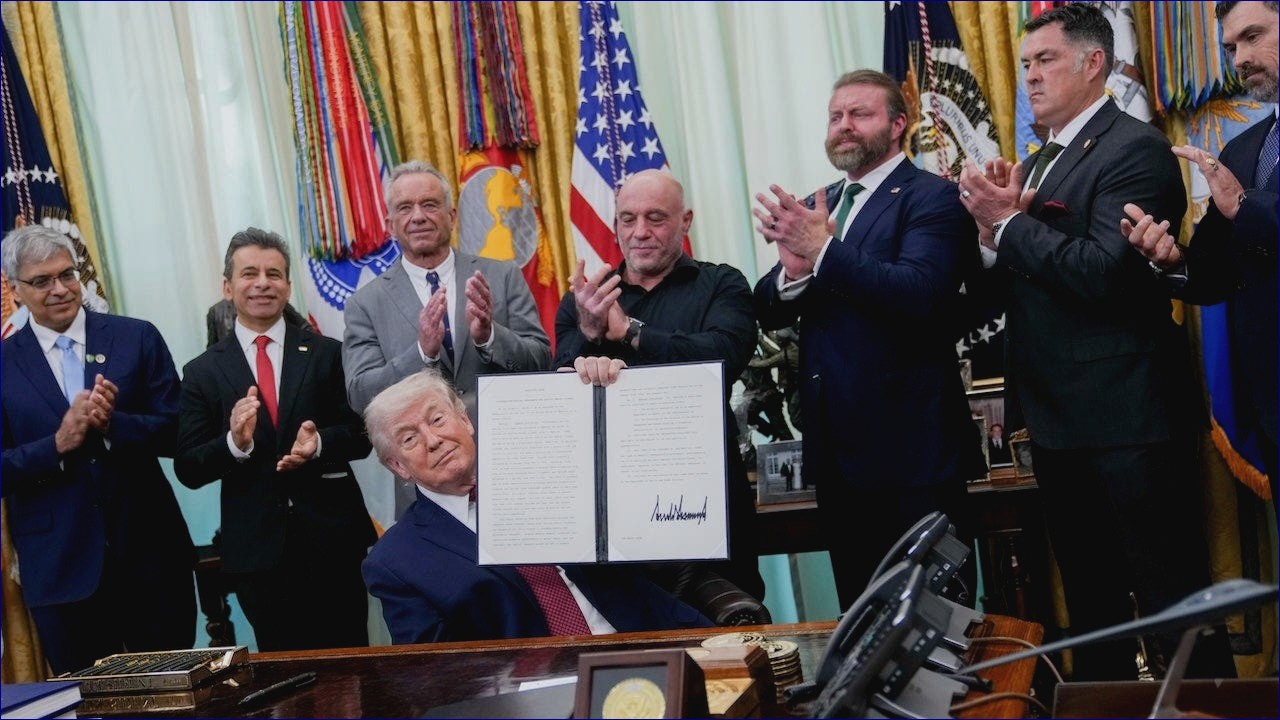
In a recent move, former President Donald Trump has expressed his support for advancing research on psychedelic drugs, aiming to enhance mental health treatments. On Friday, Trump signed an executive order designed to speed up study, funding, and potential approval by the FDA of substances like ibogaine, psilocybin, LSD, and MDMA. The focus is primarily on helping those with PTSD, depression, and addiction.
Experts note that psychedelics, which affect the brain’s serotonin system, are being cautiously researched for their mental health benefits. Reactions to Trump’s initiative have been mixed. Supporters view it as a revolutionary step for mental health care, especially for veterans. However, some critics raise concerns about the adequacy of safety data and effectiveness.
Jay Kopelman, a former Marine Corps officer and current CEO of the Mission to Live Foundation, praised the order, emphasizing its potential to help veterans struggling with treatment-resistant PTSD and depression. He stated that the Veterans Affairs Health System will now be pushed to begin research and clinical trials involving psychedelics, providing options for those not finding relief with traditional treatments.
Dr. Marc Siegel, a medical analyst, also sees promise in psychedelics for severe mental health issues, echoing the need for more research and structured funding. He explained that these drugs could positively influence brain chemistry, helping patients reduce their anxiety and change perceptions.
Despite the optimism, caution is urged. Kevin A. Sabet, head of the Foundation for Drug Policy Solutions, expressed worry that the initiative might prioritize politics over science. Sabet pointed out that while rigorous studies for treatment options are necessary, ibogaine poses serious health risks, including potential death, as it is classified as a Schedule I substance.
Emily Mercer, a Marine veteran leading a nonprofit focused on MDMA-assisted therapy for PTSD, welcomes the executive order but acknowledges significant risks. She emphasizes that these treatments should only be administered in controlled settings by trained professionals.
Both experts and veterans agree that ongoing research is crucial for determining who can safely benefit from psychedelic therapies. They stress the importance of medical supervision and thorough post-treatment care for effective healing.
In terms of the future, while Trump’s order aims to push for faster approval processes, further steps, including clinical trials and regulatory compliance, are still necessary. Mercer highlighted that without proper infrastructure to ensure safe delivery and reimbursements for these treatments, veterans and other individuals in need may still face long waits for help.
In conclusion, while there is eagerness surrounding this new direction in mental health care, experts point out the necessity of proceeding carefully to maximize benefits and minimize risks. As Kopelman aptly noted, “Psychedelics are not a cure-all, but they open the door to healing.”
