
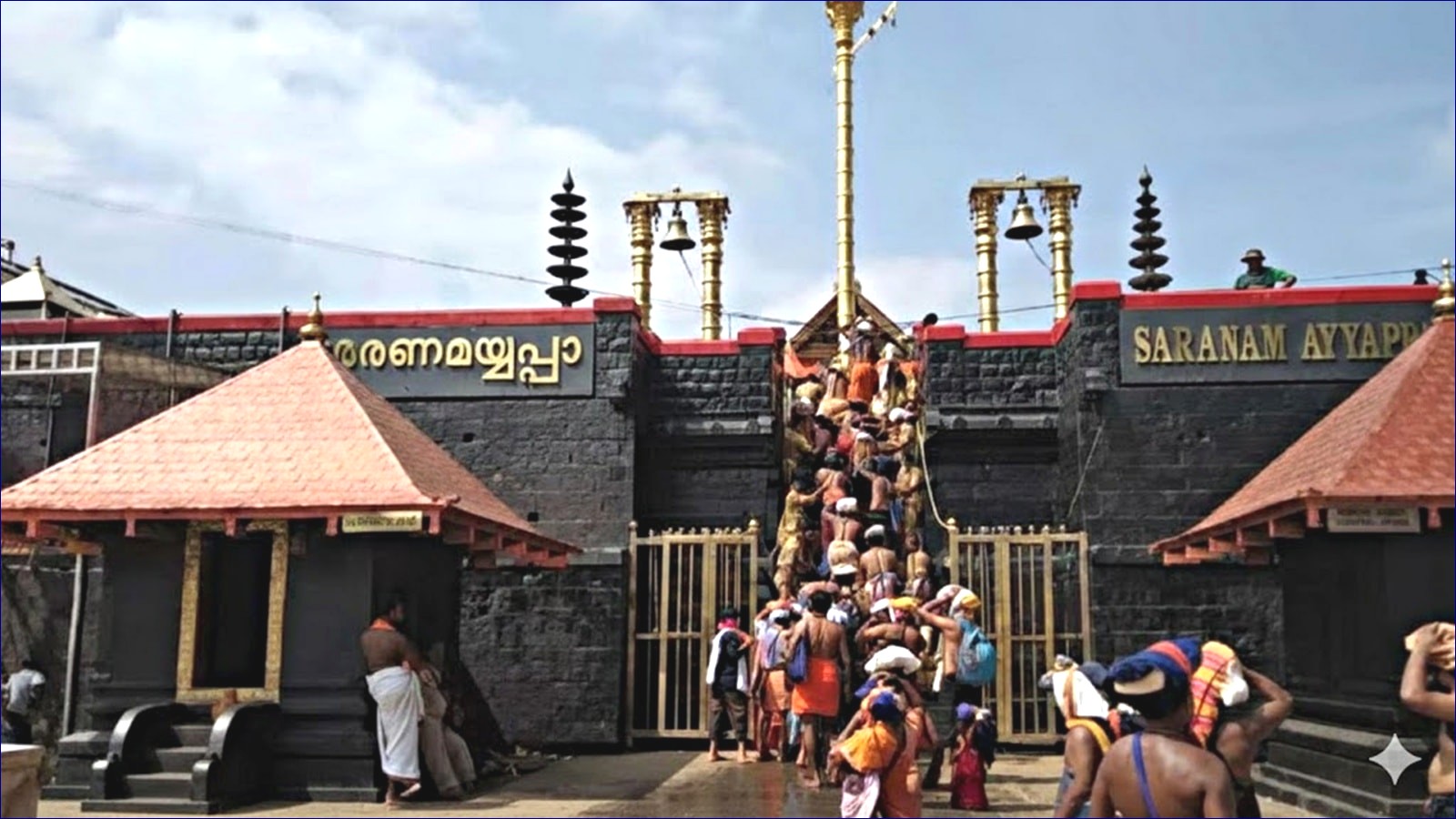
The ongoing hearings in the Supreme Court regarding the Sabarimala temple have exposed some divisions within the ruling BJP. Central to the debate is the issue of whether temples should be completely freed from government control, a topic that resonates deeply with the party’s supporters.
During the proceedings, the BJP-led government expressed hesitance to relinquish control over temples to the public. This stance has drawn criticism from various Hindu organizations, including the Kerala Kshetra Samrakshana Samithi, which is influenced by the RSS.
A nine-judge bench, led by Chief Justice Surya Kant, is looking into seven constitutional questions stemming from appeals related to a 2018 Supreme Court ruling. This ruling had removed restrictions on women’s entry to the Sabarimala shrine, raising many legal and religious questions.
One significant issue being discussed is the balance between individual rights under Article 25 and the rights of religious groups under Article 26 of the Constitution. Article 26 allows religious groups to manage their own affairs, while Article 25 permits the state to regulate certain secular activities connected to religious practices.
Hindu groups argue that some state governments have misused Article 25 to exert control over temples. They claim this control includes appointing priests and even dictating specific rituals, as seen in Tamil Nadu and Kerala.
The Solicitor General, Tushar Mehta, clearly stated that the appointment of priests should not be a government responsibility. He argued that only religious communities should make such appointments, emphasizing that true secularism means that the state should not interfere with religious matters.
Despite this, Mehta was careful regarding the relationship between Articles 25 and 26. He acknowledged that both rights are fundamental but suggested that Article 26 could be subject to restrictions under Article 25 in certain legal contexts, highlighting the complexity of the issue.
Contrasting Mehta’s view, Senior Advocate C.S. Vaidyanathan, representing various Hindu organizations, asserted that Article 26 should take precedence. He argued that restrictions on this right should only come if they relate to public order or morality, insisting that Article 25 is limited in scope.
Vaidyanathan emphasized that the rights guaranteed under Article 26 are fundamental and should not be overshadowed by the state’s regulatory powers mentioned in Article 25. He pointed out the importance of safeguarding the collective rights of religious communities.
Some justices expressed concerns about misinterpretations of these rights. Justice Kumar noted that if Article 26 was treated as independent of Article 25, it could lead to exclusionary practices regarding temple access. Similarly, Justice Nagarathna highlighted the necessity for inclusivity in temples, stressing that keeping certain groups out does not align with the values of Hinduism.
The discussions have brought to light the delicate balance between government authority and religious freedom, a topic that will continue to resonate in the legal and societal landscape.
