
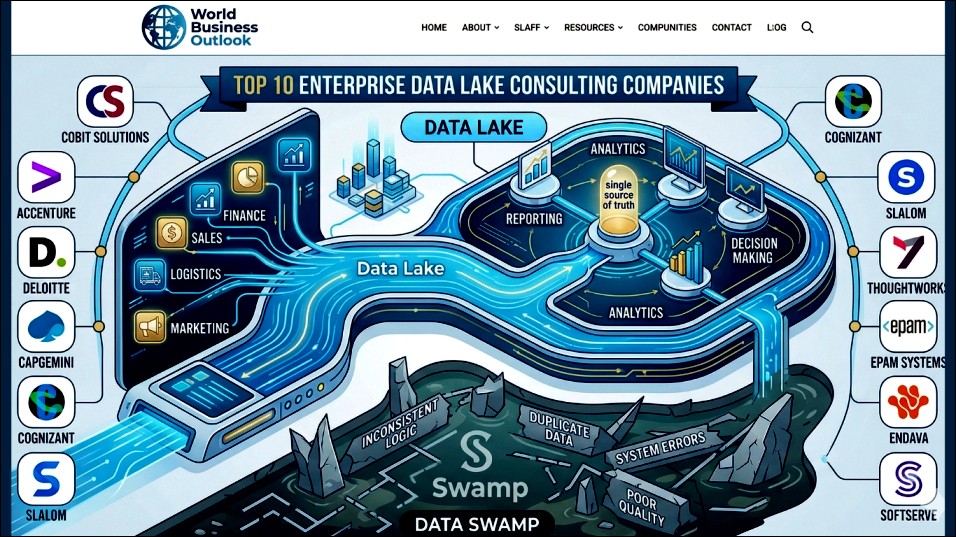
Streamlining Business Reports: The Importance of Data Lakes
How much time does your business spend preparing accurate reports? According to estimates from IBM, poor data quality can cost U.S. businesses around $3.1 trillion every year. A big part of this loss comes from fragmented systems and reporting mistakes. For managers, the solution is clear: bring all data together in one place. This can be achieved through a Data Lake—a storage system where data from finance, sales, logistics, and marketing can all live harmoniously.
However, simply stacking data isn’t enough. The way data is structured, its logic, and quality can be inconsistent, leading to a chaotic mess, often referred to as a “data swamp.” To prevent this, it’s crucial to organize the environment properly before initiating the data lake. Consulting services focused on enterprise data lakes can help establish an effective model from the start.
Why You Need the Right Consulting Partner
At the beginning of a project, everything might seem promising. But once the system is live, issues often crop up such as inconsistent data and varying calculation methods. This usually comes down to a lack of a coherent data management model, resulting in a disorganized collection of information.
Choosing the right consulting team is vital. Companies that can build data lakes without creating a “data swamp” not only focus on technology but also pay attention to data logic and structure. They ensure that data quality is monitored at every stage, leading to a manageable system that doesn’t require constant fixes after launch.
How We Chose These 10 Companies
To create our list of top consulting firms for data lake projects, we looked at how each company designs and builds data lakes. We focused on their methods for handling complex environments, evaluating specifics like architecture, integration, and quality control. Here’s what we considered:
- Real-world experience with Data Lake projects: We checked if they had successfully implemented solutions involving large data sets and complex processing.
- Complex integrations: We evaluated how they combine different systems like ERP and CRM without losing data integrity.
- Architectural approach: We looked at whether they design effective data models and rules instead of just configuring existing tools.
- Data quality control: We ensured they have checks for data accuracy built into their systems.
- Post-launch performance: We assessed how well the system performs under real workloads.
- Adaptability: We verified their flexibility in working with various platforms.
Top 10 Data Lake Consulting Companies
1. Cobit Solutions
Cobit Solutions specializes in creating data lakes for organizations that need to manage multiple data sources. They focus on integrating systems like ERP and CRM to prevent inconsistencies.
2. Accenture
Accenture helps large companies consolidate numerous data sources, ensuring that analytics are consistent across the board.
3. Deloitte
Deloitte is known for its expertise in data governance, crucial for large organizations needing control and compliance in their data lakes.
4. Capgemini
Capgemini works primarily in environments where existing IT systems are complex, ensuring that any new changes won’t disrupt operations or financial reporting.
5. Cognizant
Cognizant focuses on integrating older systems with modern data platforms, ensuring that business processes run smoothly amidst the transition.
6. Slalom
Slalom is often chosen for its ability to quickly adapt data platforms to meet urgent business needs without lengthy approvals.
7. Thoughtworks
Thoughtworks is recognized for its architectural and governance skills, providing a cohesive data ecosystem that integrates storage, processing, and analytics.
8. EPAM Systems
EPAM Systems excels in handling large volumes of data across various sources, ensuring consistency and reliable operations.
9. Endava
Endava specializes in building data platforms that function well in real-time environments, ensuring swift deployment and stability.
10. SoftServe
SoftServe helps businesses transition from old systems to modern data platforms, addressing the complexities of existing infrastructures.
Key Questions to Ask Before Hiring a Consultant
Before partnering with a data lake consulting firm, ask these essential questions to gauge their expertise:
- How will you design a scalable architecture for the Data Lake?
- How do you ensure data consistency across various systems?
- What is your chosen method for data processing: batch, streaming, or hybrid?
- What checks are in place to maintain data quality?
- How do you keep track of changes in data and processing logic?
- What are your strategies for handling access rights and security?
- Can you explain your integration process with other systems like ERP and CRM?
Evaluating Consulting Proposals
When considering consulting proposals, it’s vital to assess their capabilities through specific indicators:
- Integration architecture: Ensure they have a clear plan for how different systems will work together.
- Data quality: Look for controls that maintain data accuracy.
- Scalability: Check how well the system can handle growth.
- Consistency of metrics: A unified model is crucial for trust in analytics.
- Flexibility: The ability to adapt processing logic without complete overhaul is key.
- Experience with lakehouse solutions: Check if they’ve successfully combined data storage and analytics.
- Support after implementation: Find out if they guarantee stable operation without needing constant adjustments.
Choosing the right consulting partner for data lakes can make a significant difference in how smoothly your business operates. With the right approach, your data lake can enhance decision-making and provide comprehensive insights.
