
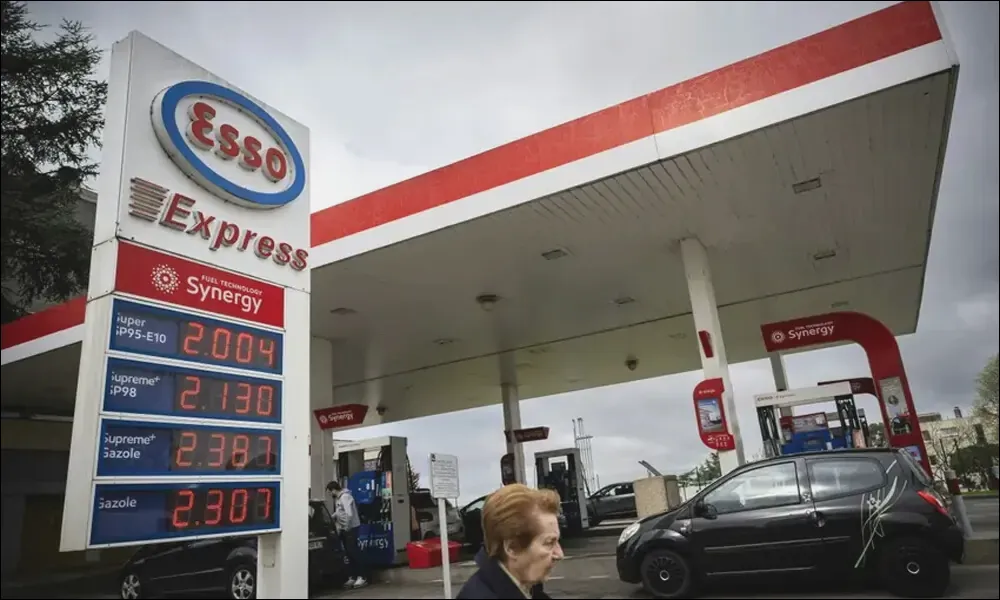
European Diesel Prices Surge Amid Ongoing Conflict
PARIS: Since the outbreak of the war in the Middle East, the price of diesel fuel in Europe has soared by over 30%. This sharp increase underscores the continent’s heavy dependence on imported energy and the continued importance of diesel in the automotive sector. With the Easter holiday approaching, many expect to see longer lines at gas stations due to heightened demand.
Before the conflict, diesel was already facing challenges, and experts predict further price hikes ahead. The situation is exacerbated as trade through the Strait of Hormuz remains disrupted, which could lead to increased inflation.
As of Thursday, the cost of diesel in Europe surpassed $200 per barrel, marking the highest level since March 2022, when Russia’s invasion of Ukraine sent shockwaves through the market.
Although electric vehicles are gaining popularity, diesel remains the dominant fuel choice for many sectors. It is essential for trucks, buses, construction machinery, and even maritime shipping. In fact, diesel made up 86% of transport fuel sales in Latvia in 2024, 73% in France, and 66% in Germany, according to FuelsEurope, a trade organization for the refining industry.
Susan Bell, a commodity market expert at Rystad Energy, noted that the international supply of diesel is much tighter compared to gasoline. Consequently, diesel prices have surged dramatically, whereas gasoline prices have remained relatively stable.
In the wake of the recent airstrikes by the U.S. and Israel on Iran, diesel prices in Britain, France, and other European nations have risen by over 30%. In contrast, regular petrol prices in France have only increased by 17%, according to government data. The Netherlands now has the highest diesel prices in Europe, exceeding $2.80 per liter, which is about 20% higher than the lowest prices found in Italy.
Historically, diesel fuel was cheaper than petrol, and governments encouraged its adoption in vehicles. However, insufficient refinery capacity and rising taxes on diesel have contributed to the current situation.
While the European Union is now a net exporter of petrol—mostly to the U.S. and Africa—it still relies heavily on diesel imports. Russia was once Europe’s main supplier of diesel, but sanctions imposed after the invasion of Ukraine have forced EU countries to seek alternatives from nations like India, Turkey, the U.S., and Saudi Arabia.
According to Rystad Energy, states in the Middle East supplied more than half of Europe’s diesel in 2025, amounting to 554,000 barrels per day out of a total of 1.06 million barrels. Approximately one-third of that traveled through the Strait of Hormuz. As Europe searches for replacements, some countries, like Slovakia, have even implemented temporary restrictions on diesel sales, while others like Ireland and Spain have reduced taxes on the fuel to help alleviate costs.
French energy giant TotalEnergies, which operates six refineries throughout Europe, stated that their facilities are running at full capacity. Despite their efforts to optimize operations, options for increasing supply are limited.
Bell emphasizes that if there were a shortage of petrol, Europe could reduce exports. However, the same flexibility does not apply to diesel. “The most practical solution would be to source diesel from Russia,” she noted, although European sanctions are likely to remain in place for the foreseeable future.
