
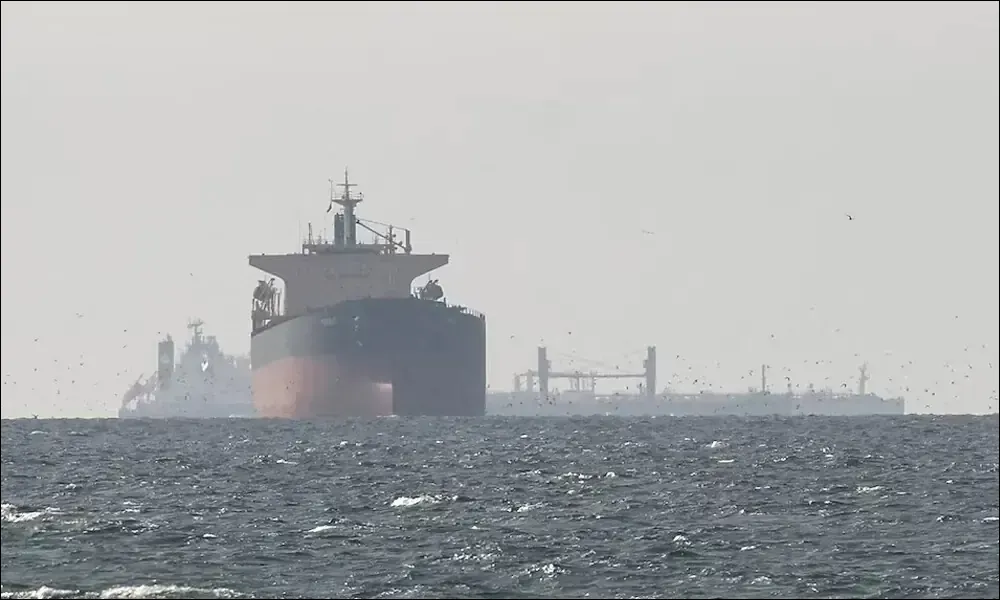
LONDON: On Thursday, three tankers, including one co-owned by a Japanese company, navigated the Strait of Hormuz by staying close to the shore of Oman. This route is quite rare, especially as Iran continues to exert control over this crucial shipping lane.
Before the recent conflict that began over a month ago, about 20% of the world’s oil and liquefied natural gas moved through the Strait. However, that number has significantly declined. Iran has been targeting ships and oil facilities in the Gulf in response to attacks from the U.S. and Israel, creating a tense situation that has led to fuel shortages and rising energy prices around the world.
The successful passage of these three tankers was significant because they followed a path near the Omani Musandam Peninsula. Maritime data revealed their movements on Friday. Since the conflict erupted, most vessels have only been using a route approved by Iran, often referred to as the “Tehran Toll Booth” by shipping journal Lloyd’s List.
Lloyd’s List noted that no other ships had been recorded using a different route through the strait in nearly three weeks. The three vessels that crossed on Thursday included two large crude carriers, the Habrut and the Dhalkut, along with an empty liquefied natural gas (LNG) tanker, which sent out signals identifying them as “OMANI SHIP” during their crossing.
The Sohar LNG tanker was particularly noteworthy as it was the first LNG ship to pass through the strait since March 1, when Iranian attacks had nearly halted crossings. This vessel, co-owned by the Japanese firm Mitsui O.S.K., is the first Japanese tanker to leave the Gulf since the onset of the conflict.
When the Sohar LNG crossed the strait on Thursday, it had been in the Gulf since February 25 and was empty at the time. All three tankers have now stopped west of Muscat, Oman, based on their transponder data.
Since March 1, there have been 240 crossings of the Strait by commodity carriers, which is a 94% drop compared to peacetime. Among these movements, 151 were oil tankers and gas carriers, most heading eastward.
Earlier on Thursday, a French-owned container ship also successfully made its way through the Strait of Hormuz, marking the first known passage by a major European shipping company since March 1.
In a related development, Iran announced plans to draft a peacetime protocol to oversee maritime traffic through the Strait of Hormuz in collaboration with Oman, according to state media reports.
