
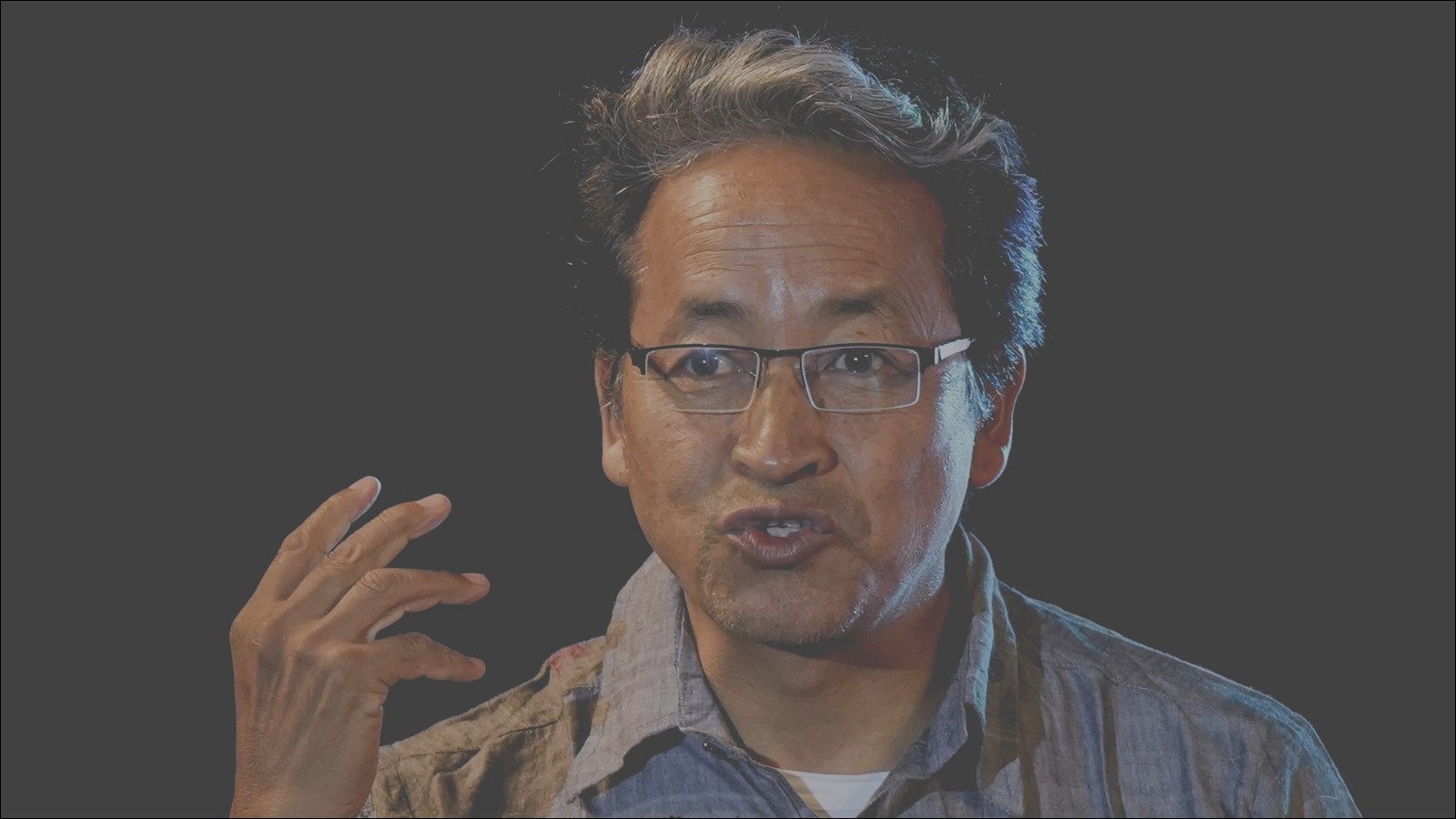
Climate Activist Sonam Wangchuk Talks Openness in Ladakh’s Political Dialogue
On Monday, climate activist and education reformer Sonam Wangchuk expressed a more conciliatory stance on political discussions regarding Ladakh. He signaled a willingness for a “give and take” approach with the central government, emphasizing the importance of a “win-win” result. This comes amidst key local groups insisting that their primary demands, such as the Sixth Schedule and statehood, are non-negotiable.
Wangchuk was recently released from jail, where he had spent several months after being arrested under the National Security Act following protests in Leh described by authorities as violent. His release followed the withdrawal of the detention order by the government.
“Our key concerns are the Sixth Schedule and statehood. If not both, then at least one. If the government seeks something, they should also grant us something in return. It shouldn’t be one-sided,” Wangchuk stated, suggesting a degree of flexibility that contrasts with the firm stance of the Apex Body Leh and the Kargil Democratic Alliance.
Wangchuk welcomed what he referred to as a recent “extending of hand” from the government aimed at fostering trust and dialogue. He expressed a desire for a resolution that benefits all parties involved. “Our struggle was for a broader victory, not just for myself. The people of Ladakh deserve a win,” he remarked, highlighting that positive discussions could lead to a better situation for everyone.
He framed this recent development as a movement toward engagement rather than conflict. “They have offered meaningful dialogue. We worked hard for this through protests and our journey from Ladakh to Delhi,” he said, noting how the community is eager for discussions rather than violence.
Wangchuk clarified that there was no deal with the government for his release. “I wouldn’t accept a deal; my fight was always for the people of Ladakh,” he asserted, indicating his readiness to be part of any committee representing Ladakh in talks with the central government.
He shared that he had been prepared for a long legal battle against his detention. “I was ready to wait for a year and then speak about the issues I faced. But now, the government’s actions have made things easier for me,” he explained, mentioning that he faced difficulties in communication while in custody, despite the supportive behavior of jail staff.
While discussing the experiences of his wife, Geetanjali Angmo, during this period, he claimed she faced challenges in getting to Delhi to file a court motion.
Looking ahead, Wangchuk expressed a desire to move beyond past grievances. “We’ve been through a lot, and I would rather focus on creating a new beginning built on trust,” he said. He emphasized that talks require compromise from both sides, and he plans to return to Ladakh to consult with community leaders about the next steps.
Wangchuk also expressed a renewed faith in the judicial system and urged the government to drop “meaningless cases” against Ladakh residents. He mentioned that even individuals attempting to donate blood were arrested during recent tensions.
Meanwhile, Geetanjali Angmo shared a vision for Ladakh to become a model of self-reliance and environmental sustainability, stating the need for collaboration with the government.
Reiterating his commitment to peaceful activism, Wangchuk noted he only resorts to hunger strikes when absolutely necessary. “I follow Gandhi’s principles, which guide my actions,” he said, emphasizing his intention to foster constructive dialogue rather than harbor resentment.
Additionally, he raised concerns about the social conditions of inmates during his time in jail. “A large percentage were from underprivileged backgrounds, which was concerning,” he observed, while also commenting positively on the treatment he received from prison staff.
Wangchuk concluded by addressing rumors related to his detention, asserting that if he truly posed a threat to the country, he wouldn’t have been released. “People in Ladakh feel hurt being labeled as anti-national,” he stated, affirming his commitment to work for the betterment of his community.
