
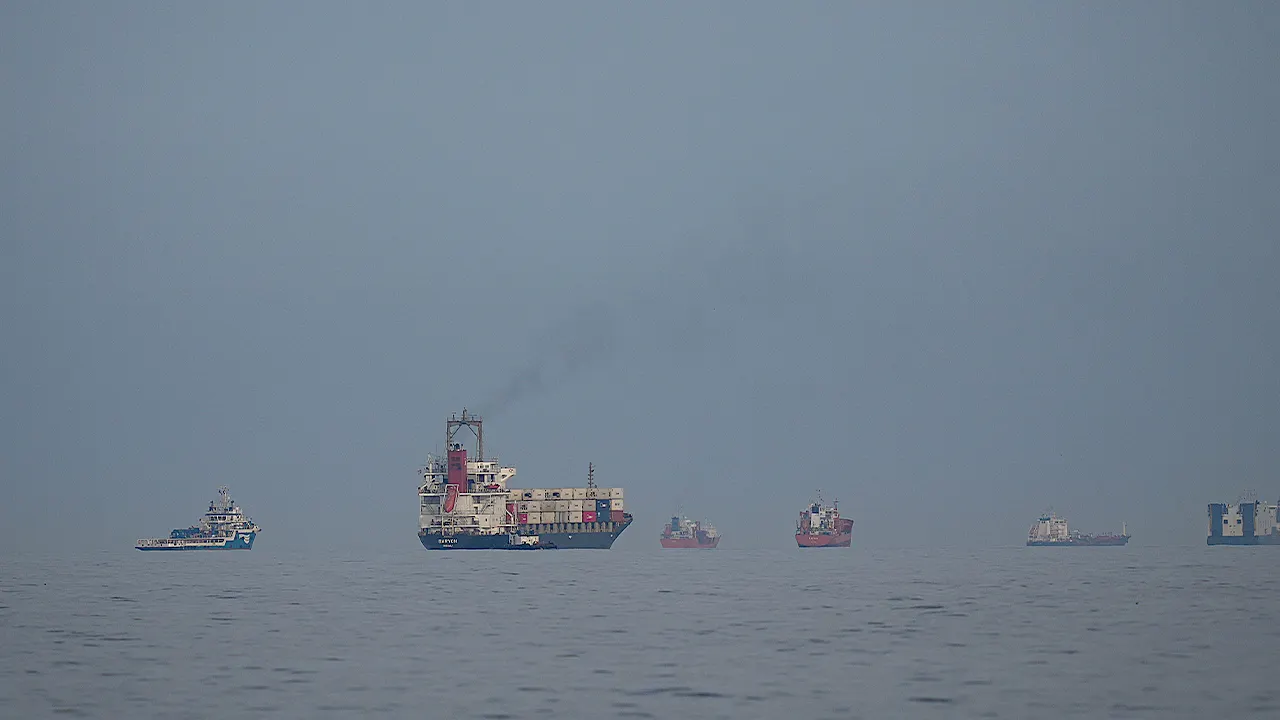
Iran’s New Naval Tactics: Explosive Drones in the Strait of Hormuz
Iran is reportedly using explosive-packed drone boats disguised as wooden fishing ships in the Strait of Hormuz, signaling a shift in maritime warfare tactics, according to defense expert Cameron Chell. This warning comes after the United Kingdom Maritime Trade Operations (UKMTO) confirmed that an oil tanker, flagged from the Marshall Islands, was hit by an Iranian unmanned surface vehicle near Muscat, Oman, on March 1.
UKMTO noted that the tanker’s crew was safely evacuated following the attack. Following this incident, two more oil tankers were targeted on March 11 by remote-controlled explosive boats as Iran ramped up its strikes against foreign vessels, coinciding with the start of the U.S. Operation Epic Fury on February 28.
Chell explained that these “suicide skiffs” present a growing threat due to their stealthy nature. He highlighted the possibility that Iran employs advanced technology like radio remote control, encrypted communication, and frequency hopping for these attacks. Locating and neutralizing such small vessels is challenging, especially when many can be deployed at once.
He pointed out, “When there are 50 boats along the shoreline, it becomes difficult to track them all, especially when they look like ordinary fishing boats.” The drones could be manually controlled or, in some cases, operate autonomously, potentially allowing a single operator to manage a swarm of 10 boats.
In recent reports, six vessels were reportedly attacked in the Gulf and Strait of Hormuz. Iran has also deployed mines, complicating traffic through this vital waterway. In response, U.S. Treasury Secretary Scott Bessent indicated that the U.S. Navy might escort merchant ships in partnership with international forces, while U.K. Defense Secretary John Healey mentioned ongoing discussions with European allies about the strategic importance of the Strait.
However, Chell raised concerns over the readiness of current defense measures. He emphasized that the sophisticated drone defense mechanisms in use might not be suited to counter these smaller boats effectively. Manned aircraft typically target larger threats, making them less efficient against dozens of smaller, explosive-laden boats.
He also noted the need for comprehensive surveillance and rapid response capability given the geography of the Strait. As Iran’s Supreme Leader Mojtaba Khamenei threatens to leverage control over the Strait against the U.S. and Israel, oil prices are already on the rise, highlighting the high stakes involved.
Chell concluded by reiterating how the geography of the Strait facilitates this type of low-cost, asymmetric warfare. The disguising of explosive boats as fishing vessels allows them to appear harmless while posing significant risks to shipping routes.
In summary, the evolving tactics in the Strait of Hormuz present new challenges for international maritime safety and may impact global oil markets.
