
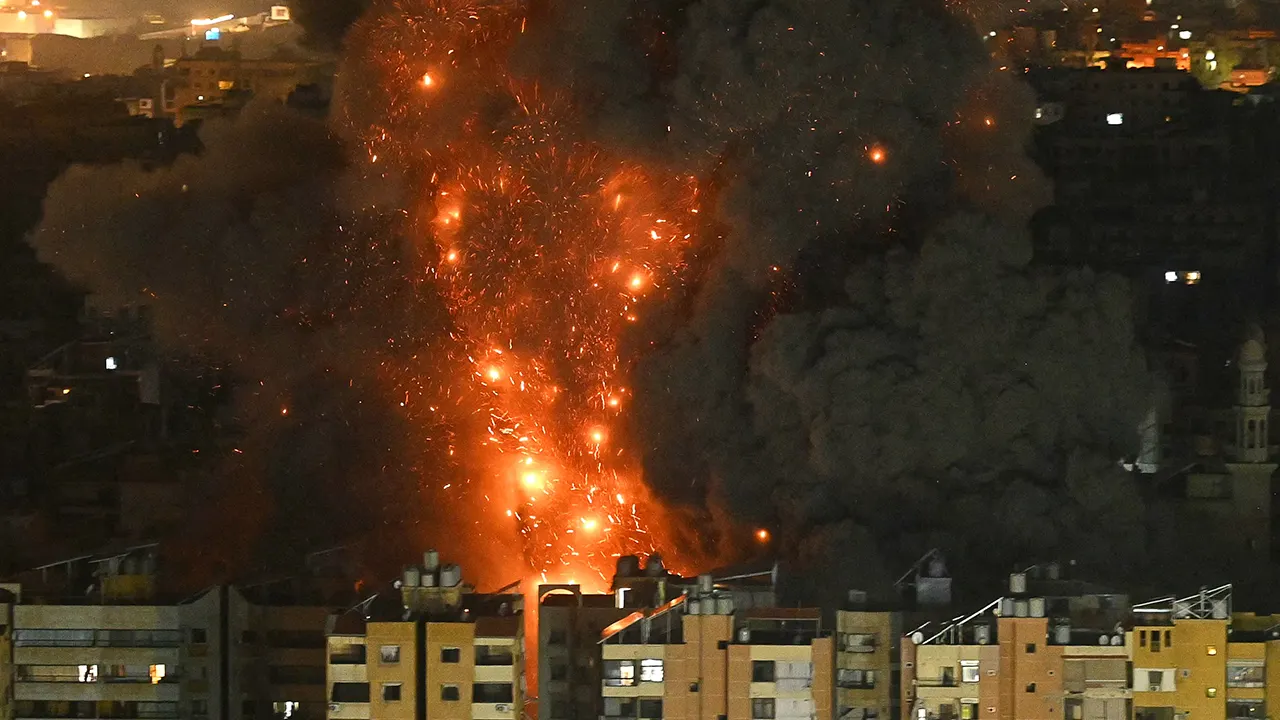
Tensions Rise Between Israel and Hezbollah Following Rocket Attacks
JERUSALEM: A significant escalation has been reported as Hezbollah, a militant group backed by Iran, launched around 200 missiles and drones into Israel overnight. This series of attacks has been characterized by Israeli media as a coordinated strike from both Hezbollah and Iran.
In response, the Israeli Defense Forces (IDF) carried out strong retaliatory actions against Hezbollah positions in the suburbs of Beirut. The IDF declared, “We are acting decisively against the Hezbollah terrorist organization due to its intentional attack on Israel, ordered by the Iranian regime. We will not allow any harm to our civilians and will respond forcefully to any threats against our state.”
Hezbollah referred to its operation as “Eaten Straw,” asserting that the group targeted Israeli military locations, including some near Tel Aviv.
Growing Concerns Over Regional Stability
Just days before this escalation, Lebanese President Joseph Aoun accused Hezbollah of pushing Lebanon toward a situation similar to Gaza. Security analysts, such as Sarit Zehavi from the Israeli Alma Research and Education Center, believe that Hezbollah’s recent actions are an attempt to intimidate Israel. “I hope our government remains resolute and does what’s necessary,” she stated.
Matthew Levitt, an expert on Hezbollah, mentioned that the name “Eaten Straw” refers to a Quranic verse about defeating enemies, suggesting serious repercussions for Israel.
Diplomatic Efforts and Challenges
Despite ongoing hostilities, the Lebanese government has expressed interest in direct talks with Israel to resolve tensions. However, an Israeli official dismissed this proposal, citing a lack of impact on Hezbollah’s actions.
Danny Danon, Israel’s Ambassador to the U.N., warned that Lebanon must either take significant measures to limit Hezbollah or face Israeli military action to dismantle the group. He stated, “There are no other options.”
Edy Cohen, an expert on Hezbollah, characterized the Lebanese government’s overture as mere political performance, referencing failed past agreements to disarm Hezbollah post-2006 conflict.
During a U.N. Security Council meeting, Lebanon’s Ambassador Ahmad Arafa emphasized the desire for peace among the Lebanese people and the government’s commitment to asserting control over the state. He claimed, “Our modern history shows that no government has demonstrated this level of courage to reclaim authority and limit arms to legitimate state institutions.”
As tensions intensify, Israeli officials are warning that Hezbollah’s increasing aggression could turn parts of Beirut into a war zone similar to Gaza.
