
Europe is making strides towards energy independence and achieving its net-zero emissions goals. However, it still lacks a scalable, local solution for reliable clean energy. Fusion energy, often termed the “holy grail” of energy, hasn’t yet proven that it can generate more energy than it consumes. While companies in the US and Asia have attracted billions for fusion projects last year, Europe is lagging, primarily due to delays with ITER and fragmented national investments.
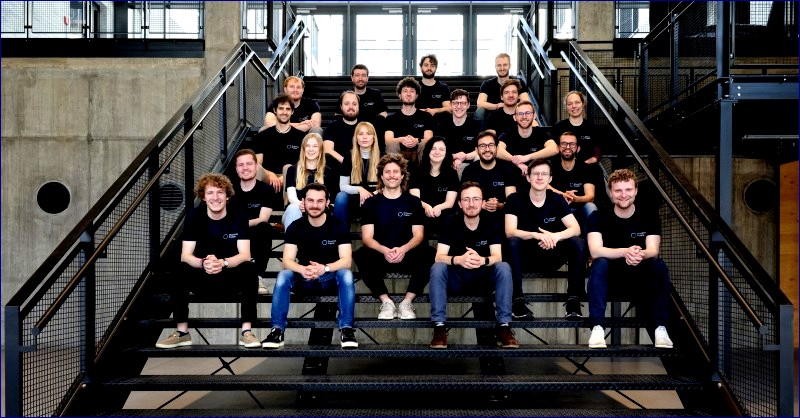
Enter Proxima Fusion, a start-up based in Munich that aims to change the game. Established in 2023 from the Max Planck Institute for Plasma Physics (IPP), Proxima has secured €400 million from Bavaria, part of a larger €2 billion initiative to construct a cutting-edge stellarator test facility near Munich.
This week, Proxima finalized a deal with RWE and IPP, with each party committing 20% of the funding. All eyes are now on Berlin, which is expected to announce the remaining €1.2 billion in federal funding later this year.
Proxima’s plans kick off with a demonstration reactor named Alpha, located in Garching. This reactor aims to be the first stellarator globally to achieve net energy gain by the early 2030s. If successful, it could lead to the creation of Stellaris, the first commercial fusion plant at RWE’s former nuclear power station in Gundremmingen.
Transforming Years of Research into Effective Clean Energy
Proxima Fusion was co-founded by Francesco Sciortino, Lucio Milanese, Jorrit Lion, Martin Kubie, and Jonathan Schilling, who are all part of IPP’s top fusion research team. Their goal is to turn decades of public research into a practical solution for sustainable energy.
Utilizing advancements from IPP’s Wendelstein 7-X, Proxima is developing a design that employs high-temperature superconductors and simulation-driven engineering to enhance efficiency and scalability. Their QI-HTS stellarator aims to reduce maintenance downtime and maintain plasma stability, a significant hurdle for fusion technology.
Unlike many global competitors that use tokamak reactors, Proxima is focusing on stellarator technology. This sophisticated magnetic configuration helps keep plasma stable without the disruptions that often affect tokamak reactors.
In partnership with Germany’s plasma research community and the new industrial consortium called the Alpha Alliance, Proxima plans to collaborate with over 30 global partners, including Siemens Energy, Air Liquide, Thales, Eni, and RWE. The Alliance aims to streamline fusion manufacturing by coordinating supply chains, component production, and assembly processes across Europe.
“This MoU is a crucial step in firmly positioning the European fusion industry on the global map. It signifies the beginning of an industrial ecosystem that brings together both existing and new expertise in Europe, fostering local value creation. This marks the start of a long-term growth journey that could open new export opportunities for Germany and Europe,” said Sciortino.
Looking Ahead
Proxima’s Alpha reactor is expected to go into operation in the early 2030s, with Stellaris, the first commercial fusion facility, anticipated later in the decade. If all goes smoothly, Germany could become home to the world’s first grid-connected commercial fusion reactor, fulfilling Chancellor Friedrich Merz’s vision for leadership in fusion energy.
Proxima aims to secure its share of funding through private international investors while looking to gain federal support under the “Fusion Action Plan” this year. This plan has allocated more than €2 billion to develop a domestic fusion industry by 2029, promising thousands of skilled jobs and establishing Bavaria as a hub for European fusion innovation.
However, a significant hurdle remains: without Berlin’s €1.2 billion contribution, the test facility cannot proceed. Nevertheless, Sciortino remains optimistic. He believes that a combination of political commitment, industry strength, and scientific progress could finally bring fusion energy from concept to reality in Europe.
