
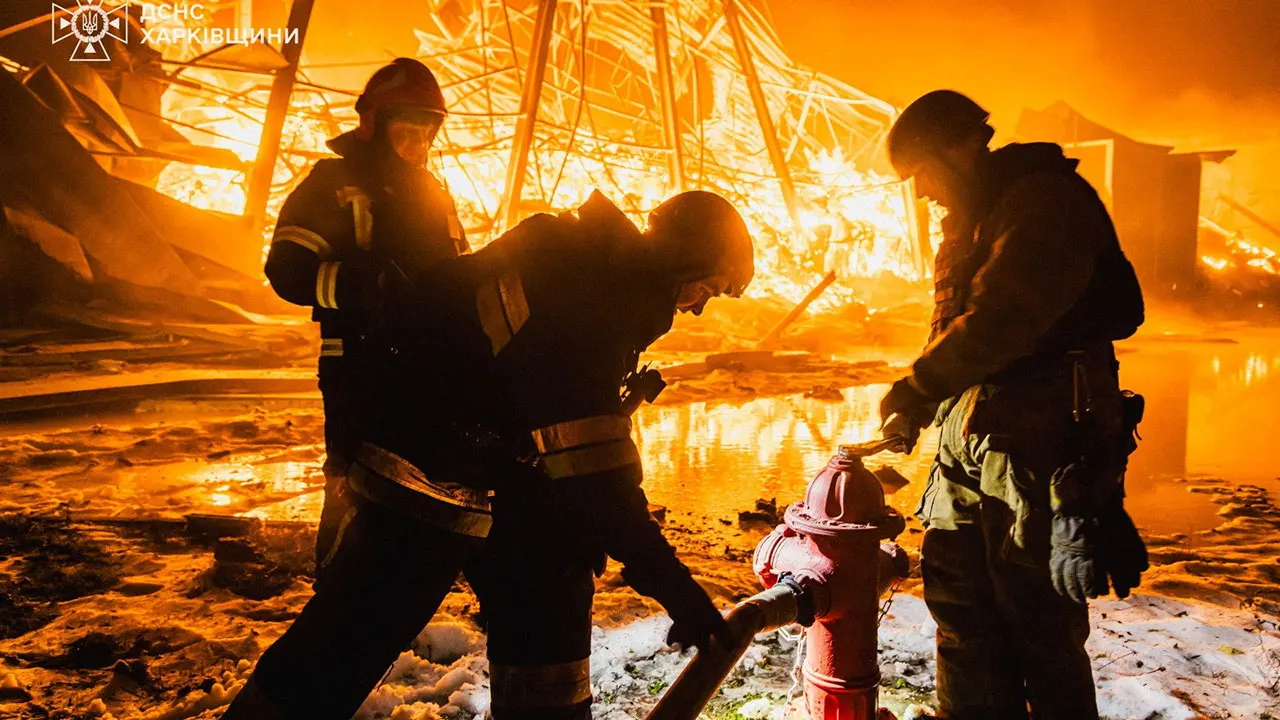
Ukraine Strengthens Air Defenses Amid Cold Winter and Temporary Pause in Strikes
Ukraine is working swiftly to bolster its air defenses as a temporary lull in Russian attacks on Kyiv and other cities nears its end. Military and diplomatic experts caution that this development may not significantly alter the situation on the battlefield and could actually give Russia a stronger position in future talks.
On Friday, President Donald Trump expressed optimism at the White House, stating, “I think we’re getting very close to getting a settlement.” He noted the tension between Ukrainian President Volodymyr Zelenskyy and Russian President Vladimir Putin complicates negotiations, but he remains hopeful about upcoming discussions.
The Kremlin announced that President Putin agreed to Trump’s request to pause airstrikes on Kyiv until February 1, aiming to create a more favorable environment for talks. However, Ukrainian officials emphasize that there is no official ceasefire in place.
As freezing temperatures are expected in Kyiv, with lows of minus 26 degrees Celsius, Zelenskyy announced plans to enhance short-range air defenses against drone attacks to safeguard cities like Kherson and Nikopol. He highlighted the heightened threat to civilians in areas targeted by Russian drones.
Russian lawmakers are pushing for increased military action despite the pause. Russian parliament speaker Vyacheslav Volodin has called for the use of stronger weaponry, while Chechen leader Ramzan Kadyrov has expressed opposition to negotiations.
Experts believe that the temporary pause is largely symbolic rather than a significant change in military strategy. Former Navy SEAL Vice Adm. Robert S. Harward remarked that the halt in strikes serves more to send a political message than to indicate a shift in military tactics.
While Trump’s peace initiative has been labeled a starting point by Putin, experts urge caution regarding interpreting Russia’s agreement as a move toward peace. Carrie Filipetti, a former senior State Department official, expressed skepticism, indicating that while any pause is welcomed by Ukrainian citizens, it is unlikely to change the intensity of Russia’s military efforts unless significant adjustments are made.
Zelenskyy has warned that Ukraine’s ability to protect civilians is at risk due to delays in Western military support, noting that such delays have left them lacking essential air defense systems.
Cautions about the temporary pause extend to its implications for Ukraine’s negotiation power, with experts suggesting that it might not strengthen Ukraine’s position in future talks with Russia.
In summary, while the brief pause in strikes brings a moment of relief, the underlying tensions and military actions suggest that the region remains volatile. Diplomacy may seem challenging, but any positive outcomes from Trump’s involvement could pave the way for future progress.
