
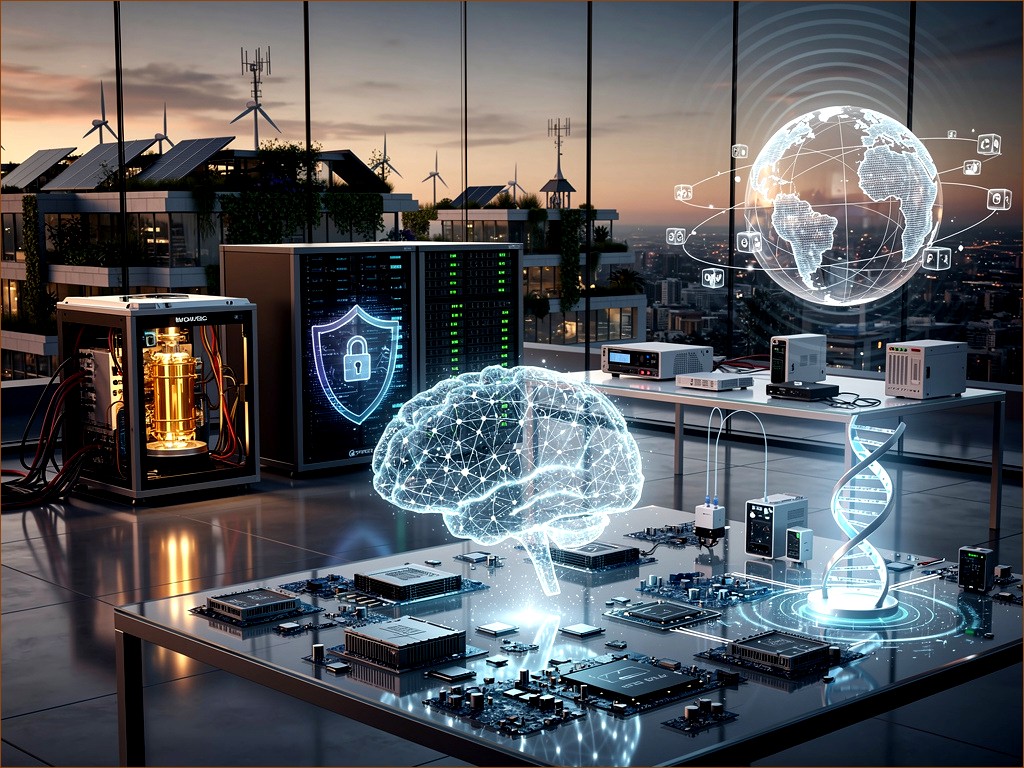
New Horizons in Artificial Intelligence
As we approach 2025, artificial intelligence (AI) is becoming a hot topic among business leaders and tech innovators. Recent developments in AI are not only small improvements; they are transforming entire industries at a remarkable pace. A report from McKinsey indicates that integrating AI into business practices could unlock trillions of dollars in economic benefits. From predictive analytics to self-operating systems, the applications are vast. This growth is fueled by advancements in machine learning that allow for quicker data processing and decision-making—something that once seemed like science fiction.
AI is moving beyond simple tasks, evolving into systems that can operate more independently. These smart agents can negotiate, plan, and complete tasks without needing constant human guidance, a trend noted by various industry analysts. For instance, generative AI can now communicate in multiple languages and work seamlessly with Internet of Things (IoT) devices, broadening its use in global markets. This evolution is driving innovation in fields like healthcare, where AI-powered diagnostics are becoming the norm, promising quicker and more accurate patient care.
Yet, the fast-paced growth of AI poses certain challenges, especially regarding ethics and governance. Experts have pointed out that while AI can boost productivity, it could also enhance biases if not monitored properly. Conversations on social media platforms reflect a mix of hope and caution, emphasizing the need for sustainable AI development to address energy consumption concerns, as AI-related data centers consume huge amounts of power.
Pushing for Sustainability in Technology
Sustainability has become a major focus in the tech industry, urging companies to evaluate their environmental impact. New green technologies are on the rise, aimed at shrinking carbon footprints via efficient computing and renewable energy solutions. According to Deloitte’s Tech Trends report, AI is being utilized to enhance energy efficiency in areas ranging from smart electrical grids to manufacturing workflows. This isn’t just about following regulations; it’s becoming a competitive advantage, as consumers and investors increasingly prefer environmentally friendly companies.
One exciting development is the emergence of bio-based materials and decentralized renewable energy systems. These innovations are likely to change supply chains, making them more resilient and less reliant on fossil fuels. For example, advancements in 3D printing with sustainable materials lead to micro-factories that create goods on demand, reducing waste and cutting down transport emissions. This trend supports larger industry movements toward circular economies, where resources are reused instead of thrown away.
However, there are challenges to scaling these innovations. High upfront costs and technological barriers can slow down adoption, but partnerships between startups and established companies are helping speed things up. Recent news highlights collaborations in the energy sector that merge AI with solar and wind technologies, striving for more effective energy distribution.
Breakthroughs in Quantum Computing
Quantum computing is opening up fascinating new possibilities, boasting computational power far surpassing current technologies. As we head into 2025, advances in quantum algorithms are enabling solutions to complicated challenges in areas like drug research and financial models. Experts believe that quantum will revolutionize tasks related to encryption and optimization, which traditional computers struggle with.
Although quantum technology is advancing, it remains in its early stages. Industry insiders expect that by 2026, hybrid systems that combine quantum and classical computing will be more widespread, allowing businesses to tackle complex simulations previously thought impossible. This is especially exciting for materials science, where quantum simulations may quicken the development of new battery and semiconductor materials.
Nonetheless, there are hurdles to overcome, such as the need for extreme cooling and error correction. Online discussions are buzzing with excitement about the fusion of quantum with AI and Web3, suggesting the arrival of a “new era” in computing. These conversations highlight the transformative potential but also point out the need for significant infrastructure investments to make quantum more than just a research lab phenomenon.
Advancements in Blockchain Technology
Blockchain is moving beyond its origins in cryptocurrency and is finding practical applications in areas like supply chain transparency and secure data exchange. New developments in this space are increasing trust in digital transactions, with smart contracts automating agreements across various sectors. There’s growing interest in how integrating blockchain with AI and 5G can create robust ecosystems, paving the way for jobs in related fields.
Decentralized renewable energy systems using blockchain hold great promise, allowing individuals to trade energy directly with one another. This is particularly beneficial for emerging markets where traditional infrastructure is lacking. Companies are also exploring the tokenization of assets, making physical goods easier to trade and verify through digital tokens.
Security is a critical issue, as the unchangeable nature of blockchain technology can be a double-edged sword if vulnerabilities are found. Recent discussions in major publications highlight high-profile security breaches and ongoing efforts to strengthen these systems against cyber threats, underlining the need for standardized security measures.
The Future with Edge Computing and IoT
Edge computing is changing how data is processed, moving it closer to where it’s generated. This shift is essential for applications like self-driving cars and smart cities, where immediate decisions are key. The combination of edge computing with AI is resulting in more intelligent devices that don’t rely on central servers, enhancing both efficiency and privacy.
The rise of IoT devices is creating vast networks that collect and analyze data on an incredible scale. Innovations in this area include AI-driven predictive maintenance for machinery, helping prevent costly breakdowns. The synergy between edge computing, IoT, and 5G is facilitating seamless data flow, benefiting sectors ranging from telemedicine to automated farming.
However, the expanding IoT landscape raises privacy and security concerns, as more devices can create more opportunities for cyberattacks. Experts emphasize the need for advanced cybersecurity solutions, with AI playing a crucial role in both defending against threats and potentially enabling them if mishandled.
Cybersecurity in a Connected World
With increased interconnectivity, cybersecurity has become a cornerstone of innovation. The rise in sophisticated threats, including ransomware and AI-driven attacks, necessitates proactive security measures. As previously noted by McKinsey, investments in cybersecurity tools utilizing machine learning to detect irregular activities are on the rise.
Innovations like zero-trust architectures are becoming common, ensuring that no entity is automatically trusted on a network. This approach is crucial for safeguarding essential infrastructure in sectors like healthcare and transport. Recent discussions on social media platforms showcase trends in AI-supported cybersecurity, with many companies adopting these new technologies to stay ahead of potential threats.
The challenge remains to balance security with usability, as overly strict measures may hamper productivity. Collaborative efforts across borders are vital to tackle global cyber threats, with public and private sectors working together to establish norms and share vital information.
Automation and Tomorrow’s Work Environment
Automation driven by robotics and AI is changing workplace dynamics, taking over repetitive tasks and freeing up humans for more creative work. Insights from Deloitte suggest an increase in intelligent automation that adapts to changing conditions, boosting operational efficiency across different sectors.
In industries like manufacturing, collaborative robots (cobots) are working alongside humans to enhance safety and productivity. This trend also spreads to service sectors, where chatbots and virtual assistants are increasingly managing customer interactions with sophistication.
The societal ramifications include concerns about job displacement, prompting discussions around reskilling programs. Industry experts advocate for ethical automation that keeps worker welfare in mind, ensuring that technological advancements benefit society as a whole.
5G and Future Connectivity
The rollout of 5G networks is paving the way for faster and more reliable connectivity, enabling innovations such as augmented reality and remote surgeries. Reports indicate that 5G’s low latency is ideal for mission-critical applications, driving advancements in mobile edge computing.
Looking ahead, research into 6G promises even faster speeds and integration with satellite systems for global coverage, which could radically improve technology access in rural areas, bridging the digital divide.
Challenges around spectrum allocation and infrastructure costs remain, but the potential for economic growth through enhanced connectivity is immense, as noted in various industry analyses.
Biotech Meets Technology
Biotechnology and technology are merging in exciting ways, leading to advancements in personalized medicine and gene editing. AI is speeding up drug discovery, significantly reducing the time needed for development.
Telemedicine platforms, supported by AI diagnostics, are making healthcare more accessible, especially in areas lacking resources. Mental health applications using machine learning offer customized support, addressing global wellness challenges.
As always, ethical issues like data privacy in health technology are crucial, with regulations evolving to keep up with these advancements.
Navigating Regulations and Ethics
With technology evolving so quickly, regulatory frameworks are adapting to keep pace, with governments establishing policies on AI ethics and data protection. The EU’s AI Act serves as an important example, striving for a balance between innovation and necessary safeguards.
Industry leaders are also advocating for self-regulation to complement government efforts, fostering trust in new technologies.
As we look toward 2026, the interaction of these trends will shape the tech sector, requiring all stakeholders to be flexible and responsive. The blend of AI, sustainability, and connectivity is not only altering industries but also reshaping opportunities for humanity. Executives need to make strategic investments that ensure innovation also serves broader societal objectives. With careful planning, the tech realm can tackle challenges and unlock exceptional growth opportunities.
