
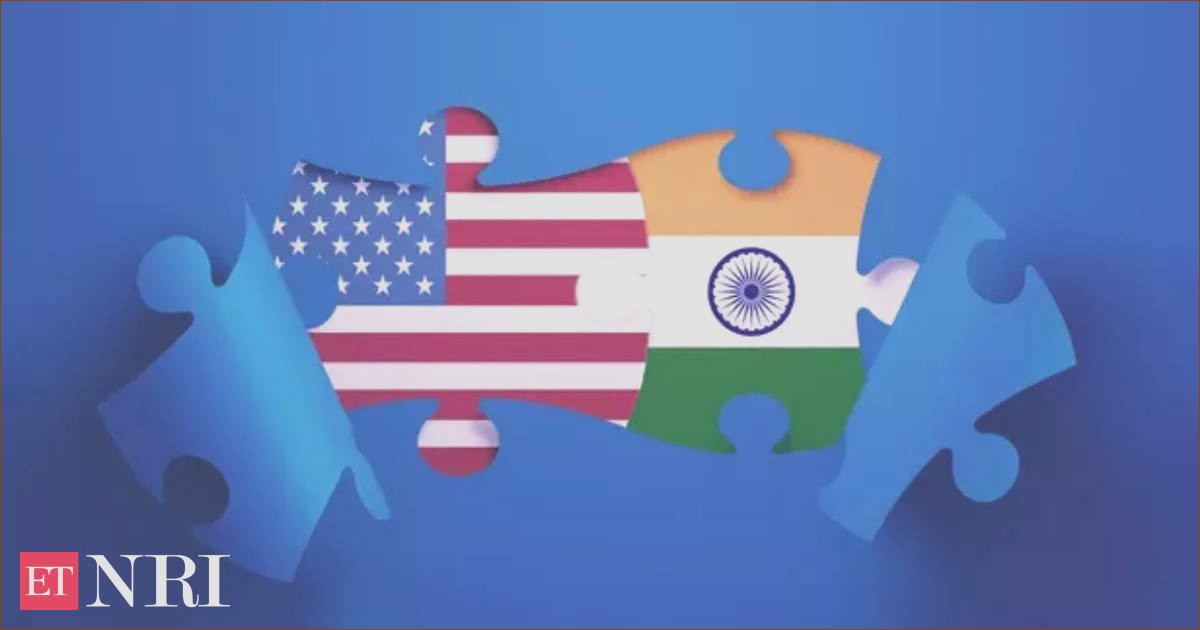
The spotlight shines brightly on Indian voters in the US as the presidential race approaches its climax, pitting Donald Trump against Kamala Harris in an electrifying contest. In the final stretch, opinion polls reveal a nail-biting deadlock across the pivotal seven swing states that could very well tip the electoral scales: Arizona, Georgia, Michigan, Nevada, North Carolina, Pennsylvania, and Wisconsin. With mere tens of thousands of votes holding the power to determine the outcome, the influence of Indian-American voters—a formidable demographic—cannot be overstated for both major political parties.
### The Significance of Indian-American Voters
Today, an estimated 5.2 million individuals of Indian origin call the US home, among whom roughly 3.9 million are aged eighteen or over. A recent Carnegie Endowment for International Peace report details that about 2.6 million of these individuals are eligible voters, a number that, while seemingly modest in the vast ocean of American electorate, has garnered substantial attention this election cycle.
The Indian-American community has burgeoned by an astonishing 50 percent between 2010 and 2020, making it the second-largest immigrant group in the country, outpaced only by Mexican Americans. A survey conducted by the Carnegie Endowment reveals that an impressive 96 percent of registered Indian-American voters exhibit a strong intent to hit the polls this cycle.
This community’s elevated socioeconomic status amplifies its allure for campaign strategists on both sides of the aisle; the median household income for Indian Americans hovers around $153,000, more than twice the national average.
Interestingly, trends suggest a potential shift among Asian American voters, who have historically leaned Democratic. The presence of Kamala Harris alongside candidates like Usha Vance and Vivek Ramaswamy injects a distinctive Indian dynamic into this year’s electoral narrative.
### The Role of Indian-American Voters in Swing States
As anticipation mounts for what promises to be a record turnout—reportedly over 160 million total voters—it’s crucial to spotlight the role of roughly half a million Indian-American voters concentrated in critical swing states. These seven battlegrounds will shape the very fabric of the presidential race, with around 400,000 new Asian American, Native Hawaiian, and Pacific Islander voters emerging in the last four years through various avenues such as relocation, citizenship, or simply coming of age. Shekar Narasimhan, national chair of the AAPI Victory Fund, emphasizes this sentiment.
Data from AAPI, a premier research entity focused on Asian American demographics, indicates a pronounced Indian American presence, particularly in Georgia, where they number approximately 177,310, followed closely by Pennsylvania (166,355), Michigan (129,025), and North Carolina (124,397). More modest figures emerge from Arizona (68,957), Wisconsin (37,264), and Nevada (19,828), yet each carries its weight.
Shalabh Shalli Kumar, the industrialist behind the Republican Hindu Coalition who supports Trump, articulated with fervor the razor-thin margins in these battleground states. “It’s incredibly tight,” he remarked. “In stark contrast to 2016, where Hillary had a solid lead, we find ourselves in a virtual toss-up. Unless a significant shift occurs in the next 24 or 36 hours, it appears President Trump may secure victory.” He further posited that the collective Hindu and Indian vote—totaling close to a million in these seven states—will be the pivotal factor in determining the next Commander-in-Chief.
### A Shift in Political Allegiance
Traditionally, Indian-Americans have shown strong support for the Democratic Party, yet current data suggests an intriguing pivot. The 2024 IAAS survey indicates only 47% of Indian-Americans now identify as Democrats, a notable drop from 56% just four years prior. This trend hints at a growing discontent within the community, particularly among younger voters and males.
Moreover, support for Kamala Harris—a pivotal figure given her Indian ancestry—also appears to be waning. The survey reveals that about 61% of Indian-American respondents intend to back Harris, marking a decrease of nearly seven percentage points compared to Joe Biden’s approval in the previous election.
The significance of Indian-American voters in the upcoming elections cannot be overlooked. As this demographic becomes increasingly politically engaged, their potential to sway the tides of American politics continues to expand, heralding a new epoch in electoral influence.
(With inputs from various sources)
