
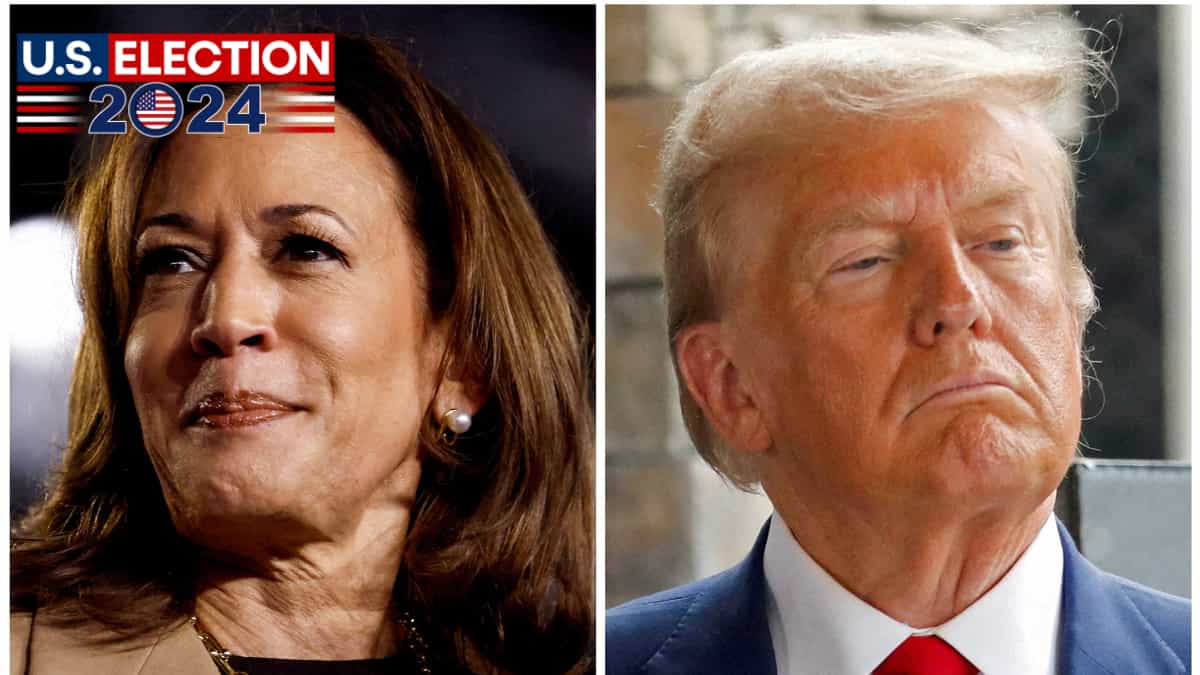
A Crucial Moment in the American Electoral Landscape
Ah, the exhilarating time has arrived for America to engage in its democratic duty—casting ballots that echo across the nation.
As citizens of the U.S. tread the familiar paths to their polling places, a particularly watchful eye is cast on the Indian diaspora. This community holds significance, especially as Democratic heavyweight Kamala Harris proudly showcases her Indian heritage. But the Republicans aren’t without their Indian ties either; Donald Trump’s running mate, JD Vance, is linked to India through his wife, Usha.
The Indian American Attitudes Survey (IAAS) reveals a community that boasts approximately 5.2 million members, with around 2.6 million representing eligible voters.
In this fiercely competitive presidential election, one must ponder: what matters most to Indian-American voters?
Engaging in conversation with WION, Gargie Dwivedi, an investment risk analyst hailing from New Jersey, expressed palpable frustration. "Enough with the racist and sexist rhetoric from the president. Enough of the incessant discussions around abortion laws—it’s high time a woman steps forward to speak for those who are marginalized. Just the other day on my train, I overheard someone declare, ‘this race is bls vs bbs.’ It’s disheartening to think that the hatred for women runs so deep that some would prefer Trump over a progressive voice,” she articulated, her words laced with urgency.
With a keen focus on healthcare reform, Dwivedi advocated for accessible medical assistance programs like Medicare and Medicaid, which support nearly 150 million Americans.
In a groundbreaking move earlier this October, Harris unveiled a proposition for Medicare home health care during an interview with ABC. “So many of our citizens find themselves juggling responsibilities—caring for children and aging parents simultaneously. The burden is almost unbearable, especially for those in the workforce,” she remarked, shedding light on the dire need for systemic support.
Our dialogue then pivoted to Naseem Khan, a tech industry professional residing in New York. She echoed sentiments that resonate deeply among her peers: the pressing need for a robust economy, urgent climate action, and sound immigration policies favorable to Indians.
"The temperature swings here range from a brisk 40°F to a stifling 70°F; these abrupt changes are simply intolerable! Global warming is no longer a theoretical threat relegated to academic texts—it has become a glaring reality," Khan lamented, pushing for immediate legislative action.
She further illustrated the financial strain on families, saying, “Just look at the price of fuel! Once a mere $1.70 per liter in Texas, it’s now skyrocketed to $3. Breakfast staples, like eggs, have surged to a staggering $9, compared to the modest $4 of yesteryear.”
Whether in crimson, azure, or a blend of both, the world awaits with bated breath—soon, America will reveal its next leader.
Will this election usher in the nation’s first ‘Madam President,’ or will a former president reclaim the throne? Indian Americans, just like the rest of the country and indeed the globe, stand on the precipice of anticipation.
