
MIT.nano: Leading the Way in Nanotechnology
At the 2025 Nano Summit, MIT President Sally Kornbluth emphasized the crucial role of MIT.nano in addressing significant global challenges. “We can create a positive impact by joining forces,” she stated, highlighting that nanoscience and nanotechnology serve as fundamental aspects of MIT’s work in critical areas.
The summit, organized by MIT.nano, brought together discussions centered on the importance of collaboration and the potential of nanotechnology in solving big issues. Kornbluth pointed out, “MIT.nano is distinguished by its focus on teamwork and openness,” showcasing how small-scale science can lead to large-scale solutions.
Collaborating on Health Innovations
Angela Koehler, director of the MIT Health and Life Sciences Collaborative, posed an important question about uniting efforts across campus to address major health problems. Three speakers highlighted their groundbreaking work in medicine.
Ana Jaklenec from the Koch Institute for Integrative Cancer Research shared her team’s progress in developing single-injection vaccines. “MIT.nano played a key role in our technology,” she noted, explaining how techniques from the electronics industry influenced their pharmaceutical advancements.
Giovanni Traverso, a gastroenterologist and mechanical engineering professor, drew inspiration from nature, using insights from squid and remora fish to devise innovative drug delivery systems. Jagesh Shah from Mirai Bio also spoke about the importance of collaboration between industry and academia to enhance medical solutions and advocate for nurturing aspiring scientists.
Advancing Manufacturing
The second session focused on MIT’s Initiative for New Manufacturing (MIT INM), aiming to prepare future innovators in manufacturing. A. John Hart, co-director of INM, emphasized that MIT’s mission includes understanding both the domestic and global manufacturing landscapes.
Dan Oran discussed his journey from technician to entrepreneur with his company, Irradiant Technologies, raising questions about transitioning innovations from the lab to the market. Elisabeth Reynolds highlighted the challenges in scaling ideas for production, while John Liu addressed workforce issues faced by manufacturers. Liu proposed bridging technicians and engineers with a new role—technologist—to ensure ongoing innovation.
Connecting Economies with Nanoscience
Benedetto Marelli, mission director for the MIT Climate Project, stressed that combating climate change requires a comprehensive approach involving interconnected fields. Faculty members showcased nanoscale solutions for climate resilience, with Michael Strano discussing the conversion of waste into renewable resources, and Desirée Plata sharing strategies for carbon dioxide removal.
The faculty remarked on the link between climate change and the economy, with Plata noting the need for sustainable designs to transform economic systems.
What Happens at MIT.nano?
MIT.nano provides shared facilities where researchers tackle pressing global challenges. With over 1,500 users, the question of what takes place there is complex. During a showcase, students shared diverse projects spanning from quantum devices to innovative solar solutions, reflecting the creativity and teamwork celebrated during the summit.
The enthusiasm from these researchers echoed the excitement shared by President Kornbluth, who recognized the potential for groundbreaking inventions to emerge from MIT’s community.
Honoring Pioneers of Nanoscience
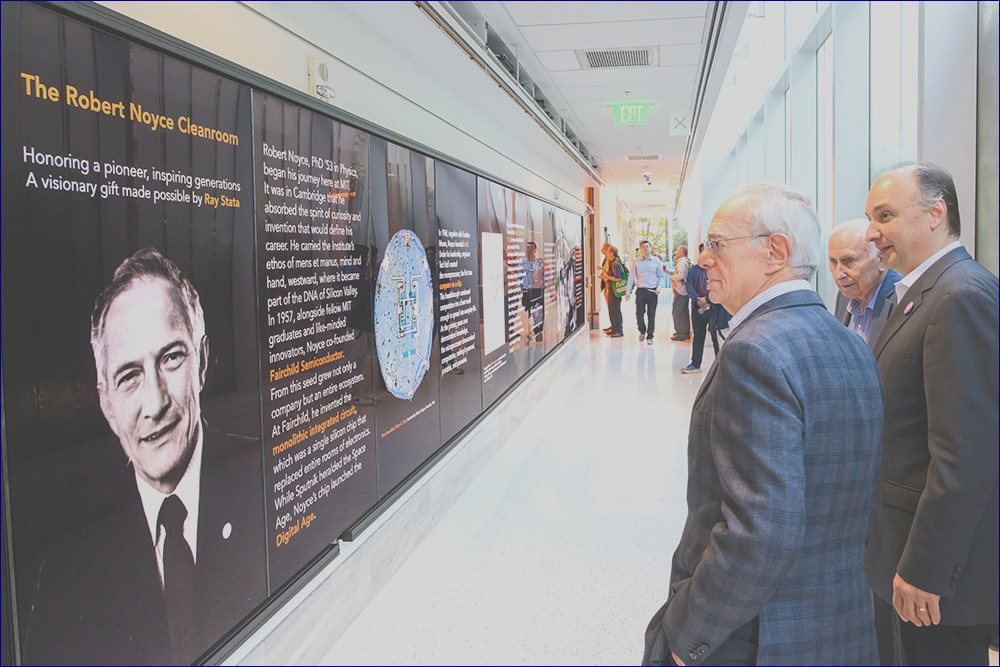
As the summit concluded, President Emeritus L. Rafael Reif celebrated the dedication of the MIT.nano cleanroom complex, named after Robert N. Noyce, co-founder of Intel and a significant figure in semiconductor history. “It’s fitting to honor Noyce, as his leadership shaped the electronics industry,” Reif expressed.
Ray Stata, whose generosity made the cleanroom possible, acknowledged Noyce’s contributions, stating, “He was a pioneer in his field, and this cleanroom will stand as a tribute to his legacy at MIT.”
Reif also pointed out the achievements of MIT graduates like Lisa Su, underscoring MIT’s continued role in shaping the future of technology.
In closing, the 2025 Nano Summit highlighted MIT.nano’s commitment to innovation and collaboration, paving the way for the next generation of leaders in the world of nanotechnology.
