
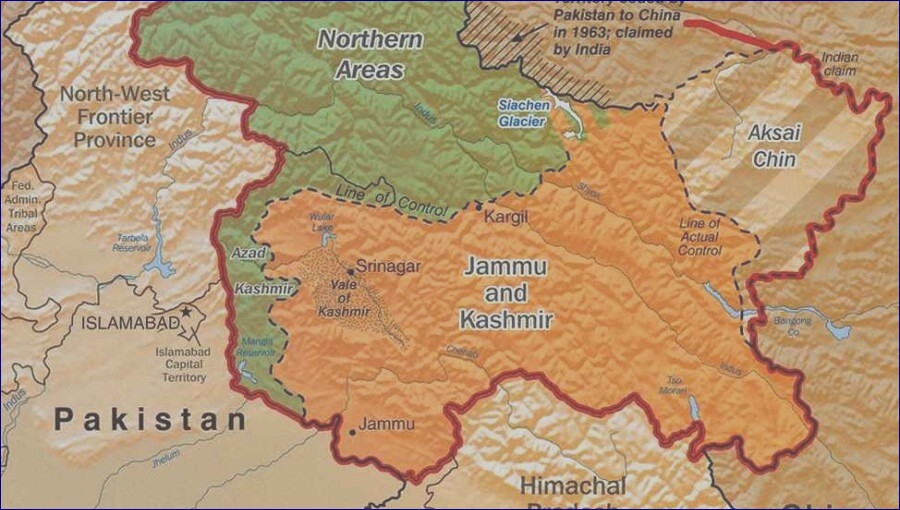
The India and Pakistan Relationship: An Ongoing Struggle
For Pakistan, India is not just a neighboring country; it shapes the very essence of its identity, security policies, and daily concerns. The tension between the two nations is more than just historical grievances; it is fueled by ongoing crises, deep-rooted fears, and constantly changing regional circumstances.
Since gaining independence in 1947, Pakistan has focused primarily on its relationship with India. The eastern border with Iran and the lengthy boundary with Afghanistan receive far less attention. Instead, all eyes are on India, where historical conflicts have made the idea of containing India a priority.
The wars fought in 1947, 1965, and 1971, along with the Kargil conflict in 1999, have reinforced the belief that India needs to be kept in check. This perspective is woven into the very fabric of Pakistan’s political and military institutions. As a result, the military has little incentive to downplay any threat from India; portraying India as a danger is seen as essential for justifying high defense spending and maintaining its significant role in governance.
Political leaders in Pakistan, whether in military uniforms or suits, have learned that showing any kind of goodwill towards India often leads to allegations of betrayal and political backlash.
The pressures faced by Pakistan have become increasingly evident in recent years. Islamabad has issued stern warnings about “full-spectrum retaliation,” including possible nuclear responses, if India were to attack. For instance, India’s suspension of the Indus Waters Treaty in 2025, following a terrorist incident, sparked alarm in Pakistan, as control over river flows is viewed as a critical survival issue.
In a brief conflict in early 2025, both countries exchanged missile fire and drone strikes before reaching a ceasefire on May 10. However, these occurrences only strengthen mutual distrust, leading both sides to view the other as untrustworthy. Each diplomatic gesture is met with skepticism; India questions Pakistan’s commitment to controlling militant groups, while Pakistan fears Indian aggression under the guise of counterterrorism.
Even ceasefires in Kashmir are often seen as temporary pauses in an ongoing rivalry, rather than progress towards peace. The nuclear aspect adds further complexity. Pakistan continues to enhance its nuclear capabilities, believing that India poses an existential risk. Leaders in Pakistan have discussed using their entire range of military power if provoked, and a first strike has never been ruled out.
Every military move and political statement is influenced by deep-seated fears, leading to situations where a small mistake could escalate into something much larger. Luckily, such a catastrophe has yet to occur.
The diplomatic landscape has changed dramatically since 2016, with high-level talks fading away. Nationalism thrives in both countries, as politicians find that confronting the other side garners support. In Pakistan, any civilian government seeking rapprochement risks losing military backing and public approval, given the strong anti-India sentiment in the media.
China’s growing influence also complicates matters, with Pakistan leaning on its ties to China for support. This reliance may encourage a tougher stance against India, but China’s own relationship with India raises questions about how it will navigate its ties with both nations.
India’s strengthening connections with the U.S., Japan, and Australia further bolster its confidence while causing concern about Pakistan’s role as a regional pawn for China. Although both countries might experience short-lived periods of calm, the underlying suspicion remains.
External powers, particularly in Europe and the U.S., are advocating for stability to prevent nuclear escalation, but this temporary peace is precarious and unlikely to last without significant shifts in attitudes and politics. For either country to achieve lasting peace, it would require a profound change in how they perceive each other and address the challenges of Kashmir and cross-border militancy.
Pakistan needs to dismantle militant networks and reframe its view of India—not just as a threat, but as a necessary neighbor. However, such a transformation remains elusive, hampered by prevailing ideologies, military influence, and national narratives.
If these fundamental changes don’t occur, the animus between India and Pakistan will persist, keeping the region in a state of fragile peace.
