
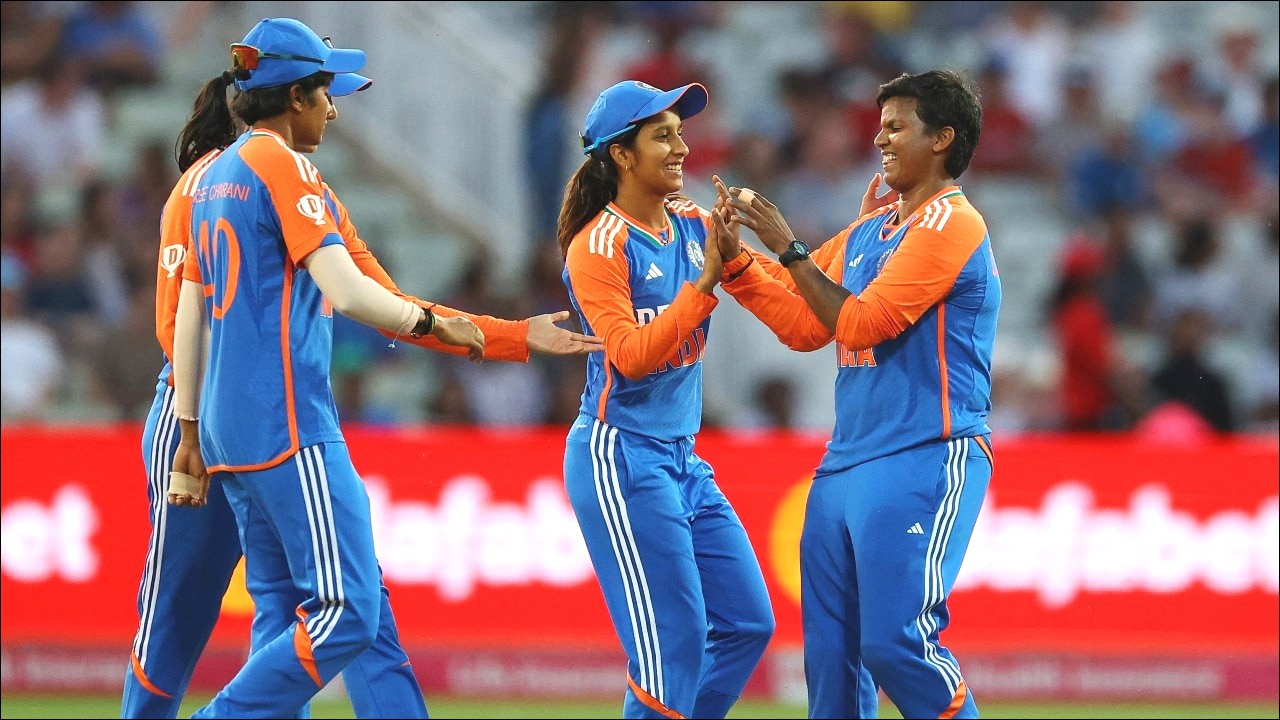
The Indian men’s cricket team celebrated their victory at the T20 World Cup last year, followed by a win in the Champions Trophy. Meanwhile, the women’s team is still striving for its first World Cup title. They have a promising chance to achieve this when the much-anticipated tournament kicks off on September 30.
In preparation for the World Cup, India has scheduled six matches, starting with a three-match ODI series against England, followed by another three ODIs at home against Australia. Since their disappointing performance in the T20 World Cup last year in the UAE, the Indian women’s team has shown marked improvement, securing ODI series wins against West Indies, New Zealand, and Ireland, along with a tri-nation series triumph in Sri Lanka.
Recently, India managed a narrow 3-2 victory over England in a T20I series. Now, with the 50-over World Cup approaching, the focus has shifted to addressing important issues in the One-Day format. As the first ODI against England begins on July 16, India aims to find the right team balance as they gear up for this global challenge.
What’s next for Shafali?
Shafali Verma hasn’t played in ODIs since being omitted after the New Zealand series last year, despite her impressive run-scoring in domestic cricket and her strong performance for the Delhi Capitals in the Women’s Premier League (WPL). The rise of Pratika Rawal has made it harder for Shafali to reclaim her place.
In the recent T20I series against England, Shafali scored 176 runs at a commendable strike rate of 158.55. But with Pratika averaging 63.80 and becoming the fastest woman to score 500 runs in ODIs, it’s a challenge to find space for Shafali.
Despite the competition, head coach Amol Muzumdar believes Shafali is still a contender for the ODI World Cup squad. He described the decision between Shafali and Pratika as a “happy headache” for the coaching staff.
“We have great depth in this team,” Muzumdar noted. “Shafali is a fantastic player, and I am confident she will be in the mix as we finalize our core group.” If Shafali is to be part of India’s plans, she must get a chance in the ODIs against Australia to determine her standing in this format.
Promising chance for Charani
The squad for the England series includes Deepti Sharma and Sneh Rana, likely to lead India’s spin attack in the World Cup. However, left-arm spinner Shree Charani has made a strong case for herself. After impressing in her first WPL season, Charani earned her ODI call-up for the Sri Lanka tri-series, securing six wickets in five matches.
She continued her good form into her T20I debut, becoming India’s leading wicket-taker in the series against England with 10 wickets at an economy rate of 7.46, including a standout four-wicket haul.
Skipper Harmanpreet Kaur praised Charani, stating, “She’s a key player for us. Her performance in the WPL was notable, and we all saw her potential.” Now part of the ODI setup, Charani will be eager to make a significant impact and complicate the selectors’ decisions for the final team.
Is the fast bowling strong enough?
Pooja Vastrakar and Renuka Singh are key fast bowlers for India, but both have missed recent matches due to injuries. Vastrakar has not played since last year’s T20 World Cup due to a knee issue, while Renuka has been sidelined since the 2025 WPL.
With their absence, India has rotated various bowlers like Saima Thakor, Sayali Satghare, and Arundhati Reddy as they search for stability in the pace attack.
Renuka has been a vital contributor, taking 35 wickets in just 19 ODIs. Without her, the pace department seems weaker. For the upcoming England series, India has included Kranti Gaud, Satghare, and Amanjot Kaur, but the attack lacks the strength that Renuka and Vastrakar would provide.
It’s crucial for India to remember that when spinners face pressure, the fast bowlers must step up. India has reached the World Cup finals twice but hasn’t clinched the title yet. A common issue has been their tendency to falter after early setbacks. Playing on home soil this year should boost their confidence, with strong support from local fans.
Ultimately, turning their World Cup hopes into reality will depend on how well the team handles high-pressure matches against top teams like Australia, New Zealand, and England.
– Ends
