
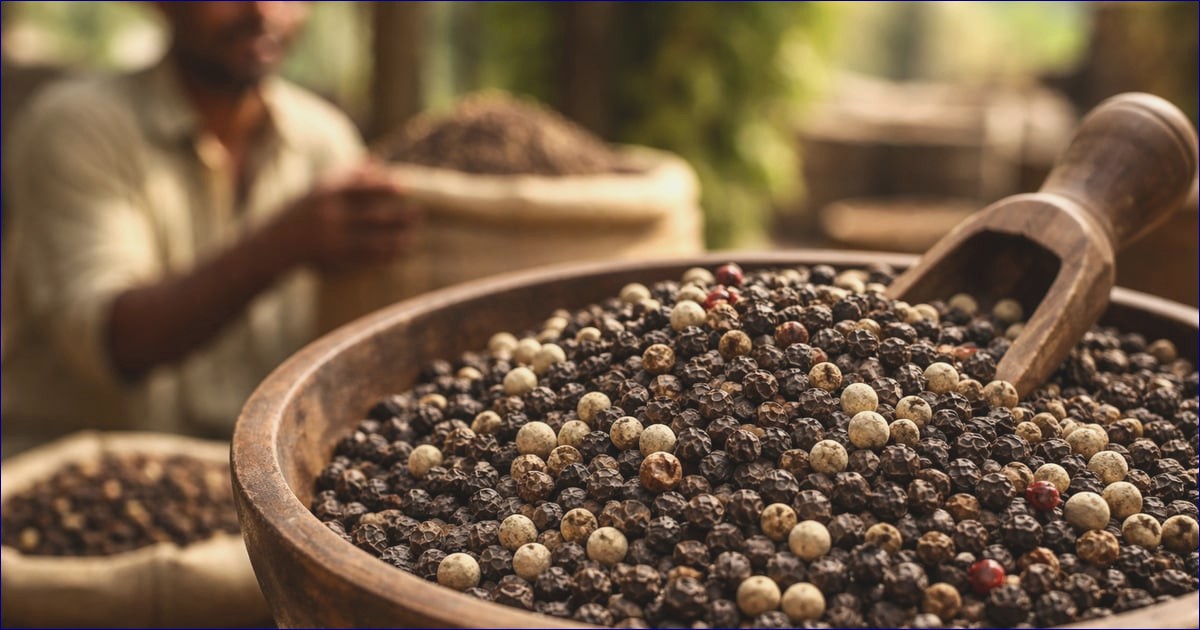
Indian Pepper Prices Rise as Farmers Hold Back
In recent days, wholesale prices for Indian pepper have shown a firm upward trend. This increase is attributed to farmers and stockists holding back on sales while demand improves, especially as festivals approach. Meanwhile, prices for black pepper from Vietnam have also nudged higher, remaining stable overall.
In the Indian wholesale markets, a drop in pepper arrivals has created tighter supplies, particularly as the festive season prompts stronger domestic demand. Farmers and stockists seem reluctant to sell at lower prices, leading to an increase in wholesale prices over the past week. With weddings and festivals approaching, internal consumption of pepper is expected to rise further, making imported alternatives less appealing.
Recent Price Changes
In key Indian markets, wholesale pepper prices rose by approximately $0.37 to $0.42 per kilogram, highlighting farmers’ strengthened bargaining position. In contrast, prices for imported pepper have shown only slight variations, indicating a stable but cautious global market.
Here are some price updates for pepper from Vietnam and India:
-
Vietnam (Hanoi)
- Black Pepper 500 g/l: €6.00 (down from €6.05)
- Black Pepper 550 g/l: €6.05 (up from €6.00)
- Black Pepper 600 g/l: €6.30 (up from €6.25)
-
India (New Delhi)
- Black Pepper 500 g/l: €6.05 (up from €6.00)
- Organic Black Pepper 500 g/l: €7.90 (unchanged)
- Organic White Pepper: €6.80 (unchanged)
Prices indicate a slight increase in certain grades of Vietnamese black pepper, while Indian prices for organic options remain steady, aided by strong domestic demand.
Supply and Demand Trends
Currently, the supply of spices in India, including pepper, is lower than usual. Farmers are withholding stocks in response to decreased prices, leading to a squeeze in available supply. As wedding and festive seasons unfold, this trend is mirrored in other spices such as cardamom, cloves, and turmeric.
On the export side, Vietnam continues to be a major supplier, with black pepper shipments expected to exceed last year’s volumes. However, the global pricing competitiveness remains constrained due to the availability of cheaper imports from Vietnam, Indonesia, and Sri Lanka, which keeps pressure on Indian exports.
Weather Impact on Crop Outlook
In Vietnam’s Central Highlands, where much of the country’s pepper is produced, the rainy season is beginning to wind down. Reports suggest that despite earlier heavy rainfall, the crop development is progressing well, and there are no significant weather-related threats to production.
In India, particularly in Kerala and Karnataka, the weather has been variable. Some storms are anticipated, but these are not expected to harm the crop significantly and may even help maintain necessary soil moisture.
Market Sentiment and Future Expectations
The current pricing trend for Indian pepper is primarily driven by limited selling and robust seasonal demand rather than any concrete signs of production shortages. Farmers are strategically holding onto their stocks to wait for better prices as demand spikes during festivals.
Globally, the fundamentals appear more balanced, with Vietnam’s export rates increasing year-over-year. However, average export prices decreased slightly in the third quarter, indicating that there is enough supply to meet current demand without creating significant price surges.
Short-Term Market Outlook
As supplies remain tight and demand continues to rise, Indian pepper prices are expected to stay stable or even see slight increases in the short term. However, competitively priced imports from Vietnam, Indonesia, and Sri Lanka may limit any major price increases.
- For importers and industrial buyers: It may be wise to secure near-term needs quickly, especially for Indian pepper, due to the current market conditions.
- For Indian exporters: Utilizing the current price firmness to make selective high-margin sales could be beneficial.
- For stockists and traders: Existing positions in India are supported superficially, but be vigilant to changes in farmer selling habits or increasing imports that might stabilize the market.
3-Day Market Overview
- India (New Delhi): Expect black and white pepper to trade firmly with a slight upward trend due to lower arrivals and ongoing demand.
- Vietnam (Hanoi): Prices for black pepper grades 550-600 g/l are likely to remain stable or slightly increase.
- Sri Lanka: Prices for dehydrated green pepper are expected to stay steady with no significant market changes on the horizon.
