
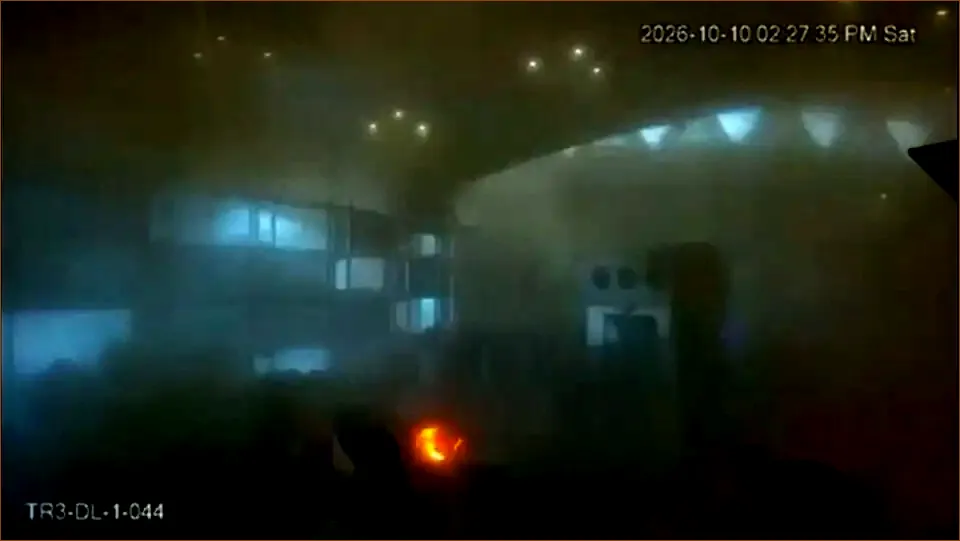
RIYADH: Saudi Arabia halted public alerts for possible military attacks shortly before a series of deadly raids on Riyadh airport, resulting in the loss of at least 18 lives and injuring over 300 people.
The government has not provided an explanation for the lack of warnings before the four attacks that occurred in the past week. These alerts had previously underscored the ongoing violence that threatens to undermine the kingdom’s image of stability amidst its conflict with Yemen’s Houthi rebels.
The absence of these warnings during the airport assaults has raised concerns about Saudi Arabia’s security and its capacity to safeguard both residents and visitors, according to multiple Western and Arab officials, as well as political analysts speaking with Reuters.
Experts indicate that the Saudi government is attempting to maintain a sense of normalcy while dealing with ongoing military operations. Sultan Alamer, a Saudi academic based in the US, noted, “They want to both pursue military actions and reassure the population and important outside partners.”
The Saudi civil defense agency, responsible for emergency management and issuing early warning alerts, along with the media office, did not respond to inquiries regarding the missing alerts.
Some regional analysts suggest that this approach could backfire, as the lack of warnings has created increased uncertainty within the kingdom.
Riyadh Airport to Cancel Nearly 60% of Flights Following Attacks
On Monday, Saudi Arabia’s civil defense issued its first alerts since September 29, cautioning residents in Riyadh and southern cities about potential threats. It remains unclear whether this decision was influenced by the recent airport attacks, as the Saudi government has not provided further information.
Throughout the Gulf region, governments have experienced drone and missile attacks but have managed public communications differently. Qatar, for instance, has issued mobile alerts ahead of nearly every assault, advising residents to stay inside. Countries like Bahrain and Kuwait have also activated sirens, urging individuals to seek shelter.
Saudi Arabia implemented its early warning system for mobile and social media notifications in May. However, despite a rise in Houthi attacks leading up to last week’s violence, alerts had stopped, with the last communiqué issued on September 29 for the Najran province.
Although the civil defense agency continued to issue warnings related to severe weather, including floods and heavy rain, it also cautioned against sharing sensitive information about attacks.
Before the latest airport assaults, officials from allied Western nations had inquired about the halt in alerts, receiving feedback that many citizens found the notifications disruptive, particularly at night.
Former US ambassador to Saudi Arabia, Michael Ratney, explained that the Saudi government sought to balance its public messaging about attacks with the need to maintain calm within the kingdom. However, he noted that the absence of threat alerts had only heightened public anxiety regarding the ongoing strikes.
Airport Operations Affected This Week
“Riyadh’s strategy appears to stem from a dilemma: they need to counter the Houthi threats without causing societal unrest. Yet, the lack of alerts contributes to the very unease they hope to avoid,” Ratney said.
Ali Shihabi, a Saudi analyst with close ties to the government, pointed out that defending the country’s vast assets remains a challenge, regardless of early warnings. “Saudi Arabia is a large nation with numerous valuable sites, and there simply aren’t enough resources to protect everything all at once,” he remarked.
Despite the recent attacks, Saudi Arabia hosted an international conference on Monday. However, several prominent oil executives withdrew from attendance. At the World Petroleum Council Energy Congress in Riyadh, Prince Abdulaziz bin Salman, the kingdom’s energy minister, reassured attendees of Saudi Arabia’s safety, while also acknowledging ongoing risks.
Internal Alerts Issued by Embassies
Though public alerts remained absent until Monday, approximately a dozen attacks have occurred in Riyadh recently, according to officials from Western nations. During this period, Western embassies have been issuing internal alerts to their staff regarding missile and drone threats based on a mix of intelligence and information from Saudi authorities.
Even embassies reported that they did not receive prior warnings before the significant airport attack, which was the deadliest over the past week.
On Sunday, Saudi state television released footage capturing moments in the airport terminal moments before the assault, showing travelers awaiting flights and then abruptly transitioning to the chaos of a missile explosion.
