
NEW DELHI: On Monday, a large group of opposition party demonstrators marched to India’s Supreme Court to voice their anger over the removal of millions of names from the voter lists. This issue has led to several days of unrest in the capital and has directly questioned the leadership of Prime Minister Narendra Modi.
Protesters, including members of the youth movement known as “cockroach,” have taken to the streets almost every day this month, demanding the resignation of Chief Election Commissioner Gyanesh Kumar. Critics argue that the recent voter list revisions unfairly benefit Modi’s Bharatiya Janata Party (BJP).
The voter list changes, which began last year, have resulted in over 130 million names being removed—an amount greater than Japan’s entire population. This includes 28 million deceased individuals, 63 million who have moved, and 30 million who could not be located.
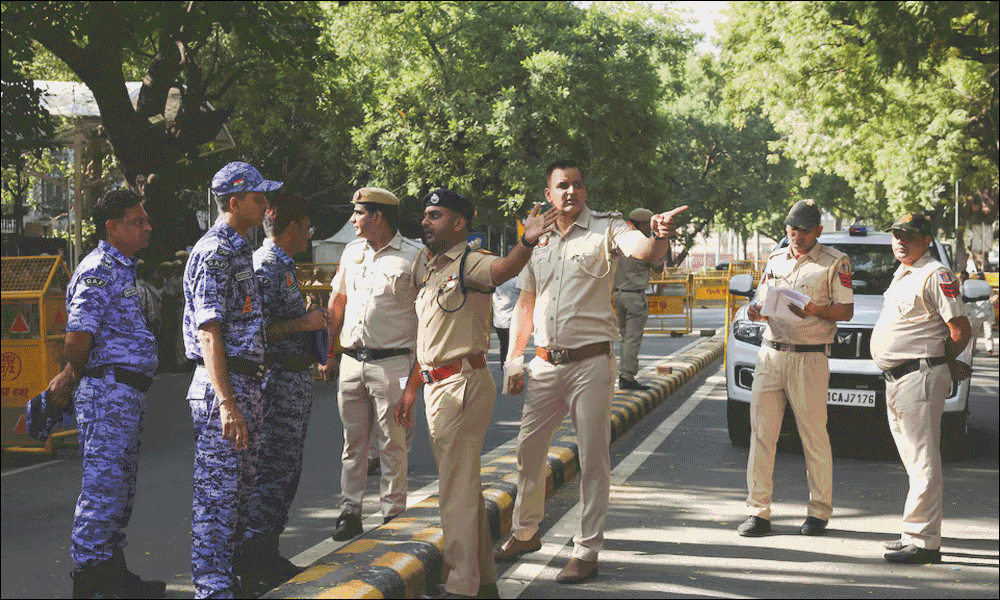
Over the weekend, police detained thousands of protesters, including leaders from the Cockroach Janta Party (CJP). These supporters attempted to march through central Delhi but were halted by heavy police presence, which had secured the area.
The Election Commission has denied any favoritism toward a particular party, stating that individuals who were wrongly removed from the voter list can re-register. Meanwhile, the BJP has accused opposition parties of trying to undermine democracy by questioning the electoral process.
As the opposition marches to the Supreme Court seeking legal action regarding the voter list changes, Chief Justice Surya Kant has advised the group to file an official petition since the matters are already under court review. Kant remarked that discussing ongoing cases would not be appropriate.
On Monday, hundreds of individuals, including members from opposition parties and left-leaning student groups, made their way to the Supreme Court, with some leaders traveling by bus. Anirudh Siyag, a PhD student participating in the protest, expressed, “The fundamental values of this country are being attacked, institutions are losing their independence… I am here to stand against this.”
To prepare for the protest, authorities shut down six metro stations for ten hours and restricted traffic in over twenty key areas in Central Delhi. Hundreds of security personnel in riot gear were dispatched, with barricades set up on main roads and water cannons on standby.
The BJP has characterized the protests as an effort by the main opposition Congress party to gain political power. Agriculture Minister Shivraj Singh Chouhan stated, “By discrediting constitutional institutions and creating chaos on the streets, their only goal is to return to power.”
In response to the situation, the Delhi Police announced that Jantar Mantar, a historic protest site, would no longer be an official location for demonstrations, and three new sites were designated instead.
Earlier this year, supporters of the CJP had held sit-in protests at Jantar Mantar, demanding the resignation of Education Minister Dharmendra Pradhan over exam paper leaks.
Separately, CJP leaders met with Delhi Police officials to request a date for a peaceful protest, warning of further demonstrations if no date is provided within 24 hours. This youth movement has recently mobilized protests on various issues, from government school conditions to job availability, posing a significant challenge to Modi and his BJP during his twelve years in power.
The unrest intensified following a report last month in the Indian Express, which revealed concerns raised internally by Kumar’s deputies regarding the removal of names from the voter list, registration processes, and digital systems. Opposition parties claim that the deletions disproportionately affect Muslim voters and other minorities, who are less likely to support the Hindu nationalist government, although both the Election Commission and the BJP have rejected these allegations.
