
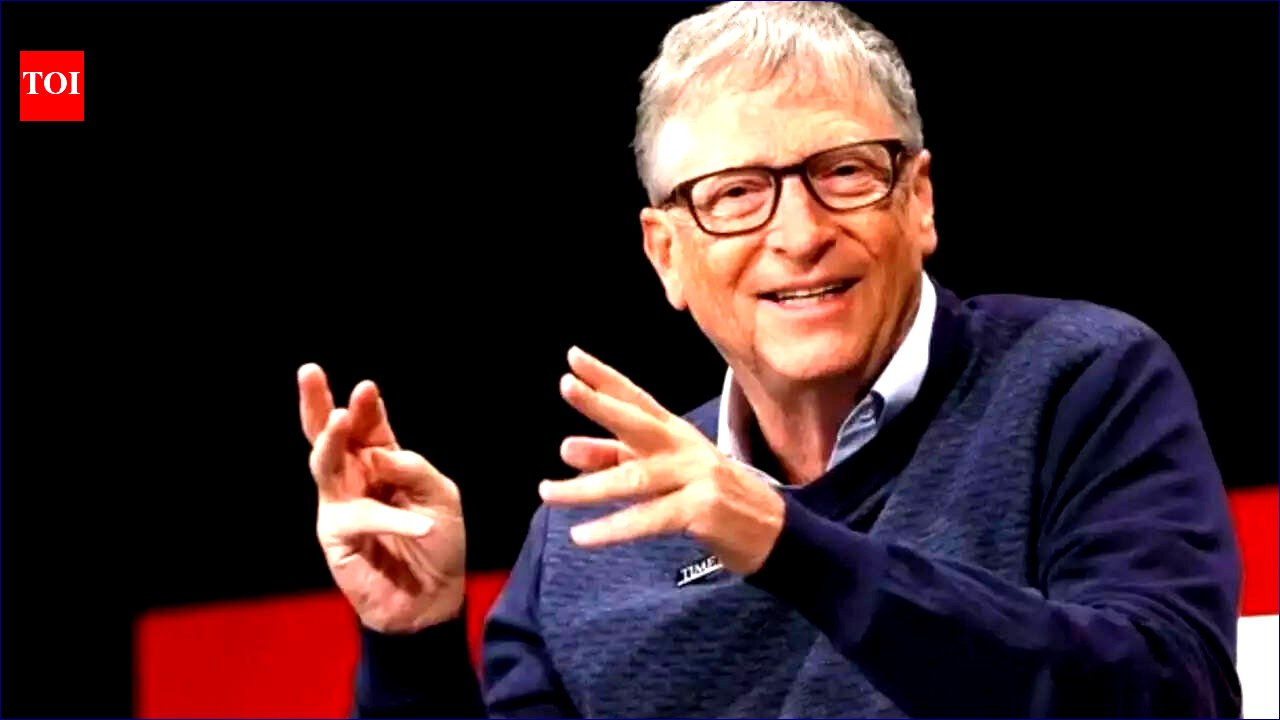
The Bill Gates Foundation has recently committed to investing $1 billion in the development of fair artificial intelligence (AI) tools. These tools are intended to support schools, healthcare workers, and farmers globally. A significant portion of this investment—$400 million, which is 40% of the total—will be specifically allocated to education. The foundation aims to utilize these funds to create AI-enhanced tutoring systems that will personalize learning experiences both in the United States and in other countries.
This $400 million contribution is a substantial move towards technology that has only become widely used in recent years. It aligns with a larger educational framework introduced by the foundation in July, which seeks to help 10 million more Americans gain valuable, career-advancing credentials before the organization wraps up its activities in 2045.
The donation comes at a time when there is an increasing discussion about the effectiveness of digital tools in primary and secondary education. As school districts around the world evaluate issues like screen time, data privacy, and the academic benefits of technology in classrooms, the foundation’s initiative aims to show that adaptive AI can produce real, positive results rather than just contribute to ongoing disruptions caused by tech.
However, there is some skepticism about incorporating AI in schools, which is influencing education policy in several states. Recently, New York City Mayor Zohran Mamdani and Schools Chancellor Kamar Samuels announced a pause on the use of student-facing generative AI in schools. This policy, which will affect about 600,000 public school students, puts a one-year hold on such technology for grades Pre-K to 8, starting in the 2026-2027 school year. It also introduces two AI critical thinking sessions each year for high school students and limited AI testing in select high school classrooms.
What Bill Gates Said About the Donation
In a report, Bill Gates, the foundation’s chair, discussed the motivation behind this initiative. He expressed that the foundation was established to address a fundamental issue: those who need help the most often lack the influence to direct where innovations and investments go. He noted, “AI poses similar challenges, but at a much quicker pace. If left to market forces alone, the best tools will first be created for those who can afford them, not necessarily for those who need them most.”
Gates emphasized the importance of making a conscious effort to use AI for good, stating, “This requires a focused commitment from government officials and technology developers to consider not only the most profitable users but also those who would benefit the most.”
The Gates Foundation’s Future
Looking ahead, Gates announced in May 2025 that the foundation plans to cease its operations by the end of 2045. In a message on his blog, Gates mentioned his desire to give back to society more rapidly than originally intended. He aims to donate nearly all his wealth through the foundation over the next 20 years, focusing on improving lives worldwide. Once this mission is fulfilled, the foundation will permanently close its doors on December 31, 2045.
