
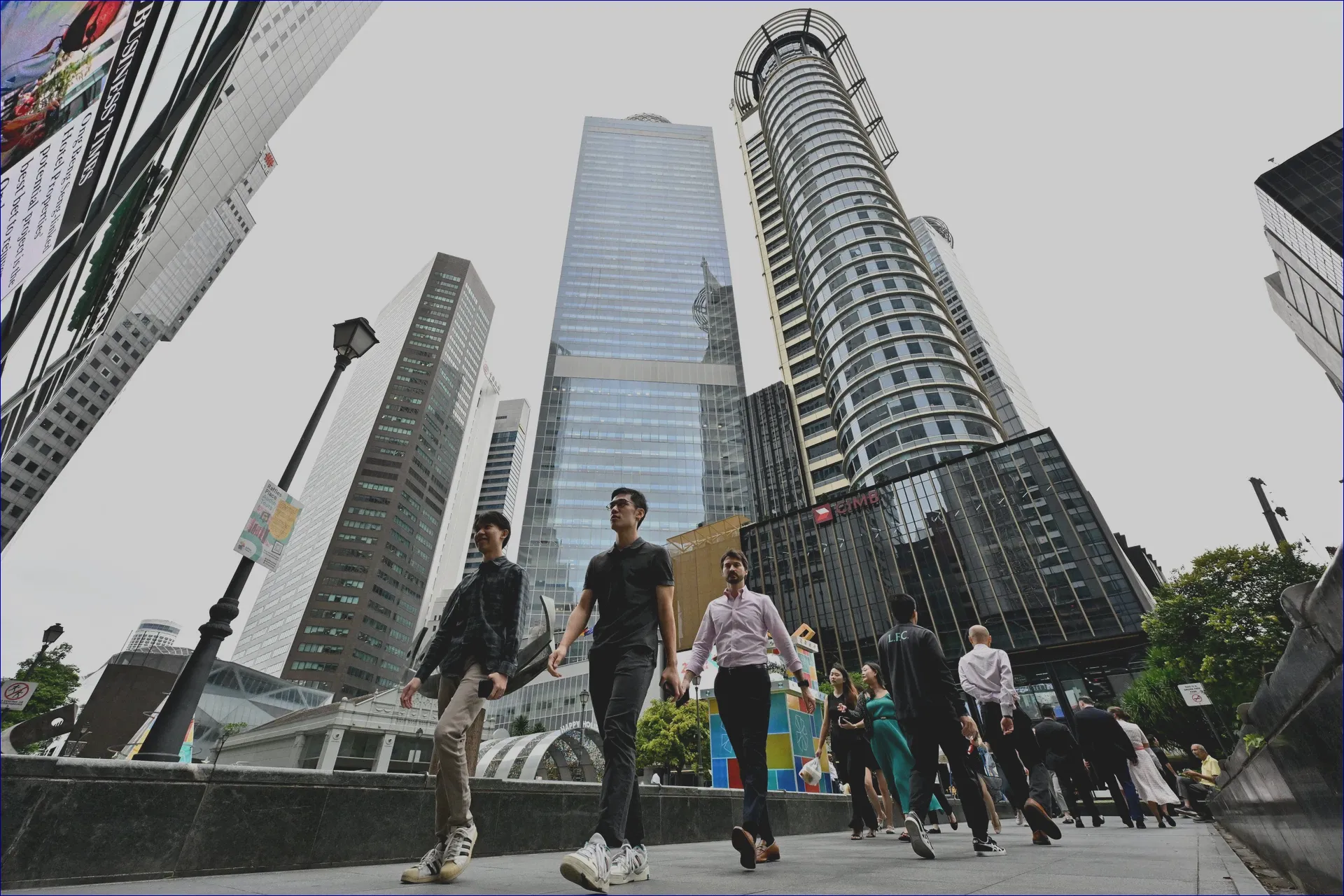
Singapore: A Beacon of Trust and Opportunity
Recently, I had the chance to meet with three different clients: a family office, a sovereign wealth fund, and the CEO of a major corporation. Each of them asked a similar question: “What does Singapore offer that we cannot find elsewhere right now?”
This question is important because we are witnessing a significant change in how global capital decides where to invest and operate.
Investors are increasingly favoring locations that provide a strong legal framework and predictable policies. This shift reflects a broader reassessment of where businesses feel secure, a trend likely to endure well beyond the current challenges that drove it.
Singapore’s rising prominence in this evolving environment is reflected in the numbers. It became the world’s fifth-largest international financial center in 2025, up from ninth place a decade earlier, according to a London think tank called New Financial.
Further data from the Monetary Authority of Singapore (MAS) shows that assets under management grew by 10% year-on-year, reaching S$6.7 trillion in 2025, with 76% of those assets coming from outside the country.
Adapting to New Realities
Today’s market is uncertain, with instability affecting old beliefs about what works. As companies adapt their supply chains after decades of structure, there is a heightened emphasis on stability and reliability, alongside returns. This means capital is increasingly drawn to regions and institutions that can provide both, especially in tough times elsewhere.
This trend is clear in the increasing focus of international investments.
United Nations data shows that the world’s top 20 host economies attracted over 80% of global foreign direct investment in 2025. Furthermore, strategic sectors made up 44% of global greenfield project values, a significant rise from just 16% in 2020. This indicates that while capital isn’t leaving the global economy, it is becoming choosier about where it operates.
Earlier this year, the Singapore dollar hit record highs against various regional currencies, even as many other currencies weakened amid global tensions. Analysts pointed to Singapore’s strong credit rating and its reputation as a safe haven as reasons for this stability.
What may seem like abstract rankings directly impact real-world decisions: where a sovereign fund stores its assets, where a multinational sets up its regional finance office, and where a family office decides to manage wealth for future generations.
Singapore as a Financial Hub
Singapore’s growth is closely linked to its image as a leading global financial center. It currently ranks as the world’s third-largest foreign-exchange market, with daily trades averaging US$1.485 trillion, and is the third-largest asset management site, managing US$2.1 trillion in assets as of 2025.
This reputation isn’t merely due to size. For years, Singapore has invested in the foundations of digital finance, engaging financial institutions, tech providers, and policymakers to explore practical tokenization applications. The focus has shifted from experiments to real implementations.
Similarly, Singapore’s strategy for artificial intelligence (AI) is taking shape. As of June this year, over 200 financial institutions are involved in PathFin.ai, a platform for developing and validating AI applications.
In August, MAS announced an additional S$220 million investment over three years for its Financial Sector Technology and Innovation scheme, aiming to support institutions in adopting market-ready AI solutions and help global firms establish centers for AI, quantum computing, and digital assets.
Singapore’s established status as a financial center, its advances in digital finance, and its growing AI ecosystem create a powerful combination. Together, they provide the tools needed for clients facing different challenges, be it exploring new investment products or adapting operational models—all within the same city.
Citi’s Commitment to Singapore
The strengths that attract clients to Singapore also make it vital for us at Citi. It’s one of the few markets worldwide where we maintain a comprehensive international presence. Our global strategy revolves around five connected businesses focused on serving clients with cross-border needs. Our operations in Singapore span banking, markets, services, and wealth, reflecting the diverse needs of clients in this region.
In 2027, Citi will celebrate 125 years in Singapore, a milestone that mirrors the country’s transformation from a regional trading port into a global financial hub. As Singapore’s financial landscape has evolved, so has Citi’s role within it—from facilitating trade and investment to driving innovations.
We are dedicated to contributing to Singapore beyond just business; we are focused on nurturing the talent required for the future of banking. This year, we welcomed 67 summer analysts selected from a pool of over 5,000 applicants, showcasing the resilience and creativity needed to lead the next wave of change in financial services.
Looking Ahead
During my meetings with the family office, the sovereign wealth fund, and the multinational CEO, it became clear they were each looking for trust, predictability, and connections to opportunities around the world.
This convergence, found in Singapore, helps explain the city’s success as a strategic hub. These favorable conditions result from conscious choices made by policymakers who prioritize openness, along with a collective commitment to long-term planning rather than quick fixes.
The global community is placing its trust in Singapore’s positive reputation for stability and openness and its capacity to foster connectivity in an uncertain world. This is a reputation that the city and the businesses operating there must earn every day.
