
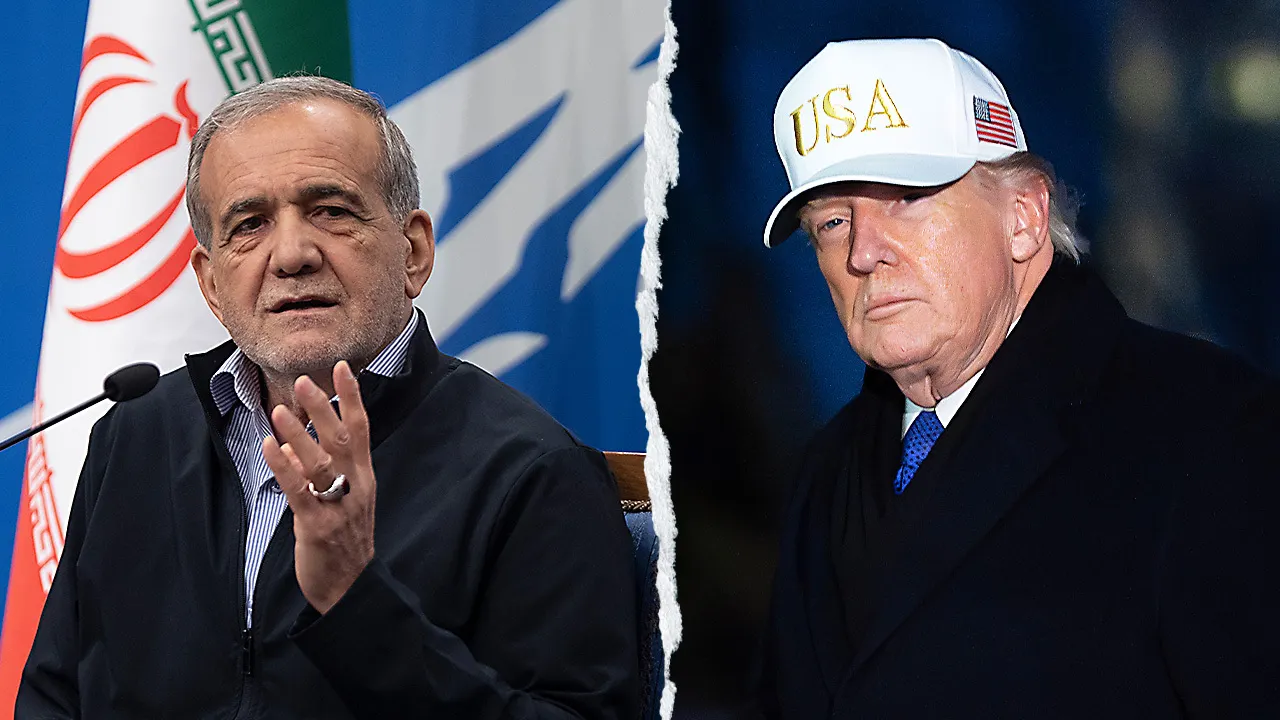
Iran’s President Criticizes U.S. at United Nations Amid Rising Tensions
In a recent address at the United Nations, Iranian President Masoud Pezeshkian sharply criticized the United States, claiming that America and Israel were aggressors targeting Iran. This statement was made during a time of increased tensions between Washington and Tehran.
Behnam Ben Taleblu, a foreign policy expert at the Foundation for Defense of Democracies, noted that U.S. President Donald Trump likely dismissed Pezeshkian’s remarks, understanding that the U.S. holds the main power in this ongoing conflict.
During his speech at the U.N. General Assembly, Pezeshkian portrayed Iran as a victim of unwarranted attacks. “We only defend ourselves. We are not terrorists,” he insisted, referring to the Iranian people as victims of cowardly assaults.
Taleblu remarked that such comments from Pezeshkian might not have fazed Trump at all, suggesting that the Iranian president’s speech was markedly different from the reality of Iran’s policies and actions.
Not long after Pezeshkian spoke, President Trump defended the U.S. stance against Iran, warning that Tehran must choose between negotiating peace or facing severe consequences. “Do I annihilate the Islamic Republic, and do it quickly?” he stated, emphasizing his tough approach.
Both leaders have taken predictable stances regarding their countries’ fraught relationship. Despite the harsh words exchanged on the podium, there are indications that both sides are still exploring diplomatic avenues behind the scenes.
Trump revealed that U.S. officials had discussions with Iranian representatives on the sidelines of the General Assembly, calling the exchanges productive. The American envoy Steve Witkoff and senior advisor Jared Kushner participated in these talks, which included Iranian Foreign Minister Abbas Araghchi.
Taleblu observed that both sides are attempting to use time to their advantage, placing the onus of decision-making on each other. Pezeshkian’s rhetoric, he noted, seems to paint Iran as a victim within a broader anti-American narrative. “In the end, it’s the Iranian people who suffer due to the policies of the government,” he added.
The ongoing talks and confrontational speeches reflect the complex situation between the U.S. and Iran. While acknowledging the possibility of negotiations, both nations remain firm in their positions. Pezeshkian reaffirmed Iran’s determination not to yield to military pressure while signaling openness to dialogue.
However, Taleblu warned that Iran might face challenges if it does not move away from its established policies. If there is no significant change, the back-and-forth between threats and talks might yield little progress, with both sides holding firm to their red lines.
