
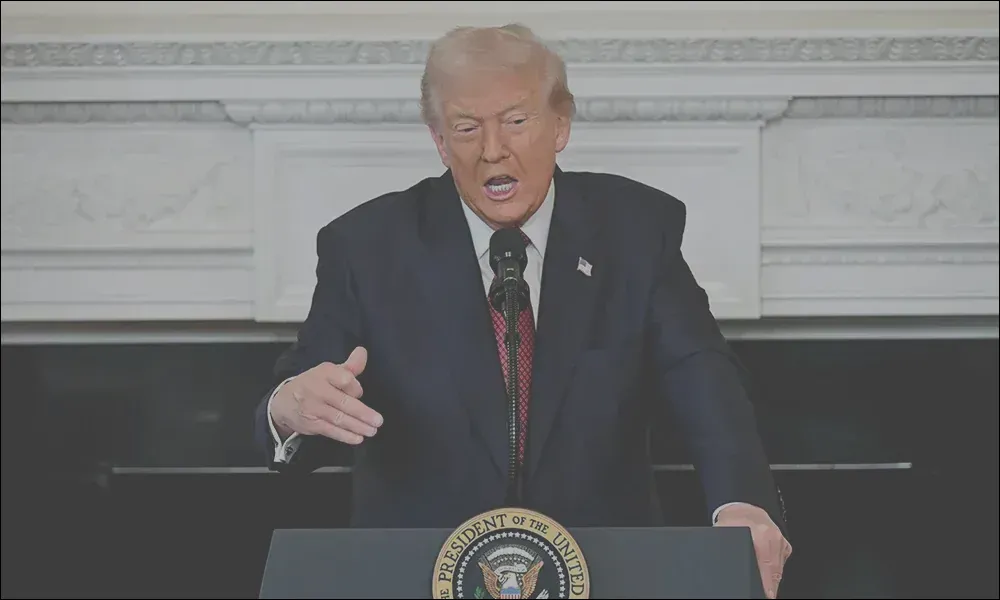
DUBAI: On Monday, US President Donald Trump indicated that Iran is eager to negotiate a deal with the United States, which could signal a potential diplomatic opportunity amid escalating conflicts across the Middle East that pose risks to global oil supplies.
Trump expressed his thoughts through a post on Truth Social, stating, “The failing Nation of Iran wants to make a deal, quickly and badly. I will determine whether or not the USA will choose to engage – The concept of which we are open to.”
His comments came shortly after Gulf states decided to delay a meeting with Iran, while tensions rose as Yemen’s Houthis launched new attacks against Saudi Arabia, raising concerns about the spread of violence in the region.
In a retaliatory move against Saudi airstrikes in Yemen, the Houthis claimed to have fired numerous missiles and drones at a military base in Khamis Mushait, Saudi Arabia, targeting key facilities such as hangars, radar systems, runways, and ammunition depots. Saudi authorities responded by issuing emergency alerts in several southern cities that have been targets of Houthi attacks before.
Recently, the Houthis have made significant gains in Yemen, taking control of areas including Perim Island, which sits at the entrance to the Red Sea. Additionally, a separate attack blamed by Riyadh on militants in Iraq disabled a key pipeline that is vital for transporting Gulf oil exports while avoiding the blockaded Strait of Hormuz.
Oman was set to host a meeting on Monday involving Iran and Gulf states to discuss reopening the crucial Hormuz shipping lane, which has been largely closed since US and Israeli attacks on Iran in late February. However, Oman’s Foreign Minister announced that the meeting was postponed at Saudi Arabia’s request.
Meanwhile, Iran issued a warning to 77 vessels that it claims have violated its operational protocols in Hormuz, stating they may face penalties or confiscation during future transits.
US Energy Secretary Chris Wright noted that the number of ships crossing the Strait with US backing is on the rise, but independent reports suggest that oil flows could have decreased this month with renewed fighting after a relatively quiet August.
Trump Faces Challenges as Yemen Conflict Escalates
The ongoing conflict in Yemen presents a complex dilemma for Trump, as he is under pressure from Gulf allies to act against the Houthis while also aiming to avoid escalating the conflict further. Since 2015, Saudi Arabia has led a coalition against the Houthis, with a ceasefire keeping tensions at bay in recent years. However, fighting has erupted again, with the Houthis making advances against forces supporting the internationally recognized government.
The International Organization for Migration estimates that around 82,000 Yemenis have fled their homes due to the recent violence, with the Houthis capturing cities like Mocha, a historic port city.
One displaced person, Aisha Muhammad, shared her story, revealing the hardships faced by her family members trapped in conflict zones. “They can’t even go out to the market to get food and drinking water. They are being blocked and shot at, so they are trapped inside their homes,” she said. “They cannot reach us, and we cannot return to them. This is a trial from God.”
In Jeddah, Saudi state media reported a meeting between Crown Prince Mohammed bin Salman and US regional commander Admiral Brad Cooper on Monday. Sources indicated that the US government has so far resisted Saudi requests for direct military involvement, opting instead for intelligence support. Trump mentioned that he had talked with the Crown Prince and noted that the Houthis have also reached out to Washington, advising against US involvement in the conflict.
In the past, the United States had bombed Houthi targets for two months in 2025 before halting the campaign after a ceasefire was established. Recently, Trump expressed optimism that the conflict with Iran might conclude shortly after the upcoming US midterm elections, predicting that oil prices would sharply decline afterward.
