
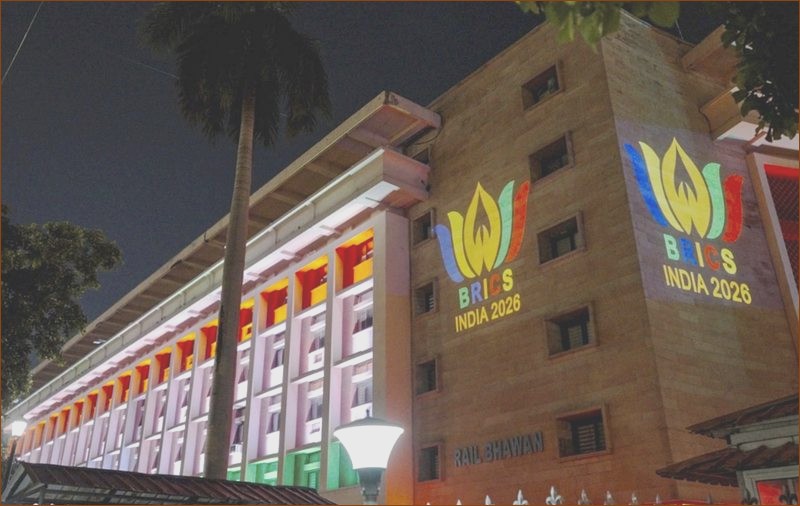
The capital city is gearing up to host a significant event this weekend as leaders from around the world gather for the 18th BRICS Summit. Chinese President Xi Jinping, Russian President Vladimir Putin, and Iranian President Masoud Pezeshkian are among the prominent figures attending, making India a key player in discussions surrounding the ongoing Russia-Ukraine conflict, tensions in West Asia, and shifts in the global economic landscape.
Scheduled for September 12 and 13 at Bharat Mandapam, the summit will bring together representatives from the 11 BRICS member nations, including Brazil, China, Egypt, Ethiopia, Indonesia, Iran, Russia, Saudi Arabia, South Africa, the UAE, and India. In addition, 10 partner countries such as Belarus, Bolivia, Cuba, and others will also be present, along with heads of various regional organizations and international institutions like the UN and WHO.
This diverse gathering poses a diplomatic challenge for India, which aims to steer BRICS toward development and collaboration while balancing the varying political and economic interests of its members. Xi Jinping’s attendance is especially notable as it’s his first visit to India in seven years. This could provide an opportunity for bilateral talks with Indian Prime Minister Narendra Modi, who aims to strengthen ties with China following recent improvements.
Meanwhile, Putin’s visit will shine a spotlight on the Russia-Ukraine situation and Russia’s growing economic relationship with India. Ahead of the main summit, he is expected to meet with Modi and address the BRICS Business Forum.
Pezeshkian’s participation is particularly important amid ongoing conflicts involving Iran and instability in West Asia. The presence of both Iran and Saudi Arabia within BRICS highlights the challenge of addressing regional issues while maintaining unity in the group.
The summit will be a test of India’s ability to coordinate efforts within a rapidly expanding organization that consists of members with diverse political and strategic perspectives. India is eager to position BRICS as a forum for collaboration among developing nations, aiming to amplify the voice of the Global South rather than create an anti-Western alliance. Key focuses for the summit include economic cooperation, digital payment initiatives, technology sharing, and collective approaches to energy and food security, climate change, and necessary reforms in global institutions.
During the meeting on September 12, BRICS leaders will discuss strengthening partnerships in various sectors, along with sharing insights on pressing international and regional matters. The following day, an expanded meeting will include not just BRICS members but also partner countries and international organization leaders.
Interesting to note is the absence of Bangladesh’s top leadership, which may attract attention. Bangladesh Prime Minister Tarique Rahman was invited as the chair of BIMSTEC, but his non-attendance reflects the current strain in India-Bangladesh relations, particularly related to the extradition of former Prime Minister Sheikh Hasina, who has been residing in India.
Negotiation over the New Delhi Declaration is anticipated to be complex, especially regarding the West Asia conflict, given the differing stances of Iran and the UAE. Reaching a consensus will be crucial for the summit’s success and ensuring a unified joint statement.
In a move to ease public disruptions, the government plans to minimize VIP convoys during the summit. Union Ministers and Chief Ministers will travel together in a single bus from Parliament to the venue, rather than using individual convoys.
