
Questions Surrounding the Role of IN-SPACe in ISRO’s Rocket Technology Transfer
There is currently uncertainty about how the Indian National Space Promotion and Authorisation Centre (IN-SPACe) issued Expressions of Interest (EOIs) concerning ISRO’s advanced rocket technologies and whether this decision aligns with any official government policies.
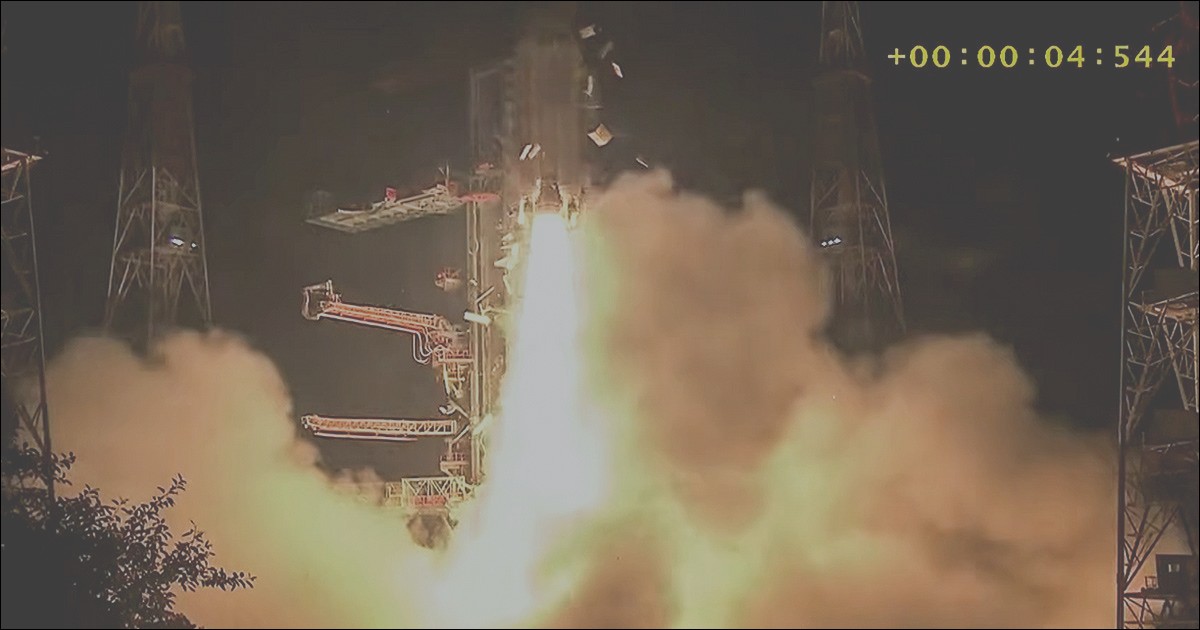
Image: ISRO successfully launched the GSLV-F17/EOS-05 mission from the Satish Dhawan Space Centre in Sriharikota on September 4, 2026. Credit: ISRO/ANI Video Grab
The involvement of IN-SPACe in the transfer of rocket manufacturing technology from the Indian Space Research Organisation (ISRO) to private companies is facing scrutiny. This scrutiny comes from former secretaries of the Department of Space and nine employee associations within ISRO. Both ISRO and Dr. Pawan Kumar Goenka, the chairman of IN-SPACe, have responded to media reports, labeling them as misleading but have not issued clarifications on key concerns raised by former officials and employee groups.
Key Concerns Raised
In a formal letter to Dr. V. Narayanan, Secretary of the Department of Space and Chairman of ISRO, nine employee associations have requested clarity on various aspects regarding the arrangement for transferring publicly developed technologies and facilities to private operators. Their questions include the role of NewSpace India Ltd (NSIL) in this process and whether Goenka’s statements represent official government positions or prioritize promotional goals.
Further concerns have been raised, including inquiries about ISRO’s ongoing roles as a public organisation, particularly regarding the development and launch of its established rockets like PSLV and LVM3. There are worries about whether public sector companies are being excluded from this new venture and what the rationale behind such a decision might be.
Voices of Experience Weigh In
Former space secretaries, including G. Madhavan Nair, have expressed their thoughts that IN-SPACe may be overstepping its designated role by seeking private sector participation related to ISRO’s PSLV and LVM3 technologies and future spaceport operations in Tamil Nadu. According to them, the task of transferring ISRO’s technology should primarily be managed by NSIL, created to handle such transitions.
Responses from ISRO and IN-SPACe
ISRO has shared updates on social media, emphasizing that while the Department of Space sets overall policy, ISRO remains the main institution for advanced research, technology development, and national missions. They clarified that IN-SPACe’s role is to facilitate private sector participation, whereas NSIL is responsible for commercializing ISRO’s services.
Despite reassurances, critics remain unconvinced, voicing that IN-SPACe’s actions appear to stray beyond its intended scope by soliciting EOIs for certain technologies and upcoming projects.
ISRO reaffirmed their commitment, stating they will not lose their central role in India’s space endeavors. Instead, the ongoing policy changes aim to broaden and strengthen the entire Indian space landscape, allowing ISRO to focus on next-generation projects while private entities scale established technologies.
Looking Ahead: ISRO’s Vision
In outlining future goals, ISRO mentioned ambitious plans like constructing a space station, conducting manned missions to the Moon by 2040, and developing advanced reusable launch systems. These endeavors are part of the broader Space Vision 2047, which seeks to establish India as a significant player in global space exploration.
Dr. Goenka highlighted that IN-SPACe aims to enable increased involvement from private companies, allowing ISRO to dedicate its resources to advanced research and significant missions—areas that are particularly complex and beyond the reach of the private sector.
In conclusion, while the expansion of the private sector’s role in India’s space landscape is underway, questions about IN-SPACe’s actions and the strategic direction of ISRO remain pertinent. The resolution of these issues will be crucial for the future trajectory of India’s ambitious space objectives.
