
U.S. Tightens Economic Sanctions on Iran, Puts India in a Tough Spot
The Trump administration has intensified its economic sanctions on Iran, launching what is known as “Operation Economic Outcast.” This new strategy also includes strict consequences for countries that continue to conduct business with Iran.
This puts nations like India, which has a close partnership with the U.S., in a challenging position. While New Delhi is a crucial ally in the Indo-Pacific region, it has significant commercial ties and strategic interests in Iran that it is unlikely to abandon, potentially leading to tension with the Trump administration.
Meeting on the Sidelines of the Summit
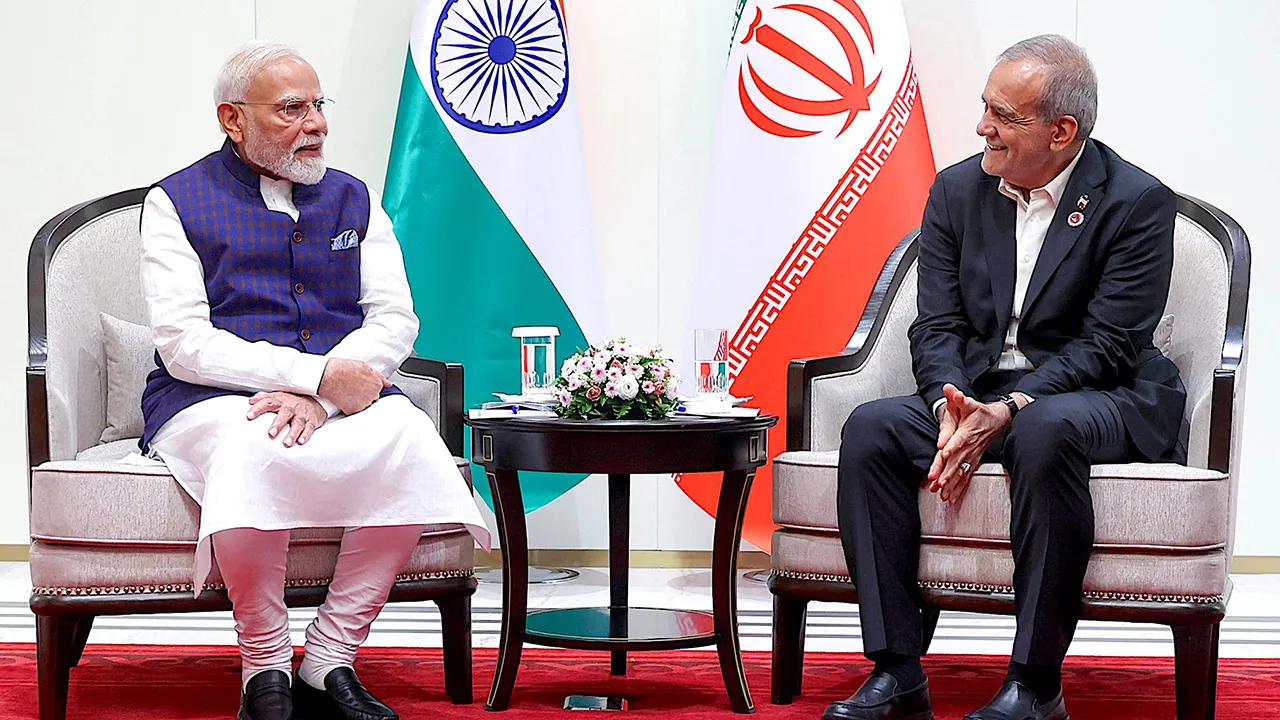
On Monday, just a week after the new sanctions were announced, Indian Prime Minister Narendra Modi met with Iranian President Masoud Pezeshkian at the Shanghai Cooperation Organization summit in Kyrgyzstan. This marked their first meeting since the outbreak of war six months prior.
According to an Iranian statement, Pezeshkian urged Modi to use India’s influence to de-escalate tensions and return to dialogue, thanking him for India’s support. Modi emphasized India’s desire to enhance its long-standing friendship with Iran and expand trade between the two countries.
Sadanand Dhume, a senior fellow at the Council on Foreign Relations, noted that Modi’s move was aimed at reassuring domestic audiences that he is not merely bowing to U.S. pressure. He pointed out that India-Iran ties have already been largely affected by previous sanctions.
U.S. Official Responds
When asked about Modi’s meeting, U.S. Secretary of State Marco Rubio expressed concerns. He stated that no country should assist Iran in avoiding sanctions that enable them to fund terrorism or develop nuclear weapons. Rubio warned that countries supporting such actions would face repercussions.
A U.S. official also reiterated that the administration is in discussions with partners worldwide to prevent Iran from acquiring nuclear capabilities.
Trade Relationships at Stake
India has been one of Iran’s top five trading partners, although trade has decreased significantly since the peak in 2018-19. Indian exports to Iran mainly consist of goods that qualify for humanitarian exemptions, such as pharmaceuticals. Iran remains a major market for Indian rice, with over $383 million worth exported in just the first half of the year.
In a significant move, India restarted importing Iranian crude oil in April after a seven-year hiatus, following temporary sanction relief by the Trump administration aimed at mitigating the impact of Middle East conflicts on global energy.
Future Uncertainties
The U.S. Treasury Department has indicated that countries engaging in Iran-related activities will receive specific deadlines to cease such trade. This has raised concerns for Indian exporters, as the United Arab Emirates’ suspension of trade with Iran has significantly impacted their operations.
Iran has warned of serious consequences for any cooperation with what it calls illegal U.S. actions. Furthermore, India’s interests in Iran extend beyond commerce; it includes strategic projects like the Chabahar port, which enhances trade routes connecting India to Central Asia and Europe while bypassing Pakistan.
A Balancing Act Ahead
Amid rising global oil prices and challenges from the Middle East, India finds itself at a crossroads. While it may resist U.S. pressure when crucial interests are involved, analysts argue that Iran’s importance has diminished compared to ties with countries like Russia.
The U.S. will continue to weigh the diplomatic risks of pressuring major economies like India. National security officials emphasize the need to maintain a strong strategic partnership with India, especially given the rising influence of China.
As the relationship between the U.S. and India grows more complicated under President Trump’s second term, the recent sanctions could test their partnership once again. Still, experts suggest that if push comes to shove, India will prioritize its robust trade ties with the U.S. over its weaker links with Iran.
As Chinese President Xi Jinping is set to visit India for the upcoming BRICS Summit, alongside other leaders, the coming weeks will be crucial in determining how these dynamics play out.
The situation remains fluid, and the course of action taken by the U.S. will significantly affect its relationships in the region. The Indian government has not yet responded to requests for comments on this evolving issue.
