
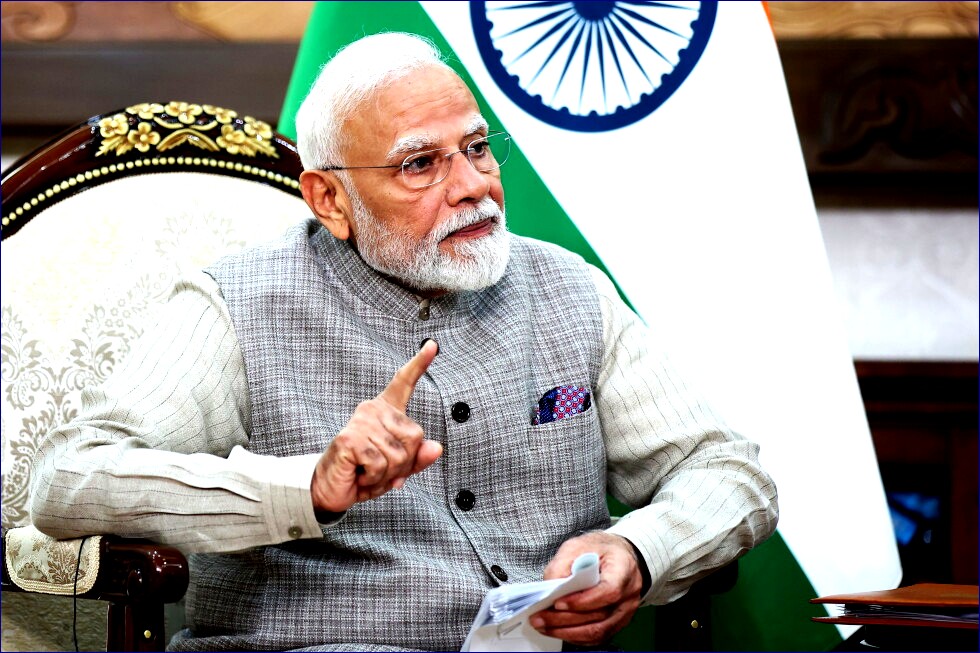
Leaders from China, Russia, and India met with other heads of state in Kyrgyzstan on Monday for the summit of the Shanghai Cooperation Organization (SCO). This organization is positioned as a counterbalance to U.S. global influence.
Chinese President Xi Jinping, Russian President Vladimir Putin, and Indian Prime Minister Narendra Modi attended the summit in Bishkek, the capital of Kyrgyzstan. During the event, Putin held separate discussions with both Xi and Modi. He expressed Russia’s intention to make a visa-free travel arrangement with China permanent and mentioned the strengthening ties between Russia and India.
On the agenda for Tuesday, the official session of the SCO, are expected talks between Putin and Iranian President Masoud Pezeshkian. Both Russia and Iran are looking to enhance their relationships with non-Western countries amid ongoing international conflicts.
Modi expressed India’s desire for peace in Ukraine, stating, “We need to move from endless war to the end of war, to the end of hostilities,” emphasizing the importance of this for humanity.
The SCO was established in 2001 by China, Russia, and four Central Asian nations as a security platform. It has since expanded to include ten member countries, namely Russia, China, India, Iran, Pakistan, Belarus, Kazakhstan, Kyrgyzstan, Tajikistan, and Uzbekistan, along with several other nations that hold “dialogue partner” status.
China has been keen to position the SCO as an alternative to Western-led groups, such as the G7. The Chinese government recently stated that the SCO has explored new avenues for regional collaboration, promoting a vision for an alternative global order with Russia’s support.
Despite showcasing strong ties, the summit highlights significant disagreements among its members. It’s not a cohesive political or military bloc, and each country has its own unique interests.
For India, attending the summit is seen as more of a strategic move than a platform for concrete outcomes. The organization is notably influenced by China, which, along with Pakistan, presents challenges for India.
Analysts suggest that India’s participation in the SCO allows it to safeguard its interests and observe changes in geopolitical dynamics. Dinakar Peri, a security studies expert, stated that this involvement enables India to assess the region more closely and manage its relationships with other nations.
Turkey is also using its SCO partner status to bolster its regional position. President Recep Tayyip Erdogan has shown interest in making Turkey a full member of the organization while maintaining its ties with NATO and Europe.
In the lead-up to the summit, significant security measures were implemented in Bishkek. Many shopping centers and public areas were closed, and traffic in the city was restricted. Authorities also postponed the school year until September 15 and declared a non-working day for civil services coinciding with the summit.
