
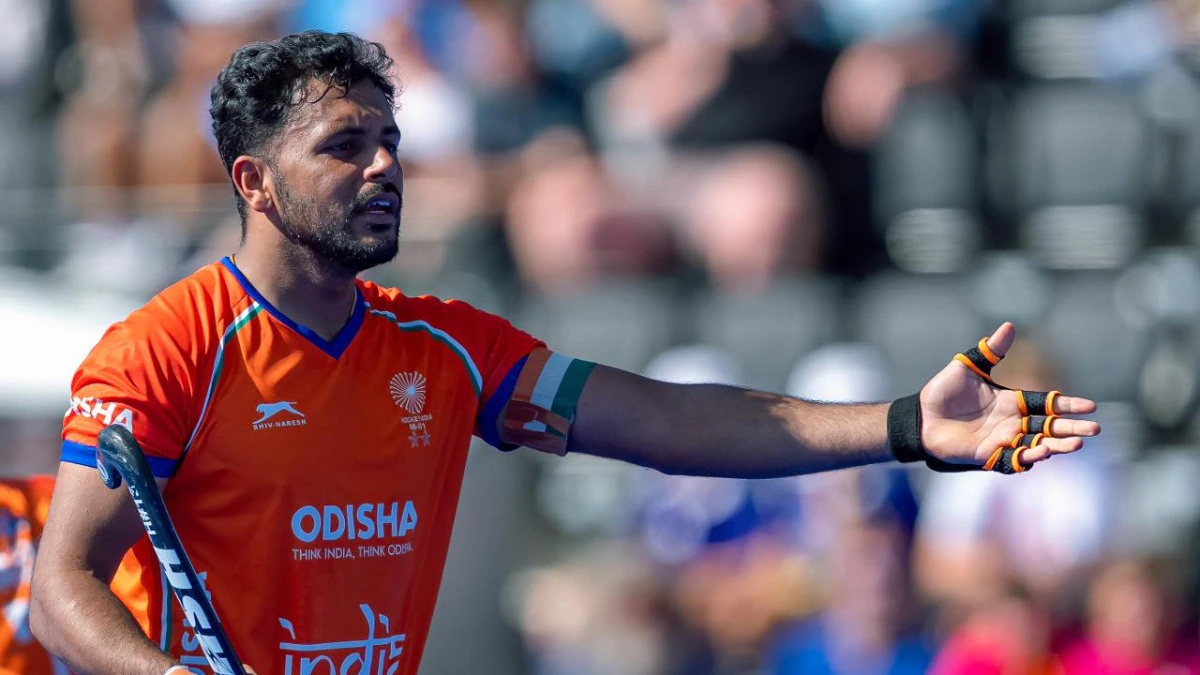
India’s men’s hockey team understood the significance of their match against Argentina. Meanwhile, the women’s team ended their campaign on a disappointing note after a hard-fought draw with Australia on August 23. Despite their struggles, many still appreciate the effort they put into the tournament.
The Indian women’s team faced tough competition but managed to only lose once throughout the tournament, which was against the skilled Netherlands. They also drew with teams like China, Australia, and England, and secured a win against South Africa. This performance could mark a positive step forward for the Indian women’s hockey team, even though they have now waited over 52 years to reach the World Cup semi-finals again.
The expectations were vastly different for the men’s squad, who came into the tournament aiming to prove themselves among the world’s best. Their confidence was high, and the coaching staff worked hard to manage expectations.
Unfortunately, what followed during the tournament was a harsh awakening, not just for the team but for Indian hockey enthusiasts as well. India struggled to secure victories against higher-ranked teams and ended up losing matches against the Netherlands, England, and Argentina. In fact, the Argentine team has now outscored India 23 goals to 5 in their last five encounters.
While India managed wins against Wales and their long-time rivals, Pakistan, both matches were marked by unconvincing performances and narrow victories. The question now looms: how can India truly close the gap with the top teams in the world?
A CONCERNING APPROACH TO THE WORLD CUP?
Following India’s 5-3 defeat to Argentina, goalkeeper PR Sreejesh voiced urgent concerns about how Hockey India approached the World Cup. He questioned whether they were focused on playing impressive hockey or simply on winning, urging decision-makers to stop hiding behind terms like “learning” and “future tournaments.”
With the Asian Games approaching, which offer direct qualification for the 2028 Olympics, the need to prioritize success becomes even more critical. Many hockey veterans suggest that qualifying for the Olympics should take precedence over other tournaments.
India’s performance in the Hockey Pro League has also been underwhelming. Their best result was a third-place finish in the 2021-22 season, followed by an eighth-place finish in the most recent edition. Although the Pro League doesn’t always feature fully capable teams, India’s struggles to keep up with powerhouses like Belgium and Germany raise doubts about their competitive readiness.
Coach Craig Fulton faced questions after the Argentina loss regarding the decision to play Yashdeep Siwach in defense during a crucial match. Despite Siwach’s limitations, Fulton stated they were using this game to prepare for upcoming tournaments, which sparked discomfort around the priorities of the team.
WHERE DOES INDIA STAND IN HOCKEY?
Currently, India is ranked eighth in the FIH standings, the highest among Asian teams. However, their standings raise more questions than answers when compared to the top teams. India hasn’t defeated the Netherlands in a major tournament since 2014, and their last victory against Belgium was also in 2014. Although they won bronze against Germany in the Tokyo Olympics, they lost to them in the semi-final of the upcoming Paris Olympics.
Looking past the top three, India has achieved sporadic victories against teams like Spain and Australia, but inconsistency remains a significant issue.
NO CLEAR TRANSITION?
A pressing concern for Indian hockey is the future of the team as veteran players begin to retire. Stars like Manpreet Singh are nearing the end of their careers, and many worry there is no clear succession plan in place. Harmanpreet Singh continues to excel in drag-flicking, but if he is neutralized, India lacks a backup plan.
In the last World Cup, most goals came from Harmanpreet, and the reliance on a few key players indicates a lack of a broader strategy. With the Olympics just two years away, India needs to start nurturing a new generation of talent, as it cannot afford to wait for its veterans to leave the game.
India will likely regroup and head to Japan soon, facing teams that may be less challenging. A gold medal there could secure Olympic qualification and help ease the sting of their World Cup disappointment.
Despite this, the issues that surfaced during the tournament against top teams will not vanish quickly. Until Indian hockey addresses these challenges, they are bound to resurface.
