
The UK’s ambitions in artificial intelligence (AI) are currently facing challenges due to limited computing resources. In response, the government has launched a £500 million Sovereign AI Fund and initiated a larger £1.1 billion program aimed at bolstering AI hardware development. By the year 2026, a considerable portion of UK venture capital is expected to be directed towards AI and hardware startup companies.
Some of the investments focus on enhancing GPU capabilities, while others target advancements in chip design, networking, or algorithm improvements essential for the sector’s progress.
In light of this, prominent investors in the UK have been asked to spotlight standout startups in the AI infrastructure space. Below is a list of these noteworthy companies presented in alphabetical order.
Duku AI
- Founders: Ted Chalouhi, William Lewis
- Founded: 2025
- Total Raised: $2.11M
- Nominated By: Adam French, partner at Antler
Duku AI tackles the growing concern over the reliability of AI-generated code, which is becoming more affordable to produce. The company uses autonomous agents that mimic real users to explore all possible outcomes and scenarios, ensuring robust testing without the need for extensive scripts. Duku AI seamlessly integrates with CI tools like GitHub Actions.
Ted Chalouhi, the company’s CEO, previously held key positions at Uber and Deliveroo. He helped establish Duku AI during his time at Antler’s London accelerator. Co-founder William Lewis has a strong engineering background, previously managing engineering at Meta.
Callosum
- Founders: Danyal Akarca, Jascha Achterberg
- Founded: 2024
- Total Raised: $110.3M
- Nominated By: Seb Hunte, investment director at AlbionVC
During their PhDs at Cambridge, Danyal and Jascha recognized that intelligence could be achieved through coordinated smaller components, similar to how the brain operates. Their platform supports AI tasks across various chip types and is compatible with major cloud services like AWS and Google Cloud.
Callosum raised $10.3 million in its seed round in February 2026 and followed with a significant $100 million round in June, totaling over $110 million in under a year.
Meticulous
- Founders: Gabriel Spencer-Harper, Quentin Spencer-Harper
- Founded: 2021
- Total Raised: $19.1M
- Nominated By: Adam French, partner at Antler
The Spencer-Harper brothers launched Meticulous to improve unreliable software testing by employing a deterministic simulation engine. Their system records actual user interactions, enabling precise visual comparisons without overwhelming developers with excessive data.
Meticulous has seen impressive growth, with notable clients like Notion and ElevenLabs, raising $19.1 million through various funding rounds, including a recent $15 million Series A.
Signaloid
- Founder: Phillip Stanley-Marbell
- Founded: 2019
- Total Raised: $4.2M
- Nominated By: Mahesh Shankar Santiapillai, investment manager at Cambridge Enterprise Ventures
Phillip Stanley-Marbell founded Signaloid to tackle the inefficiencies of traditional computing in handling probabilities and uncertainty. Their technology allows for a thousandfold increase in speed for probability calculations, aiming to benefit fields such as finance and robotics.
Signaloid has secured several grants and funding from various investors, highlighting its potential to transform industries by improving data analysis processes.
Tendrilis
- Founders: Nils Cremer, Hugo McNally
- Founded: 2025
- Total Raised: Undisclosed
- Nominated By: Seb Hunte, investment director at AlbionVC
Tendrilis is creating a new general-purpose computer architecture, moving away from minor speed enhancements to develop systems that utilize thousands of cores efficiently. With a focus on energy conservation, the company aims to meet the demands of modern computing and AI.
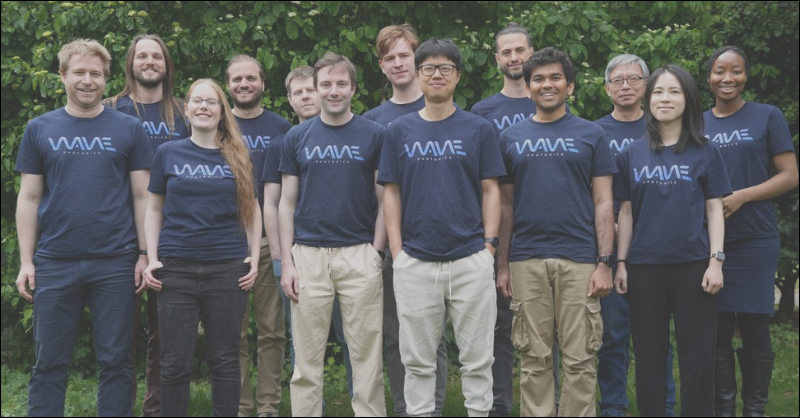
Wave Photonics
- Founders: James Lee, Matthew Anderson, Mateusz Kubica
- Founded: 2021
- Total Raised: $9.4M
- Nominated By: Mahesh Shankar Santiapillai, investment manager at Cambridge Enterprise Ventures
Wave Photonics is innovating in the area of photonic chips, which are faster and more energy-efficient than conventional chips. Using computational design technology, they streamline the manufacturing process, making rapid advancements in photonic circuit development.
The company has made strides in fundraising through various seed rounds, aiming to revolutionize the AI landscape with this cutting-edge technology.
As seen from these emerging startups, the UK is working actively to strengthen its position in the AI sector despite current challenges. With government initiatives and innovative companies rising to the occasion, the future of AI in the UK looks promising.
