
Elon Musk has provided an update on SpaceX’s exciting plans to catch the upper stage of the Starship mid-air. In a recent statement, he mentioned that this groundbreaking event will now take place in a few months instead of the previously expected timeframe of late August. This means that space enthusiasts will have to wait a little longer to see this historic moment unfold.
Initially, on August 4, Musk hinted that SpaceX had plans for this ambitious attempt during an upcoming test mission. He shared on X, “It looks like we will probably catch the ship with the tower in a few months. If a tower had been present at our practice landing site, we could have successfully caught the ship.” He also added that the first reflight of the Starship is expected either at the end of this year or early next year, stating, “This will mark a significant point in history as humanity strives to reach the stars.”
### Why the SpaceX ‘Starship catch’ is Significant
This catching attempt is noteworthy because the Starship is the largest and most powerful launch system ever built. It consists of two key stages: the Super Heavy booster and the upper stage known as ‘Ship.’ Both parts are designed for complete and rapid reuse. Instead of landing on barges or runways, these vehicles are meant to return directly to the launch mount, where large mechanical arms, resembling chopsticks, will catch them in mid-air.
SpaceX has had success in catching the Super Heavy booster, achieving this feat three times in its 13 suborbital test launches. For example, Flight 9 used a booster that had previously flown on Flight 7, and Flight 11 launched with a booster collected from Flight 8.
### The Engineering Challenge of Catching the Upper Stage
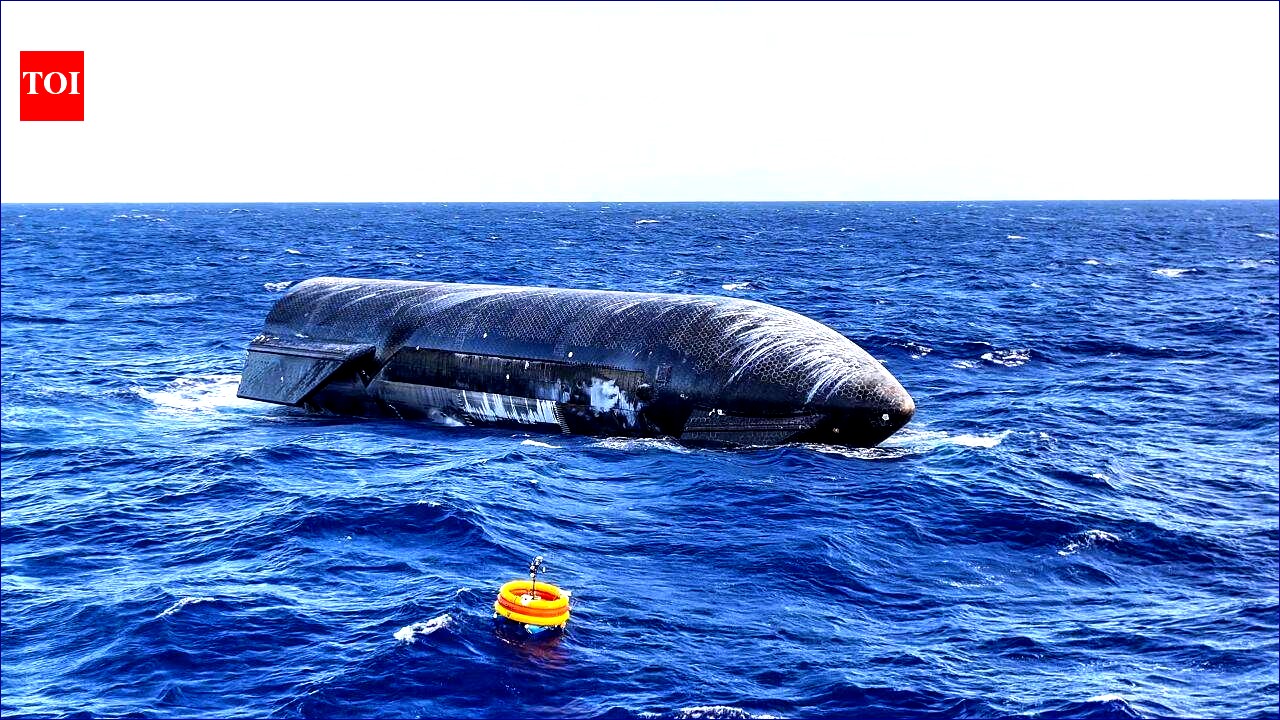
Catching the upper stage presents a greater engineering challenge compared to the Super Heavy due to its higher re-entry altitude and faster speed through the Earth’s atmosphere. Recent flight data shows good progress towards this goal. During Flight 13, which took place on July 24, the Ship successfully survived re-entry and landed in the ocean within the intended area in the Indian Ocean off the coast of Western Australia. Remarkably, the craft stayed intact even after capsizing, a feat previous prototypes had not achieved. Following the flight, SpaceX transported the vessel to Christmas Island for structural analysis, which will help in designing future models.
