
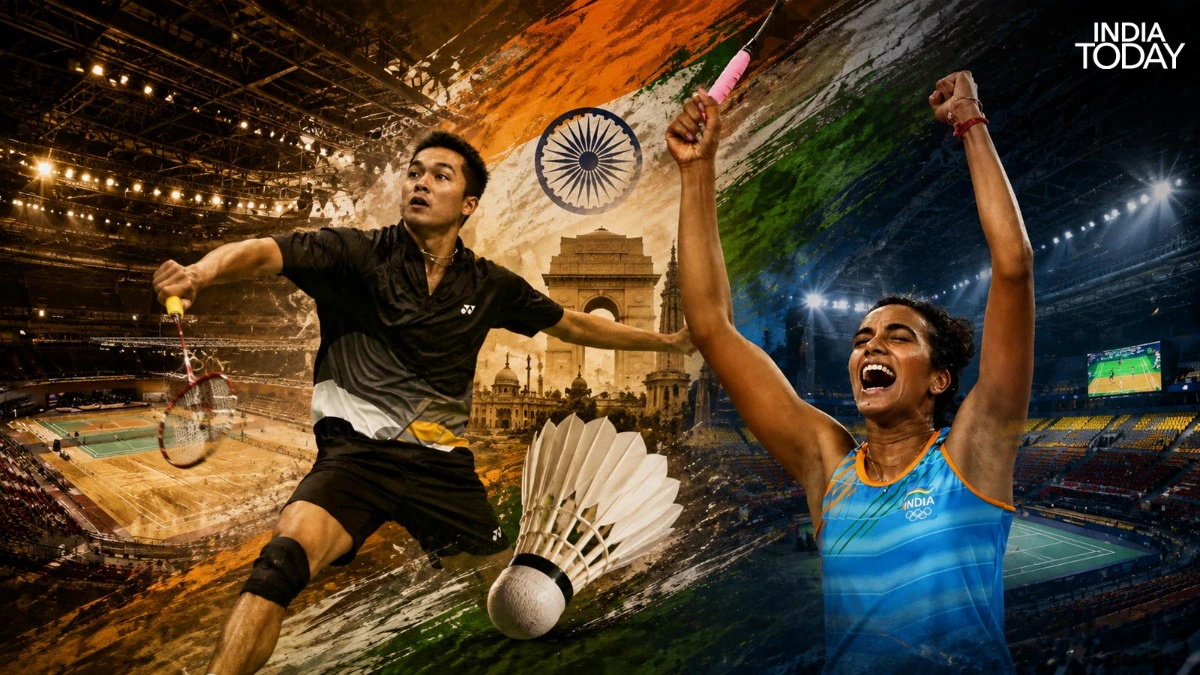
Seventeen years ago, Ramcharan Rankireddy felt a thrill just being at the Gachibowli Stadium. He was a volunteer during the 2009 World Championships in Hyderabad and was tasked with assisting one of the Chinese teams. That bus ride was unforgettable—it was filled with five medal-winning athletes, showcasing a different level of badminton that seemed far from India at the time.
Fast forward to 2026, and now Ramcharan’s younger brother, Satwiksairaj Rankireddy, stands poised to be part of India’s new generation of badminton players who are ready to challenge the traditional powerhouses of the sport.
The World Championships are returning to India after 17 long years. Scheduled from August 17 to 23, this prestigious event will take place at the Indira Gandhi Indoor Stadium in New Delhi, and there are high hopes for medals across various categories.
Reflecting on the journey over the past 17 years reveals a remarkable transformation. Legendary coach Pullela Gopichand recalls the 2009 World Championships as a significant moment—even if the focus back then was just on successfully hosting the event. “We had little expectation for our athletes’ performances and mostly hoped for a decent showing from Saina Nehwal,” Gopichand said.
Vimal Kumar, a former chief coach, remembers the event from the empty stands. “When we hosted it in Hyderabad, not many came to watch. We lacked big names in the sport, and most sections of the arena were empty,” he reminisced. At that time, Nehwal made it to the quarter-finals, which was seen as a major achievement for Indian badminton, even though India did not win any medals that year.
Among the audience was a young PV Sindhu, who recalls, “I was just a little girl back then, watching matches throughout the day. I didn’t grasp how serious it was.” Today’s Sindhu returns as a celebrated athlete, holding five World Championship medals and two Olympic medals, ready to compete again on Indian soil. “Looking back, experiencing the World Championships again after so many years is special. I hope to secure a medal at home this time,” she shared.
FROM STRUGGLE TO SUCCESS
Yet the journey of growth wasn’t just about this one event; it was marked by crucial achievements over the years. In 1980, Prakash Padukone became the first Indian to win the All England Championship, which was followed by Gopichand’s victory in 2001. But at the World Championships, India had to wait a long time for success. Padukone’s bronze in 1983 stood alone for nearly three decades until Jwala Gutta and Ashwini Ponnappa captured a bronze in 2011.
Then came Olympic glory—Saina Nehwal’s Historic bronze in London 2012 marked India’s first Olympic medal in badminton, and Sindhu followed with silver in Rio and bronze in Tokyo. The World Championships also saw a streak of success; Jwala and Ashwini broke a 28-year medal drought in 2011, while Sindhu began her medal collection in 2017.
The changes in the sport have been impressive. Vimal noted, “Back then, our doubles were weak, and there were just a few players in singles. Today, we have solid contenders in all events, including men’s and women’s doubles.” Young talents are emerging, with names like Tanvi Sharma and M. Sharani promising a bright future.
BUILDING A STRONG FOUNDATION
The progress in Indian badminton isn’t solely due to the players. Behind them, essential infrastructure is being developed. Vimal recalls the collaboration that went into hosting the 2009 World Championships, emphasizing support from various organizations and individuals. The efforts paid off, as that event helped lay the groundwork for a brighter future for badminton.
Gopichand, involved in organizing the tournament, faced the challenge of securing funds and building the necessary infrastructure. However, he expressed satisfaction at being able to host a successful World Championship event back then. The foundation laid by the academy built in Hyderabad in 2004 paved the way for the rise of talents like Nehwal and Sindhu, among others.
Now, cities across India are fostering their own badminton cultures, showcasing a network of training centers instead of relying on a single location. This growth is significant. A thriving badminton ecosystem requires more participants, courts, coaches, and support for budding talents.
A SPORT FOR EVERYONE
One notable change has been badminton becoming more affordable for many families. “Unlike tennis, which has become increasingly expensive, badminton remains accessible,” said Vimal. Initiatives from different states, like constructing badminton courts at the district level, have significantly boosted participation.
The involvement of the government has also increased, providing greater support for athletes and tournaments. Under the leadership of Himanta Biswa Sarma, the Badminton Association of India (BAI) has expanded its reach, facilitating more tournaments and increasing participation, with an impressive number of junior players entering competitions.
However, this boom has also come with challenges. As the sport’s popularity rises, maintaining infrastructure to accommodate growing numbers of participants poses significant challenges.
CONFRONTING GROWTH
With increased participation comes increased costs, particularly for essential items like shuttlecocks, which have become expensive. This poses a challenge as badminton, while accessible, is also becoming one of the pricier sports to engage in. The sport’s future hinges on addressing these financial hurdles to keep young athletes engaged.
To ensure sustained growth, the next step involves enhancing support systems around the sport. Gopichand emphasizes that the focus now should be on streamlining operations and collaborating to create a better coaching system that supports athletes throughout their careers.
PREPARATIONS FOR A NEW CHAPTER
As the World Championships approach, the Indira Gandhi Indoor Stadium is undergoing significant upgrades. Improvements include upgraded seating, new flooring, and enhanced facilities to ensure a top-notch experience for players and fans alike. Organizers are investing over 20 crores to enhance the venue, demonstrating India’s commitment to hosting world-class events.
While Gopichand acknowledges the progress made, he remains cautious about declaring India a badminton superpower. He believes the nation must further develop its talent pool and consistently achieve podium finishes in major international events to solidify its status on the global stage.
The journey from 2009 to now is a testament to the growth of Indian badminton. Ramcharan, once a thrilled volunteer, now watches his brother, Satwiksairaj, embody the hopes and expectations of a new era in Indian badminton. As the next generation steps onto the court, the aspirations have transformed from mere participation to a quest for excellence.
