
Floods Ravage Northeast India, Leaving Nearly 100 Dead
NEW DELHI: Devastating floods in India’s northeastern state of Assam have claimed nearly 100 lives, as reported on Friday. The region is experiencing one of the worst flood crises in years, with villages overwhelmed by mud and water.
The official count reveals that at least 97 individuals have lost their lives due to the floods, which have impacted around 170,000 people. Many have been forced to seek refuge in temporary shelters as rising river waters inundate homes and agricultural land.
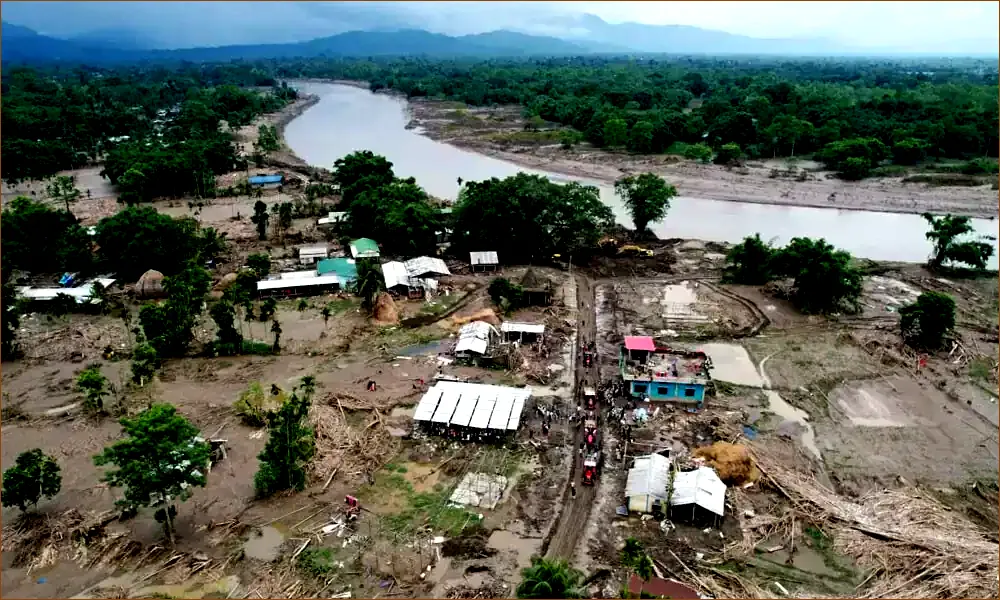
Floodwaters have submerged over 14,000 hectares of farmland, an area larger than one-and-a-half times that of Paris. Eyewitness accounts from an AFP journalist describe a scene of destruction in Sivasagar, the hardest-hit district, featuring homes half-submerged in water, uprooted trees, and vehicles buried under mud.
Assam’s Chief Minister, Himanta Biswa Sarma, shared a touching video on social media where he comforted the parents of a 13-year-old boy who tragically died while trying to save his pet dog from the floods. “No parent should ever have to bid farewell to their child,” he expressed.
India’s Health Minister, J.P. Nadda, who visited the affected areas on Thursday, described the extent of the destruction, noting that it would take significant time for normal life to return. He stated, “Village after village has been submerged.”
Flooding is a common occurrence in Assam during the June-September monsoon period, as the Brahmaputra River and its tributaries overflow. However, experts argue that climate change and unplanned development are making these disasters more frequent and severe.
Local residents and officials have pointed to illegal coal mining in the nearby state of Nagaland as a contributing factor that has intensified the flooding, affecting areas that typically escape inundation. Chief Minister Sarma has pledged to address this issue with the national government in New Delhi.
The advocacy group Climate Trends noted that the increasing intensity of floods in the region is linked to global warming, changes in river dynamics, and greater human vulnerability. They emphasize that such events are becoming not only more frequent but also more complex and costly.
