
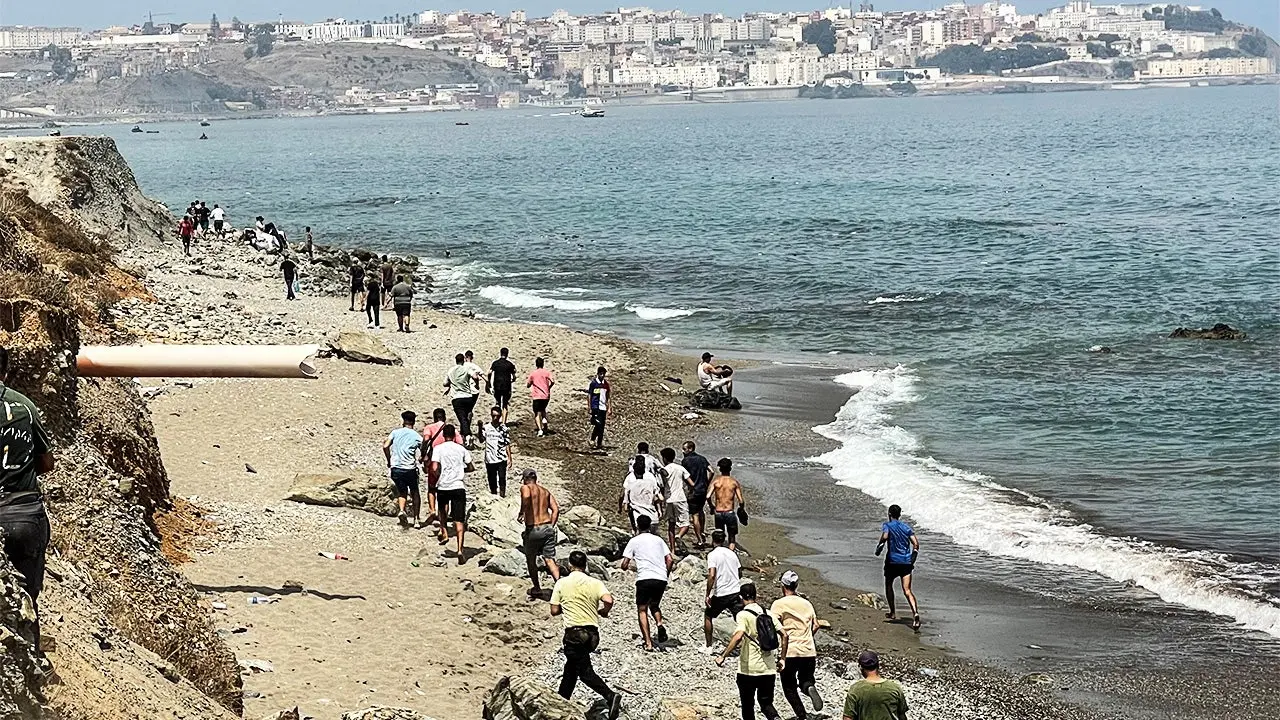
The U.S. State Department has raised its travel advisory for Ceuta, a Spanish city in North Africa, to Level 3: Reconsider Travel. This decision comes after a dramatic increase in migrant crossings from Morocco, leading to significant security concerns.
The advisory warns that the “uncontrolled arrival of migrants from Morocco could create dangerous security situations.” In response, Spain deployed military forces, the National Police, and the Civil Guard to manage the crisis. Americans are advised to think twice about traveling to Ceuta due to safety risks.
This new advisory focuses solely on Ceuta, while other parts of Spain maintain their current travel recommendations. Assistant Secretary of State Dylan Johnson described the situation as a “mass invasion,” attributing it to Spain’s failure to secure its borders. He stated that this influx poses a threat not just to Spain, but also to Europe’s security.
Johnson emphasized the U.S. support for Spain and Europe in defending their borders and urged a cooperative approach to prevent loss of life and remove illegal migrants.
The migrant surge has overwhelmed local authorities, with reports indicating that around 60,000 migrants crossed into Ceuta within a day. Although some have returned to Morocco, the situation remains critical.
Spanish Prime Minister Pedro Sánchez announced plans to strengthen security in Ceuta, including deploying a physical barrier to aid in repatriations and continuing cooperation with Morocco to fight human trafficking.
This surge is believed to be linked to a recent Supreme Court ruling affecting migrants arriving by sea. Sánchez noted that traffickers misused the ruling information, leading to more people attempting to enter Ceuta.
The ongoing crisis has caught widespread attention, with former President Trump commenting on the situation, warning that the U.S. could face similar challenges if political circumstances change. He condemned the situation in Spain as a catastrophe and encouraged vigilance for potential risks in the future.
Ceuta, along with Melilla, has long been a focal point for illegal migration due to its geographical position as part of Spain while being situated on the African continent.
