
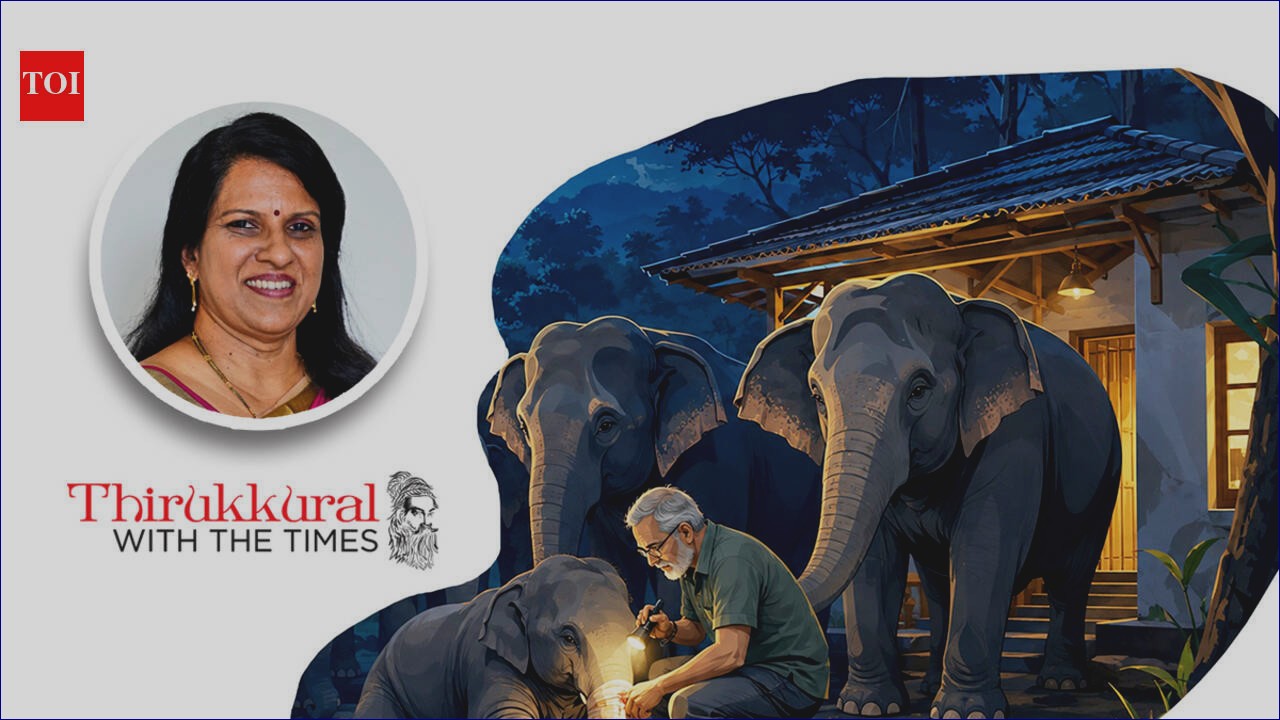
Exploring Thirukkural: A Lesson for Today
The classic Tamil work, Thirukkural, crafted by the poet and philosopher Thiruvalluvar, remains a timeless guide for modern life. Comprising 1,330 short couplets, each with seven words, this text is split into three sections focusing on virtue, wealth, and love. It’s regarded as a monumental piece on ethics and has inspired scholars and leaders through the ages.
Motivational speaker and diversity advocate Bharathi Bhaskar takes us through its profound insights. Each time award winners are announced, excitement fills the air. Yet, alongside the cheers, controversies often arise, with the latter frequently overshadowing the former. History, however, reveals an essential truth: awards don’t dictate true greatness—time does.
Consider Mahakavi Bharathiyar. His famous poem, “Senthamizh naadenum pothinile, inba thene vandhu paayudhu kaadhinile”, resonates deeply within Tamil culture today. However, when this poem was entered into a competition, it only received the second prize. Who even remembers the first prize winner now? This theme repeats itself throughout history.
Mahatma Gandhi was nominated for the Nobel Peace Prize multiple times but never received it, raising the question: if he didn’t fit the criteria for a peace award, then who would? Similarly, Alfred Hitchcock, known for his iconic films like Psycho, Vertigo, and Rear Window, never won an Oscar despite his extraordinary contributions to cinema.
Other notable figures, like Leo Tolstoy, Virginia Woolf, and James Joyce, have also missed out on the Nobel Prize. Perhaps the saddest of all was Rosalind Franklin, whose work was crucial to understanding DNA, yet the Nobel in Medicine went to Watson, Crick, and Wilkins alone.
In contemporary storytelling, we have Jeyamohan’s unforgettable short story, Yaanai Doctor. The character, inspired by the real-life elephant vet V. Krishnamurthy, was recommended for a Padma Shri award. Yet, politics stepped in, and the honor slipped away. Later that same night, a herd of elephants, trusting him as their healer, brought an injured calf to his doorstep. This simple act of trust may be the highest form of acknowledgment an individual can receive.
These reflections came to mind upon reviewing the recent 72nd National Film Awards. Film is subjective, and different juries emphasize various aspects. However, many cinema enthusiasts, including myself, were left questioning the outcomes. In my view, Meiyazhagan was one of the standout films of the year, capturing kindness and warmth without being overly sentimental. Karthi’s authentic performance added depth.
Similarly, Maharaja showcased layered storytelling, with Vijay Sethupathi delivering a masterful, restrained performance. Thiruvalluvar’s wisdom echoes here, reminding us of the limits of human judgment. He said in Kural 849, “Kaanadhaan kaattuvaan; thaan kaanaan. Kaanaadhaan kandaanaam thaan kanda vaaru,” which translates to, “One who presents the unseen as seen will not come forward to see what is to be seen.”
Awards ultimately reflect human opinions, not absolute truths, and perhaps, on a different day, a jury might have reached different conclusions. While awards are granted by institutions, deeper recognition comes from life itself.
Artists recognize this—they know their audience isn’t just the few who sit in judgment, but the countless hearts they touch across time. Rudyard Kipling expressed this beautifully in his poem If: “If you can meet with Triumph and Disaster and treat those two impostors just the same…” Awards and snubs can be deceptive; they don’t define an artist. Both can bring temporary highs and lows, but time remains the only judge that gives an accurate verdict.
