
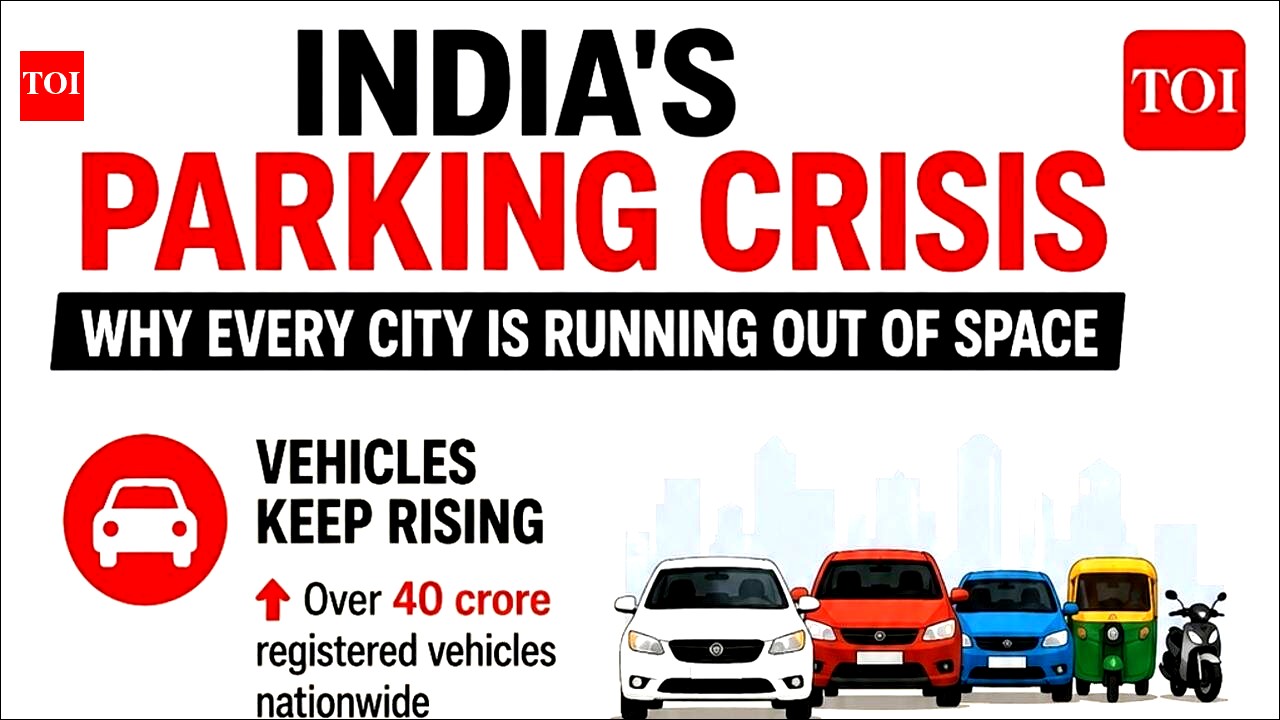
India’s Parking Challenge: A Growing Urban Issue
NEW DELHI: In cities across India, parking has become a major headache. From the narrow streets of Old Delhi to the upscale neighborhoods in Bengaluru, finding a place to park is increasingly difficult. Cars often line the sidewalks, while two-wheelers block intersections, leaving residents frustrated and confused about who parked where.
What started as a small annoyance has turned into a significant problem, with the demand for parking far exceeding the available spaces. City planners stress that parking isn’t just about where to leave a car; it reflects how cities use their limited public land. This parking crisis emerges from years of rapid vehicle growth, inadequate urban planning, and inconsistent enforcement of regulations.
Vehicle Boom Outpaces Planning
Most city plans failed to predict the rapid increase in vehicles in India. Currently, there are over 400 million registered vehicles in the country, nearly double the number from a decade ago, according to the Ministry of Road Transport and Highways. A majority of this surge is due to the rise in two-wheeler ownership, fueled by greater income and easy financing options.
Many Indian cities were designed when the number of vehicles was much lower. While some regulations require parking spaces in new buildings, older areas often lack these rules, and enforcement is usually weak. Streets built for everyday traffic have transformed into makeshift parking lots.
Historic Urban Areas Strain Under Pressure
The issue is particularly pressing in historic city centers. Long before cars existed, places like Delhi’s Chandni Chowk and Bengaluru’s traditional districts were constructed with narrow streets, making off-street parking a challenge. Expanding these roadways would mean tearing down buildings and uprooting people.
Newer suburbs face similar hardships. Residential areas built in the 1980s and 90s often catered to just one vehicle per household. Today, many families own multiple cars and motorcycles, leading to overcrowded streets and limited parking options.
Informal Parking Practices
As official parking spots become scarce, informal parking solutions emerge. Street attendants often set up outside busy markets and hospitals, collecting fees without any regulation. Complaints about arbitrary charges are common, as it’s tough for local authorities to distinguish between legitimate services and illegal operators.
Parking management has thus evolved into a governance issue as much as an infrastructure one. Municipal corporations need to regulate parking spaces properly to prevent misuse and maintain public roadways.
Underused Multi-Level Parking
To tackle the parking crisis, many cities have built Multi-Level Parking (MLP) facilities. However, many of these remain underused because they are often too far from the places people want to go, and complicated payment systems deter drivers. Meanwhile, some residents prefer parking alternatives near the road.
Despite these challenges, efforts to improve organized parking continue. The Delhi Development Authority is working to create more parking spaces and revise rules to make the best use of available spots while minimizing neighbor disputes.
Enforcement Challenges
Traffic police issue thousands of tickets each year, but the sheer number of violations makes it hard to keep up. For instance, Delhi traffic data highlighted improper parking as a common offense, with over 137,000 fines issued in September alone. Even significant fines haven’t deterred illegal parking, and towing operations face pushback from local businesses concerned about losing customers.
Digital Solutions in Parking Management
Cities are now embracing technology to better manage parking issues. In Delhi, updated regulations include CCTV monitoring, QR-code complaint systems, and efforts to improve lighting and the overall management of parking areas. Similar initiatives focusing on digital space monitoring and real-time tracking have begun in other urban centers like Bengaluru and Pune.
Looking Ahead
Experts believe that merely increasing parking spaces won’t resolve the crisis, as making parking free or cheap tends to encourage more driving. Sustainable solutions will need to integrate efficient public transit, ease of last-mile connections, and reasonable pricing linked to parking policies.
Across India, there’s a move towards treating parking not as a free service, but as a way to better manage demand. Success in this area requires strict enforcement of regulations, enhanced digital management, market-based pricing, and improved public transport. Until these initiatives are fully implemented, finding a parking spot will likely remain a significant challenge in India’s growing cities.
