
deltaVision Secures €10.2 Million Funding for Space Innovation
deltaVision, a fluidic systems company based in Munich, has successfully raised €10.2 million in funding. The company emphasizes its ability to scale production rapidly as its main advantage, rather than possessing superior technology compared to its American rivals.
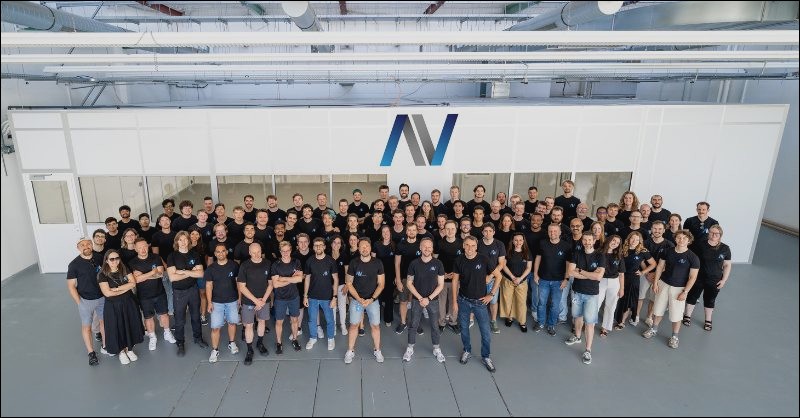
Founded in 2022 by Alex Plebuch, Denis Kiefel, and Matthias Guenther, deltaVision has grown to include 134 employees and aims to launch its first integrated refueling payload into orbit by March 2027. The latest funding round was led by KT Ventures and Valemount Capital, both of which increased their contributions following an earlier convertible loan. Additional support came from Futury Capital and various family offices.
Plebuch, who has years of experience in the aerospace industry, encountered numerous technical challenges with propulsion systems. This motivated him to establish deltaVision, which focuses on creating valves, pumps, and pressure regulators linking fuel tanks to engines in various space vehicles, including satellites and landers. The company has been profitable since its inception and serves over 60 clients worldwide, including startups and major space organizations.
Focus on Speed Over Advanced Technology
Plebuch notes that deltaVision faces minimal competition in Europe, as larger companies often prefer to manufacture components in-house instead of collaborating with specialized firms. While there are several competitors in the U.S., they struggle to keep up with production demands.
deltaVision plans to capitalize on this gap by concentrating on fast, high-volume manufacturing rather than competing purely on engineering excellence. The company is already collaborating with U.S. partners for resale and aims to establish a branch in the States soon to increase valve production.
Rival companies illustrate the market opportunity deltaVision seeks to fill. For instance, Marotta Controls has provided over 50,000 flow-control valves to clients like SpaceX. Meanwhile, Orbit Fab has secured approximately $65.9 million for its refueling technology. Notably, deltaVision has supported The Exploration Company in Munich with valve designs for reusable engines, highlighting the vibrant and competitive European spacetech scene.
Family Offices Take a Prominent Role
Plebuch intentionally chose family offices to lead the recent funding round. He believes that investors who actively build businesses and use their own capital provide more aligned support than traditional venture capital. Johannes Pichler of KT Ventures adds, “We’re investing in a profitable business model with significant growth potential.”
The new capital will focus on three main objectives: increasing the production capacity to 5,000 units annually, establishing a French subsidiary for R&D on fluidic products, and advancing research on integrated refueling systems for space missions.
As of now, deltaVision has supplied around 50 components for missions to the European Space Agency’s Argonaut lunar lander program, which Plebuch views as essential groundwork. The upcoming launch of their integrated payload in March 2027 will be a significant milestone for the company.
Plebuch emphasizes that European space hardware requires a hands-on manufacturing approach from the outset. While it’s unclear how deltaVision’s strategy will hold up against better-funded U.S. competitors before refueling standards are established, the March 2027 payload will provide crucial insights into their capabilities.
