
A New Wave of Chinese Exports Looms
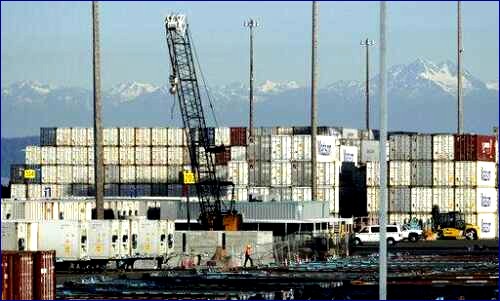
In the bustling Port of Tacoma, Washington, a worker navigates through rows of truck trailers and cargo containers, highlighting a growing concern in global trade: the rising influence of Chinese manufactured goods. China’s grip on international markets is creating significant social and political challenges around the world.
Twenty-five years ago, low-cost Chinese products entered the U.S. market, resulting in about 3 million lost factory jobs—a moment now known as the “China Shock.” Today, we see the emergence of a new “China Shock” affecting not just the United States, but countries across Europe, Southeast Asia, Africa, and Latin America. This situation raises alarms about further job losses and potential political unrest.
Recently, German Chancellor Friedrich Merz and French President Emmanuel Macron expressed the need for collective measures to defend Europe’s industries against an influx of subsidized Chinese goods. This rise in Chinese exports can be traced back to the government’s response to a significant property market downturn, which wiped out $10 trillion in consumer wealth. Since 2020, Chinese authorities have been investing in manufacturing growth to counteract this downturn and to cultivate advanced industries like electric vehicles and solar energy.
However, these expanded factories are producing more goods than the local market can absorb, prompting Chinese companies to target international markets. Reports indicate that Chinese exports saw an 18% increase in the first half of the year compared to the same period last year.
Julian Evans-Pritchard, an economist at Capital Economics, notes that the increase in manufacturing abilities has not been matched by a rise in domestic demand. As a result, this overproduction is beginning to shape global markets in ways similar to the past.
In the earlier China Shock, which followed China’s entry into the World Trade Organization in 2001, the U.S. lost 2.4 million manufacturing jobs in ten years. While consumers welcomed cheaper goods, the economic disruption fueled discontent among voters, contributing to Donald Trump’s presidential victory in 2016.
This new wave of exports is now centered on high-tech items like electric vehicles, contrasting the earlier focus on basic apparel and footwear. The impact of this trend is being felt most harshly outside the United States, particularly in Europe, which is already facing economic challenges.
An analysis by Federal Reserve economists suggests that the U.S. has managed to shield itself from this latest export wave, partly due to tariffs implemented during Trump’s administration. Current data indicates that Chinese exports to the U.S. have remained flat compared to last year, even as other markets see significant growth.
Despite tariffs, some Chinese companies are circumventing them by exporting goods through countries like Vietnam or Mexico, where minimal final processing allows them to avoid duties. For instance, LC Sign, a manufacturer in Guangzhou, has managed to expand its workforce, even after facing a downturn during the trade war.
Additionally, the undervaluation of the Chinese currency makes its products more appealing to international buyers. However, the sharp rise in exports does not mirror growth in imports, indicating a shift in China’s economic strategy as it tries to minimize reliance on foreign goods.
As China grows its share of global trade, Treasury Secretary Scott Bessent has called for a change in their economic policy, urging a transition from a focus on exports to fostering domestic consumption. The administration is expected to roll out new tariffs aimed at addressing overproduction issues in China and other manufacturing nations.
China’s current economic model, reliant on exporting, is viewed as unsustainable and detrimental not just to China but also to global markets. With ongoing issues like a housing crisis impacting consumer spending, government focus has primarily remained on developing global technology competitiveness.
While coordinated pressure from international partners might encourage policy adjustments, upcoming state visits and negotiations suggest that global leaders are still seeking favorable trade relationships with China. In Europe, leaders are grappling with the situation as they prepare to introduce emergency measures to protect local industries.
As the world continues to navigate these changes, the balance between trade, manufacturing, and domestic well-being remains as critical as ever, with countries working to manage the profound effects of Chinese exports on their economies.
